
Kyrene board approves maps for public hearings proposing six elementary, two middle school closures; keeps two dual-language sites open
Get AI-powered insights, summaries, and transcripts
Subscribe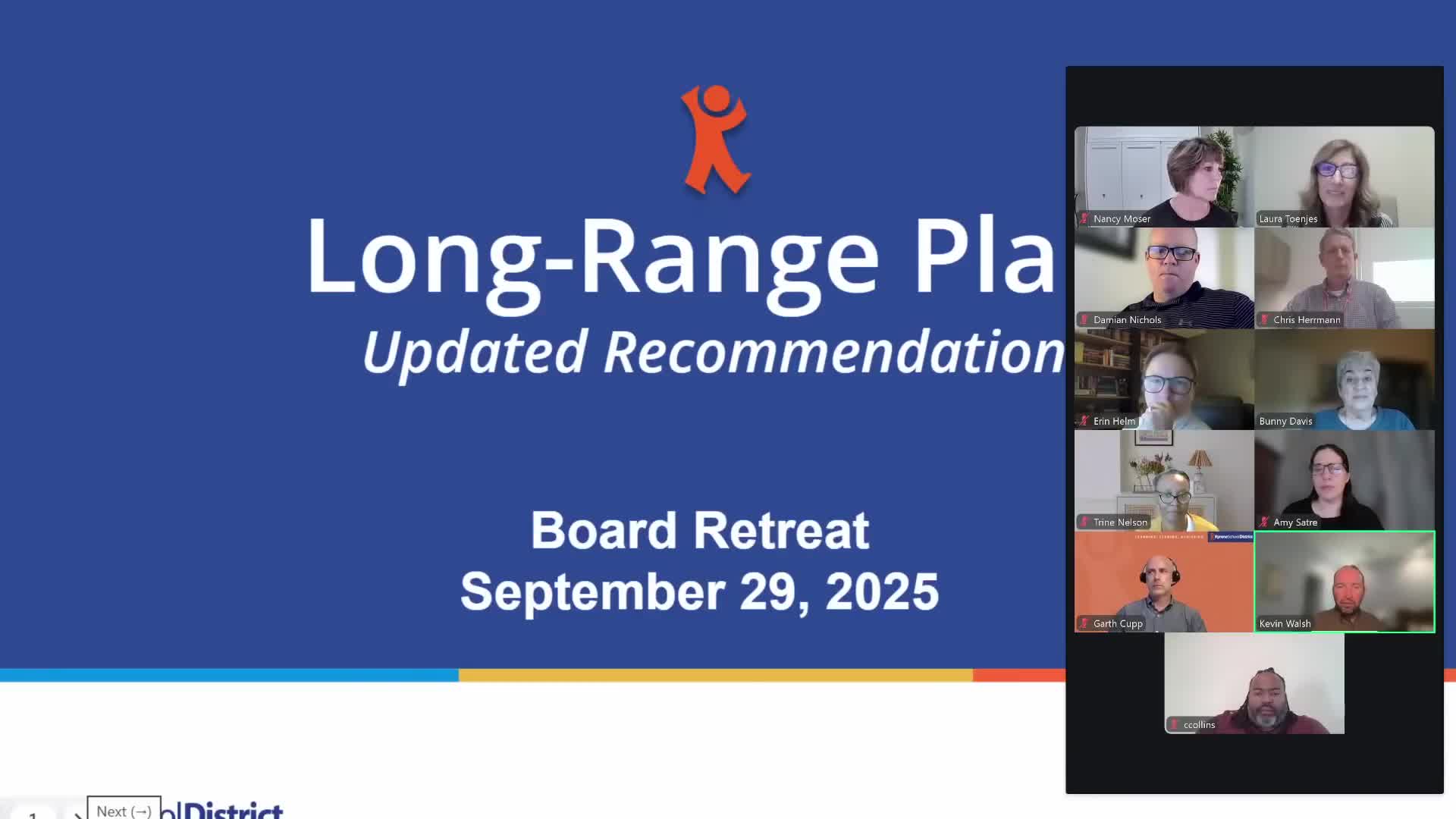
Summary
The Kyrene Elementary District Governing Board on Sept. 29 directed staff to take updated boundary maps and closure recommendations to regional public hearings, advancing a plan that would close six elementary schools and two middle schools while preserving two dual-language, boundaryless sites and starting a gifted advisory process.
The Kyrene Elementary District Governing Board on Sept. 29 directed district staff to publish updated school-boundary maps and school-closure recommendations for regional public hearings, advancing a plan that would close six elementary schools and two middle schools across the 2026–27 and 2027–28 school years while preserving two dual-language sites as boundaryless, open-enrollment programs.
Why it matters: the board’s updated plan is a response to falling enrollment and lower state funding that district staff estimate will create roughly $6.7 million in cumulative operational shortfalls over five years if no structural changes are made. The plan would change feeder patterns, reduce the number of split elementary cohorts and affect transportation, special programs and staffing across the district.
District finance staff presented the financial case at the retreat, saying the revenue shortfall stems from lower enrollment and that the projected figures are recurring operational impacts rather than one-time gaps. District staff said one-time funds, carry-forward balances or capital (bond) funds cannot be used to close recurring operating shortfalls because statute and funding rules prohibit mixing capital and maintenance-and-operations expenditures. The district also noted that renewal of Kyrene’s maintenance-and-operations (M&O) override will be on the November ballot; the district estimates the override provides about $14.6 million annually and is not a new tax.
On enrollment and savings: staff reported the district’s official 40th-day count showed a decline of 573 students year over year. Personnel savings used in the closure scenarios reflect only positions that would not relocate to other buildings; staff said those amounts are equivalent to roughly 7.8 full-time-equivalent positions per elementary school and about 13.4–13.5 FTE per middle school in the models presented. Day-to-day building operational savings shown to the board covered utilities, insurance, custodial and grounds but excluded capital projects and did not assume ownership changes or lease outcomes for vacated buildings.
Updated recommendations and program changes: based on board feedback earlier in September, the district presented a revised map that keeps two dual-language elementary schools open at their current sites but converts them to boundaryless, open-enrollment programs with no district-provided transportation. The schools named in the presentation as remaining dual-language sites were Lagos and Norte; the recommendation would remove those schools’ regular attendance boundaries so families citywide could apply but would provide no transportation except where state or district policy already guarantees it (for example, families living within a mile of their assigned elementary typically do not receive bus service).
Gifted and traditional program planning: the board heard a proposal to form a gifted advisory committee and commission a districtwide audit of gifted services beginning after January 2026. The district said current K–5 self-contained gifted programs would continue during the advisory process but that “guesting” (admitting non-identified students when class-size thresholds are not met) may be necessary in some classrooms. The district also recommended delaying any final decisions about the Kyrene Traditional Academy (KTA) — which will operate as a traditional program next year — and scheduling a board retreat after the new year to consider options and community feedback before making changes to that program’s status.
Which schools would close and timing: under the timeline presented, four elementary schools — identified on the district slides as Estrella, Colina, Millennio and Manitas — were listed for closure in the 2026–27 school year; a second group of elementary sites and one or more middle-school closures were slated for 2027–28. The district’s summary to the board characterized the package overall as closing six elementary schools and two middle schools if no buildings are repurposed. (The presentation also noted that a future gifted academy could be located in a vacated building; specific site selection was not decided.)
Feeder-pattern and split-cohort impacts: staff said the revised map reduced the number of elementary schools with split feeder patterns from five under the committee’s earlier recommendation to two under the new recommendation. On the middle-school side, the plan keeps four regionally spaced middle schools and creates a small number of split-middle feeders (the presentation described the Monte Vista neighborhood as a split feeder). Staff and board members emphasized preserving intact elementary cohorts where feasible and minimizing boundary splits.
Transportation and program capacity: staff discussed the immediate transportation effects the boundary changes could cause for open-enrollment, boundaryless programs. The district told the board that Lagos currently has about 15 in-district riders and about 30 open-enrollment riders; combined ridership for the two dual-language sites presented was roughly 57. Special-education leaders said they are reviewing capacity at the receiving schools to ensure programs for students with disabilities (including preschool and other specialized placements) can be maintained in the proposed receiving buildings, and that capacity planning is ongoing behind the scenes.
Public hearings and next steps: the board authorized the superintendent to use the revised maps at regional public hearings required by statute. The district announced a public report on override spending on Oct. 14 and said a statutorily noticed public hearing is expected Nov. 18 (with a potential alternative date of Dec. 2 if additional changes are required); board members noted a statutory requirement to provide at least 10 days between the final public hearing and any board action.
Board action: the direction the board gave at the retreat was procedural rather than a final approval of boundary maps or closures. Board members repeatedly stressed that taking the maps to public hearings does not constitute final action and that further public feedback and possible revisions would occur before any adoption vote.
What remains undecided: the district has not finalized the locations for any potential gifted academy, whether any closed buildings would be repurposed or leased, or the precise financial savings per individual school until the board provides direction on which options advance to hearings. Several board members asked staff to return with more detailed, school-level savings figures and transportation impacts during the hearing period.
The superintendent and district staff will present the maps at the announced regional public hearings and return to the board with any substantive public-comment findings and any recommended map revisions before the board would vote on final adoption.