Get Full Government Meeting Transcripts, Videos, & Alerts Forever!
Get email alerts on the Local Development And Property Fees topic
No spam. Unsubscribe anytime.
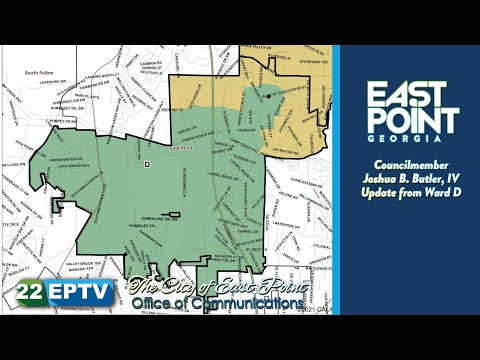
East Point councilman outlines redevelopment plan, proposes $250 annual fee on non-owner-occupied single‑family homes
Summary
City Councilman Joshua B. Butler IV described plans to redevelop Cleveland Avenue around a hospital, revive aging retail on Washington Road using bonds and tax allocation districts, and proposed a $250 annual fee on non-owner‑occupied single‑family homes to raise about $2 million for senior services and neighborhood upkeep.
City Councilman Joshua B. Butler IV used remarks recorded in the meeting transcript to outline redevelopment goals for East Point and to propose a $250 annual fee on non‑owner‑occupied single‑family homes to fund senior services and neighborhood upkeep.
Butler said redevelopment priorities include restoring hospital services along Cleveland Avenue and encouraging mixed‑use development around a health‑care anchor, and revitalizing aging shopping plazas on Washington Road. He described financing tools he would use as floating bonds and tax allocation districts to attract private investment.
"Being a public servant and representing East Point has been one of the greatest privileges of my life," Butler said, framing the proposals as part of a longer record of community engagement. He told listeners he has held more than 30 town hall meetings and attends community meetings at least twice a year.
Butler proposed charging a $250 annual fee on single‑family homes that are not owner‑occupied, saying the charge would raise about $2,000,000 for the city and that the funds would be allocated to help senior citizens pay utility bills, fix problems in their homes, and support community cleanliness and beautification. He said East Point has approximately 17,952 single‑family homes and that roughly 48% are owner‑occupied and 52% are not owner‑occupied.
He also said a prior obstacle — a state law that prevented four cities from compiling lists of single‑family properties — was changed at the state level, which he said now allows municipalities to make such lists and contact property owners who charge rent. Butler described that change as enabling his plan to reintroduce local legislation on the fee.
Butler presented the redevelopment and fee proposals as part of a broader vision for density, mixed‑use housing, and neighborhood investment. He emphasized community engagement and stewardship as part of implementation, but the remarks did not record any formal motion, council vote, or specific ordinance language.
Absent from the transcript were details about the process and timeline for formally introducing the fee to the City Council, whether the $2 million estimate accounts for exemptions or enforcement costs, and whether any department was assigned to draft ordinance language or conduct an impact analysis.