
Miami Lakes officials press ahead on blasting lawsuit, pause website charts until staff meeting
Get AI-powered insights, summaries, and transcripts
Subscribe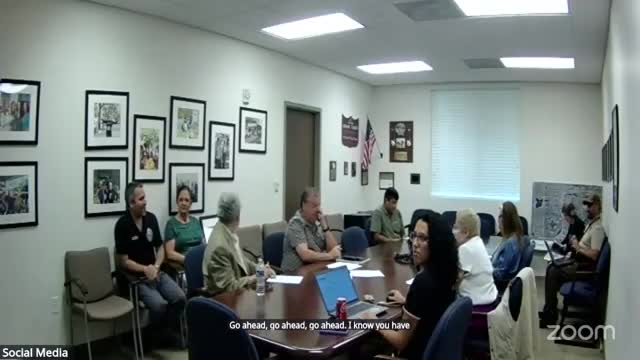
Summary
Council members updated residents on plans to file litigation over seismic blasting, discussed seeking county and municipal partners and budgeted a legal reserve; the advisory board also won a motion to hold a Sunshine meeting with town marketing staff before posting interpreted complaint charts online and approved limited marketing purchases.
Councilman Steven Herzberg said the town’s planned lawsuit over seismic blasting is still moving forward and that leaders are keeping details confidential while attorneys coordinate with potential partners and other municipalities. "We approved filing a lawsuit moving forward. That should still be moving forward. We are keeping details out of the public limelight for now," Councilman Steven Herzberg said during the meeting.
The advisory board’s discussion centered on three related tracks: the litigation timeline and likely legal costs, outreach to other municipalities and the county for support, and whether the board should publish its own charts based on state complaint data on the town website. Board members also approved two operational items: a Sunshine‑meeting with town marketing and TownStat staff to resolve how complaint data should be presented, and a motion to spend remaining marketing funds on outreach items such as pens and keychains.
Why it matters: The town and its advisory board have been collecting state complaint records about blasting and want to use those counts and charts to persuade neighboring cities and county leaders to join or contribute to litigation and to demonstrate local impacts. Officials said a coordinated legal and legislative approach — combining litigation with a new bill expected from Representative Fabrizio — would strengthen the town’s position, but that the litigation will carry multi‑year costs and may require shared funding.
What the council said and asked Councilman Herzberg told the group he has been meeting with the town attorney and that attorneys are also speaking with other municipalities about possible participation. He said the town aims to file when the timing and legal posture are right and that filing could occur before the start of the next legislative session, if appropriate. He asked peers to help contact county commissioners and neighboring municipal leaders so the financial burden of litigation is not borne solely by Miami Lakes.
Board members repeatedly asked for an explicit legal reserve in the town budget so residents can see the expected cost. At one point the group referenced a previously published range of $50,000 to $100,000 as an initial estimate for starting litigation; outside counsel hourly rates of about $550 per hour were mentioned for comparison. Multiple participants urged the town to add a line item to the budget specifically for the litigation so the public and the board would not be surprised by mid‑year spending.
Outreach and partners Speakers named Miramar, Hialeah, Doral and Homestead as municipalities to contact about shared action. Council members said Miramar — which has a high volume of complaints in the dataset the board uses — may be the most promising partner. Participants said they have contacted or will contact the Miami‑Dade League of Cities, the League of Cities and several state leaders, including the new state CFO, and Representative Fabrizio, who is expected to introduce complementary legislation.
Data publication and marketing The advisory board reviewed a set of complaint charts derived from public state data and debated putting those visuals on the town website. Town staff told the board they are reluctant to post interpreted or summarized charts that are not the state’s raw records and raised concerns about staff time and data provenance.
The board adopted a motion to hold a Sunshine meeting that will include the board’s data lead, marketing staff and the TownStat liaison to clarify exactly what can be published and how to credit sources. The board voted to pause posting interpreted graphs on the town website until staff and board members meet to establish a process and sourcing conventions. At the meeting members said the goal is to provide residents and visiting municipal officials an easily digestible, source‑cited summary — for example, Miramar‑specific totals — without mischaracterizing state records.
Votes and next steps The board also approved using remaining marketing funds to buy outreach items (pens, keychains and similar collateral) ahead of fall events and agreed to prioritize an in‑person Miramar meeting to present the locally compiled data. Board members asked the town manager and staff to return to the next meetings with a schedule for the Sunshine meeting and with an accounting or line‑item proposal for any legal reserve the council should formalize.
Ending note Members closed the meeting after a summary of the monthly blast counts the board’s engineering consultants provided; speakers emphasized that some companies have reduced peak intensities while increasing the number of lower‑intensity blasts, and that ongoing monitoring will continue to inform both the town’s public outreach and its legal strategy.