
Lake Bluff panel leans to retain municipal grocery tax, delay 0.25% home‑rule sales increase
Get AI-powered insights, summaries, and transcripts
Subscribe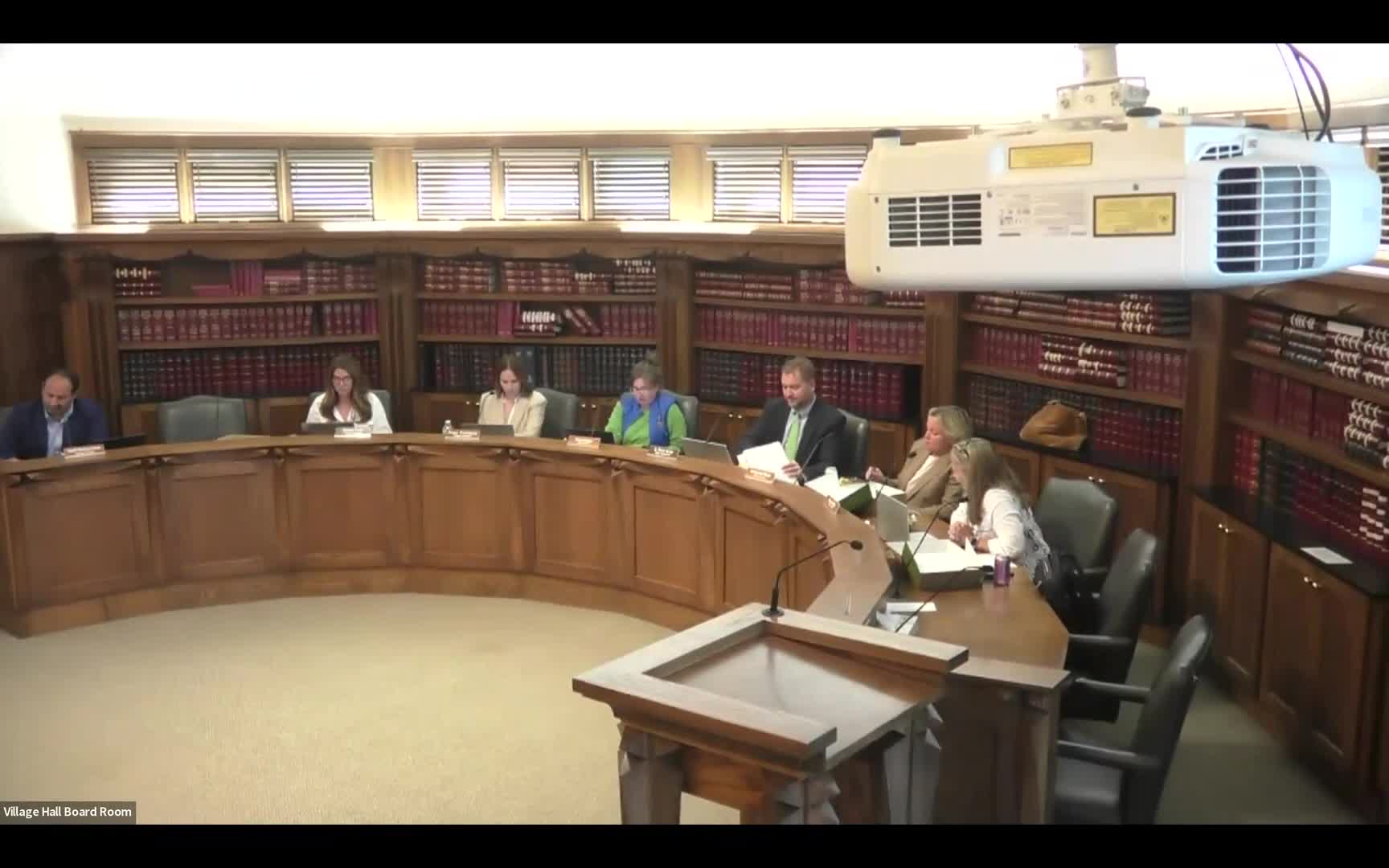
Summary
Lake Bluff trustees on Sept. 29 signaled they will maintain the village’s municipal grocery retailers’ tax option for now and postpone a decision about a proposed 0.25 percentage‑point increase in the village’s home‑rule sales tax.
Lake Bluff trustees on Sept. 29 signaled they will maintain the village’s municipal grocery retailers’ tax option for now and postpone a decision about a proposed 0.25 percentage‑point increase in the village’s home‑rule sales tax.
The Committee of the Whole reviewed input from the Village’s business advisory committee and finance staff and discussed revenue, equity and implementation constraints. The committee did not take a final vote to change tax policy at the Sept. 29 meeting; trustees said they plan to place a motion on the regular board agenda and could remove the grocery tax later if they decide to do so.
The matter moved onto the committee’s agenda after Deputy Village Clerk Drew Urban introduced the topic and summarized outreach to the business advisory committee, which recommended retaining the grocery tax. “The unanimous recommendation from that group was to support a maintenance of the grocery tax,” Drew Urban said.
Bettina O’Connell, the village finance director, told trustees she heard strong advocacy for the grocery tax at a municipal finance conference and explained how changes in state revenue sharing affect local budgets. “We used to get 10%, and that's been notched down to about 6.5,” O’Connell said, referring to the local portion of state income tax distributions that municipalities receive; she said that some advocates argue accepting the grocery tax strengthens municipalities’ leverage when pushing the state for a larger share.
Trustees traded arguments about fairness and stability. Trustee Susan (last name not specified) said the grocery tax is regressive in general but noted that purchases paid with SNAP benefits are not taxed, which partially mitigates the impact on lower‑income households. She said she had considered both options and was willing to “adopt the status quo as being the best option for us at this point.”
Other trustees argued that a 0.25 percentage‑point home‑rule sales tax increase would raise an estimated $300,000–$350,000 a year and would spread the burden differently because it would also apply to many discretionary purchases. One trustee said keeping the grocery tax in place preserves a known revenue stream while the village continues to evaluate its capital needs, including large road and stormwater projects and the underfunded police pension.
Staff and trustees clarified legal and practical limits. The village was advised it cannot selectively exempt SNAP‑eligible food at the local level (“we're preempted” from choosing the taxed basket) and that state processes set the windows for implementing or discontinuing the municipal grocery tax. Finance staff said the village can implement or discontinue the grocery tax twice a year, with implementation windows including July 1; discontinuation requires sending a certified copy of the ordinance to the state department.
Trustees did not reach the four‑vote majority in the committee required to move forward immediately with the grocery tax; several members said they prefer to maintain the status quo now and revisit the decision at the next regular board meeting, where a formal motion will be offered. Trustee Susan said she will “make a motion during the regular meeting to maintain the status quo by imposing the grocery tax” with the understanding it can be revoked at a future opportunity if the board chooses.
Procedural items at the start of the meeting included a voice vote appointing Trustee Frank Fisher as president pro tem in the absence of Village President Regis Charlott and approval of minutes from the Sept. 8 Committee of the Whole meeting.
The committee directed staff to continue monitoring receipts and gather comparative data from peer communities, and trustees agreed to keep discussion open so the board can revisit the issue if revenue trends or new information warrant a different decision.