Get Full Government Meeting Transcripts, Videos, & Alerts Forever!
Get email alerts on the Human Trafficking Signage topic
No spam. Unsubscribe anytime.
Witnesses urge law to require human-trafficking hotline signs — including in transit restrooms
Summary
An advocate for survivors told the committee that posting the National Human Trafficking Hotline number in transit facilities, including restroom stalls, is a low-cost measure that has increased calls in other states and can be a private point of contact for victims. She urged favorable reporting of House Bill 3796 and Senate Bill 2365.
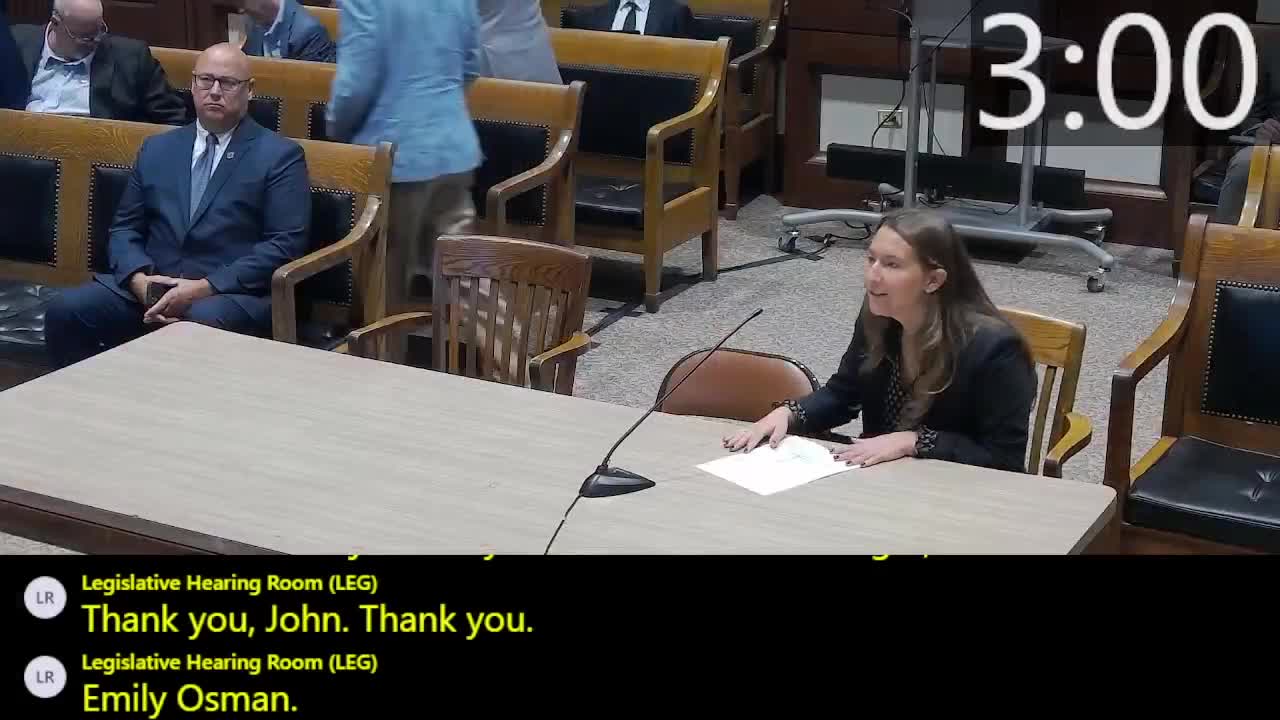
Emily Osmond testified in support of House Bill 3796 and Senate Bill 2365, a measure to require posting the National Human Trafficking Hotline number in transit facilities across Massachusetts, specifically including restroom stalls. Osmond said she first worked on the idea in 2022 after learning about the frequency of trafficking in the state and that signage laws in other states have increased hotline contacts from survivors, relatives and good Samaritans.
"Transit facilities specifically are critical points of access," Osmond said, noting that restrooms may be "the only private space where a victim can safely see the number." She cited hotline statistics: since February 2007 the national hotline has reported more than 4,000 cases in Massachusetts involving nearly 2,000 victims, and "in 2024 alone, there were over 280 reports, including 91 calls directly from survivors."
Osmond told the committee that over 30 states require similar signage in transit facilities and that local initiatives — including postings in new T train cars in Suffolk County — have shown that signage increases survivor reach. She asked the committee to report the bill favorably. No formal committee action was recorded during the hearing.