Privacy advocates back Driver Privacy Act to curb license-plate reader data sharing
Loading...
Summary
Civil-liberty and public-defense groups asked the Joint Committee on Transportation to support House Bill 3755, the Driver Privacy Act, to limit retention and out-of-state access to automatic license plate reader (ALPR) data.
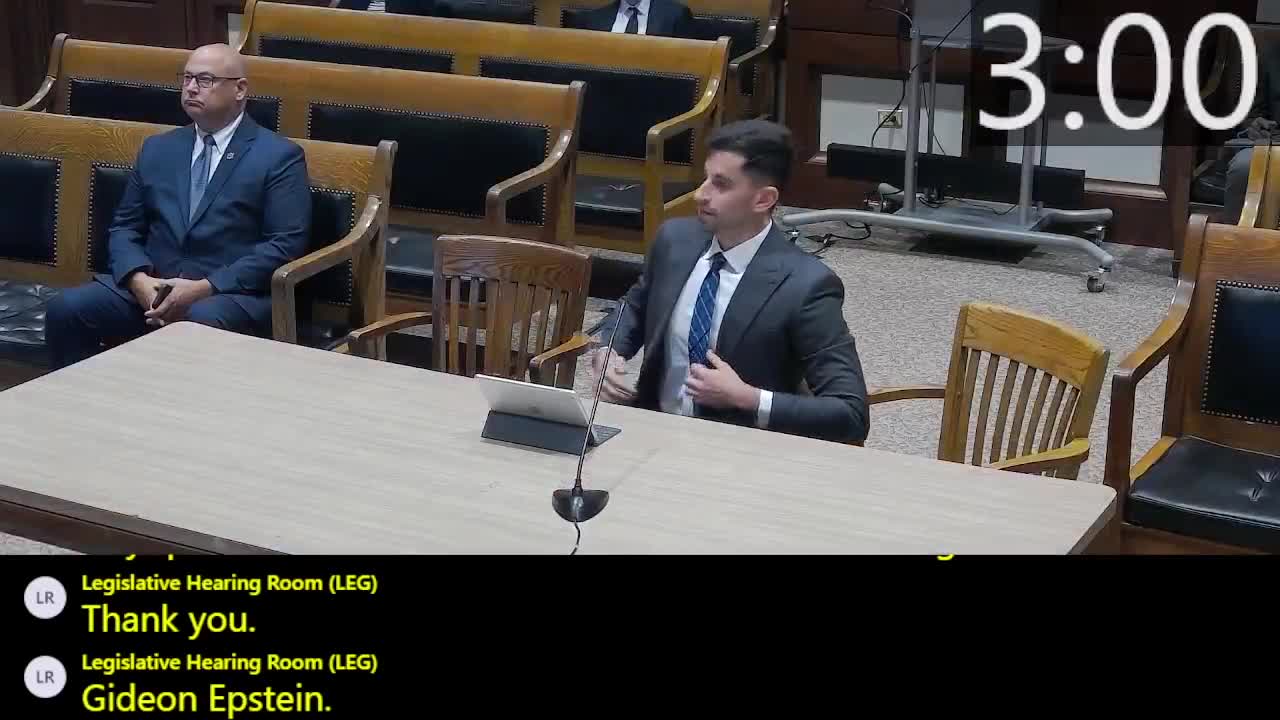
Multiple civil-liberty and public-defense organizations testified in support of House Bill 3755, the Driver Privacy Act, urging limits on automatic license plate reader (ALPR) systems and third-party nationwide databases. Gideon Epstein of the ACLU of Massachusetts said ALPR systems create a "nationwide surveillance" capability that can be accessed without probable cause and can undercut the state's shield law protecting people seeking lawful reproductive or gender-affirming care. "Dozens of Massachusetts police departments are currently participating," Epstein said, adding that ALPR data is "easily accessed by out-of-state law enforcement, all without any requirement to show probable cause."
Matt Spurlock, an appellate attorney with the Committee for Public Counsel Services, told the committee the state lacks consistent safeguards for ALPR systems and that courts are often asked retrospectively to evaluate whether novel surveillance amounted to a constitutionally protected search. He described ALPRs as "metastasizing at an unprecedented, unregulated rate" and urged judicial oversight for retrospective searches.
Representatives of Digital Fourth also testified in support, emphasizing that ALPR networks can create searchable records of residents' movements. Supporters asked the committee to report H 3755 favorably; the bill as described in testimony would require deletion of ALPR data after 14 days unless tied to a specific criminal investigation, require warrants for searches of data not collected by the requesting agency, and prohibit buying, selling, or sharing data without judicial process.
No committee action was recorded during the hearing. Committee staff accepted written material for the legislative file.