Get Full Government Meeting Transcripts, Videos, & Alerts Forever!
Get email alerts on the Code Enforcement topic
No spam. Unsubscribe anytime.
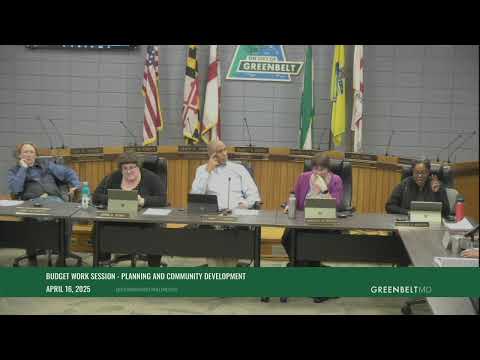
Greenbelt council hears plan to tighten code enforcement, consider higher fines and revise fee structure
Summary
Council discussed code enforcement procedures, a recent rise in municipal infractions, the city’s complaint-to‑citation workflow, and staff plans to revisit fee schedules after recent state and county legislative changes.
Inspectors and planning staff walked council through Greenbelt’s code enforcement workflow and flagged an increase in municipal infractions and licensing captures.
Assistant Director Gilberto Cabrera described the operational enforcement sequence: complaints are logged by the administrative office, assigned to an inspector, who conducts an initial inspection and, if a violation is found, issues a 10‑day notice of correction; severe issues receive a 24‑hour correction requirement. Cabrera summarized the escalation path: if a violation persists after reinspection, the department issues a municipal infraction that must be paid within 21 days or is referred to Prince George’s County court. He explained enforcement is designed to secure compliance, not revenue: "our goal is not to assess fines. Our goal is to get compliance through other means. But at the last resort, when we have to do that, we do that," Terry Ruby said.
Council members asked about raising maximum municipal fines following recent state legislation. Council Member Jenny Pompey asked whether a higher cap would be a better deterrent; Ruby said staff will review the fee schedule and consider increasing fines and adjusting repeat‑offense tiers. "I have some thoughts ... looking at perhaps some of our repeat offenses and whether, you know, like trash ... perhaps they should be assessed at a higher ... rate," Ruby said. Marrone noted a new state‑level cap could allow maxima up to $5,000, and staff signaled they would draft an ordinance if council directs.
Inspectors reported heavier workload tied to aging multifamily housing: Michael Day, Charles Redding and Anthony Krupp were identified as the three inspectors and credited for increased inspection counts. Boiler and heating inspections rely on state‑licensed third‑party testers; Ruby said the city obtains DLLR inspection reports that can include equipment age and last test dates and that staff plan a proactive round of certification requests three months before the heating season begins.
Council asked for better geographic and subject breakdowns of complaints—particularly in Franklin Park and Parkway Gardens—with staff agreeing to provide counts by subdivision and normalized counts per unit. Staff said if tenants report urgent habitability problems (no heat, severe leaks) they may apply a compressed timeline and pursue citations and court remedies to achieve abatement.
Why this matters: enforcement timing and penalty levels affect habitability for renters, compliance costs for property owners and the department’s workload and budget. Council expects a staff proposal with revised fines, fee structure options and data by complex before any ordinance drafting.
Ending: Staff will return with proposed fee changes, a recommendation on fine structure and detailed enforcement data broken down by subdivision and unit counts.