Get Full Government Meeting Transcripts, Videos, & Alerts Forever!
Get email alerts on the Natural Medicine Regulation topic
No spam. Unsubscribe anytime.
Brighton council advances first reading to regulate ‘natural medicine’ businesses, narrows safe-ride exclusion
Summary
City Council approved on first reading land‑use amendments defining and regulating natural medicine healing centers and cultivation/manufacturing/testing facilities, and removed a proposed exclusion that would have barred rideshares and taxis as acceptable "safe ride home" options for participants.
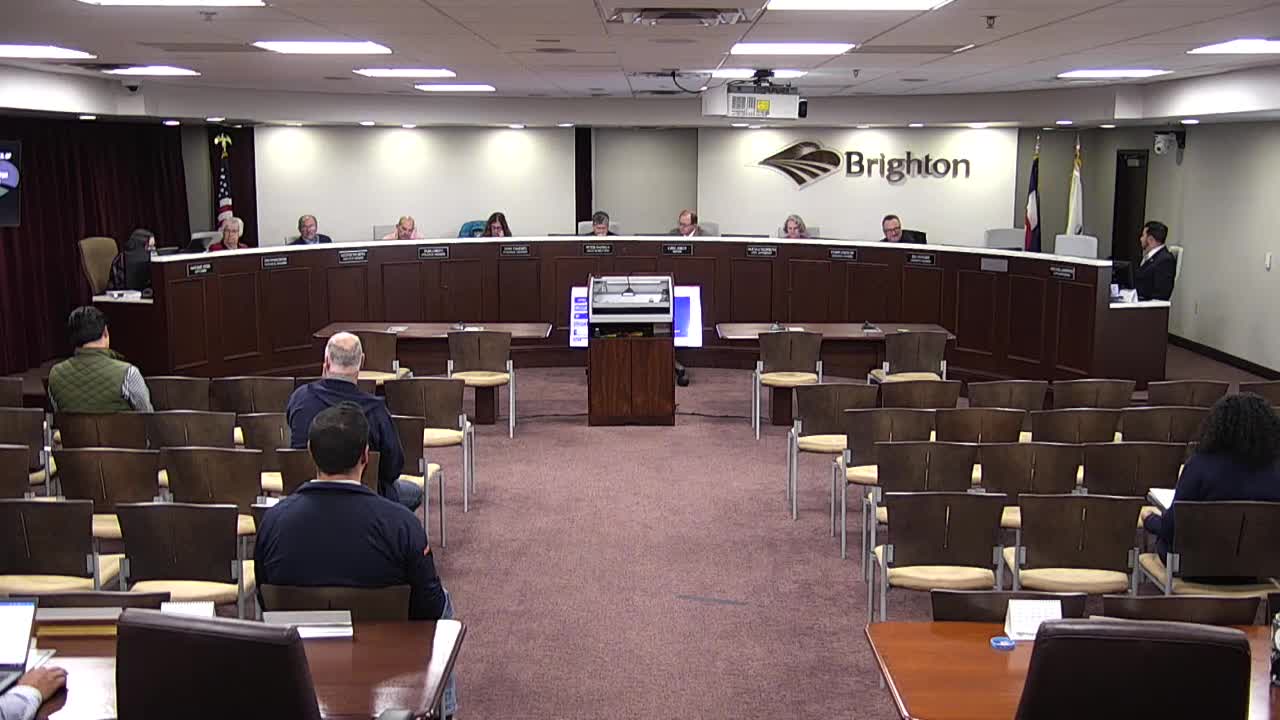
Brighton City Council on Oct. 7 approved on first reading amendments to the city’s Land Use and Development Code that define and regulate "natural medicine" uses — including supervised healing centers and cultivation/manufacturing/testing facilities — and amended staff’s draft to remove a clause that would have excluded rideshare services and taxis from acceptable safe-ride options after sessions.
The ordinance change, introduced by Senior Planner Summer McCann and framed as a first reading, creates explicit local categories for natural medicine healing centers (treated like other forms of medical care) and for cultivation/manufacture/testing facilities (treated as industrial uses). The council voted 7 to 1 to advance the first reading after Mayor Pro Tem Padilla successfully moved an amendment to delete language in Section 4.04(J) that would have barred rideshares, taxis and similar services from meeting the requirement that providers “provide proof of a ride home” for participants.
The changes respond to Colorado voter-approved and legislative actions that opened the way for regulated natural-medicine activity statewide. McCann told council that, following state law, Brighton cannot ban the uses outright but may regulate their time, place and manner. “They are not retail. It’s only a service,” McCann said of healing centers, distinguishing supervised treatment from retail marijuana operations. She added that the state issues facilitator licenses and that the city will verify licensing during the local business‑license review process.
Why this matters: the amendments set where and how new natural‑medicine facilities can operate in Brighton and add local controls intended to limit land‑use conflicts. Healing centers would be permitted where medical care already is allowed and be subject to normal business hours and a requirement to ensure participants have a safe ride home. Cultivation, manufacturing and testing facilities are proposed by right in industrial districts and as conditional uses in certain commercial/ business park districts.
Key details and council debate
- State framework and local limits: McCann summarized state developments, including Proposition 122 (decriminalization) and subsequent state legislation that created categories for natural‑medicine businesses and allowed local governments to regulate time, place and manner. She said Brighton is adopting the 1,000‑foot state buffer from schools and childcare facilities as required by state rules.
- Safe-ride provision and amendment: The staff draft required healing centers to ensure participants have a “safe ride home” and originally listed exclusions — specifically naming rideshare services and taxis as ineligible. Mayor Pro Tem Padilla moved to remove the exclusions and made the requirement read simply that facilities “provide proof of a ride home from sessions,” omitting the list of excluded transport modes. Council Member Fiddler seconded the amendment. Padilla said he did not want the city to preemptively disqualify transportation options that some patients rely on.
- Business licensing and enforcement: McCann said Brighton will enforce the requirement through the city’s business‑license review; applicants will sign an acknowledgement form specifying which transport options the city deems acceptable. She said facilitator licenses are issued by the state and that the city will check state licensure when reviewing local business licenses. McCann also said facilitator licenses are valid for two years.
- Other council questions and clarifications: Council Member Taddeo asked whether the city could ban the uses; McCann replied that the uses are already permitted by state law and cannot be outright banned by the city. Council Member Green asked who verifies state certification; McCann said that local business‑license review will include verification of state facilitator credentials. Planning Commission unanimously recommended approval on Sept. 11, 2025; staff told council there were no formal public comments before the hearing.
Next steps and legal status
Council approved the ordinance on first reading, as amended. The motion to advance the first reading passed 7 to 1; the roll‑call in the meeting record did not identify the dissenting member. Because this was a first reading of an ordinance, a second reading and formal adoption are required before the code changes take effect.
What the ordinance would do if adopted
- Add definitions in Article 11 to identify natural medicine healing centers and natural medicine cultivation/manufacturing/testing facilities. - Treat healing centers as a form of medical care and allow them where medical care uses are permitted (per the city’s use table), subject to the city’s business‑license review and the city’s safe‑ride requirement (now without expressly excluding rideshare/taxi). - Create a new use category for cultivation/manufacturing/testing that is allowed by right in industrial zones and by conditional use permit in specified commercial/business park zones. - Adopt the state‑required 1,000‑foot buffer from schools and childcare facilities.
Quotes (selected)
“They are not retail. It’s only a service,” Senior Planner Summer McCann said of natural‑medicine healing centers.
“I would like to move 6A, but remove the requirement for a that excludes rideshare services, taxis and other similar forms of transportation,” Mayor Pro Tem Padilla said when offering the amendment that council adopted.
Meeting context and public input
Planning staff reported no formal public comments filed before the hearing. The Planning Commission unanimously recommended approval at its Sept. 11, 2025 meeting. Staff said the proposed language implements state requirements while creating local time‑place‑manner controls and clarifying where the different uses are permitted.