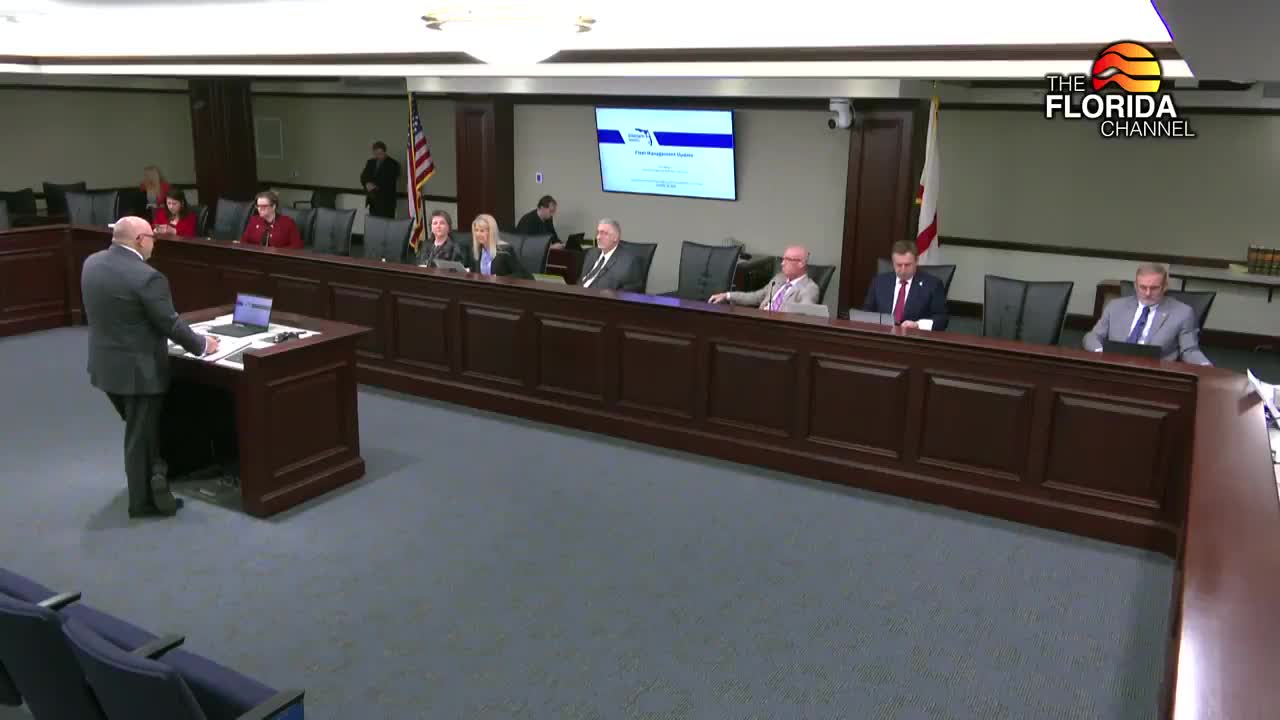
Department of Management Services outlines steps after Auditor General fleet audit; requests telematics funding
Loading...
Summary
DMS told the committee it has addressed nine of ten audit findings from the Auditor General's 2025 fleet management audit and is seeking funding for telematics and centralized procurement to improve asset tracking and reduce manual data errors.
The Committee on Governmental Oversight and Accountability heard a presentation from the Department of Management Services about its response to the Auditor General's operational audit of the state fleet management program (report 2025-1096).
A DMS representative identified as Mr. Berger told the committee the statewide fleet-tracking system currently records about 27,000 assets and is managed by a small team. Berger said nine of the audit's 10 findings have been addressed with actions that do not require additional funding; two items require legislative budget requests for funding to complete.
DMS has completed two statewide physical inventories (April and July 2025) to reconcile assets, Berger said, and reported that earlier discrepancies were largely the result of manual data entry across multiple systems. The audit found 2,279 records that did not match between the state's accounting/property inventory system (referred to in the hearing as "Flare") and the fleet system (FleetWave). Berger explained those mismatches stem from manual entry differences (for example, inconsistent vendor or model spellings) and said automation via telematics would provide a one-to-one VIN match and capture mileage, fuel purchases, maintenance and location data directly from vehicles.
Berger described two primary funding priorities DMS submitted as legislative budget requests: (1) an enterprise telematics asset-tracking system that would automate vehicle identification and operational data for sedans, SUVs and light trucks; and (2) greater centralization of state vehicle procurement to leverage scale (DMS estimates the state purchases roughly 2,000 vehicles annually across many entities).
Committee members asked about implementation timelines, system generations and access controls. Berger said FleetWave is implemented and functioning but relies on agency manual data entry; he described prior systems dating to 2012 and said FleetWave has been in place since 2021. On access control issues raised in the audit, Berger said DMS has taken steps to stop access promptly when employees depart and is coordinating with agencies to improve that process.
The presentation included no formal vote. Committee members thanked presenters and discussed the tradeoffs between centralized oversight and agency-level operational control of vehicles.