Get Full Government Meeting Transcripts, Videos, & Alerts Forever!
Get email alerts on the Stormwater Fee topic
No spam. Unsubscribe anytime.
Laramie council suspends surface‑water fee collections, opens 120‑day review after heavy public turnout
Summary
The Laramie City Council voted late Tuesday to immediately suspend collection of the city’s newly adopted surface‑water utility charges and to open a 120‑day review of the program, saying it would use the pause to address community concerns about fairness, billing accuracy and business impacts.
The Laramie City Council voted late Tuesday to immediately suspend collection of the city’s newly adopted surface‑water utility charges and to open a 120‑day review of the program, saying it would use the pause to address community concerns about fairness, billing accuracy and business impacts. The council also advanced, on first reading, an ordinance to repeal Laramie Municipal Code chapter 13.80 so the body can consider a replacement if the review does not produce an acceptable revision.
The suspension resolution, introduced by Councilor Bowling, passed unanimously as amended; the ordinance repeal on first reading, moved by Councilor Newman, passed 6‑2 (one council member absent). The suspension immediately halted further billing and directed staff to present options and data for reconsideration of credits, appeals and fee structure during the 120‑day period.
Why it matters: City staff told council the community faces recurring flooding and undersized storm‑water infrastructure and that the adopted fee structure was intended to create a stable revenue stream for multi‑year capital and maintenance work. Many residents and business owners said the bills they received were unexpectedly large, that the impervious‑area calculations and appeals process were confusing or inaccessible, and that the fee would disproportionately affect small businesses and some homeowners.
Staff briefing and financial context Director of Public Works (presenting) summarized the technical case for a dedicated funding source: "We have a problem. Right? Historic repetitive failure of the storm water system," noting pockets of undersized drainage, repeated impacts to properties and water‑quality concerns. Staff said prior studies and projects trace back many years; the City Manager and finance staff presented modeling showing most residential parcels would be charged modest monthly amounts while a smaller set of large parcels would pay significantly more.
City staff gave these key figures: the billing model covers 10,002 parcels; 7,813 are residential and 2,189 non‑residential. Staff reported that about 91% of residential parcels would pay $25 or less per month under the adopted structure, while fewer than 1% of residential parcels would pay $100 or more. For nonresidential parcels, staff said roughly 13% of nonresidential parcels would pay $100 or more per month under the adopted schedule. The city also reported it had set aside $5 million of local funds to seed surface‑water work and had been pursuing grants and loans (staff said another $10 million was expected from outside sources). The city manager and finance director warned that property tax or sales tax would not create a direct nexus between use of the storm‑water system and payment: they characterized user fees as the most equitable method to match benefit and charge.
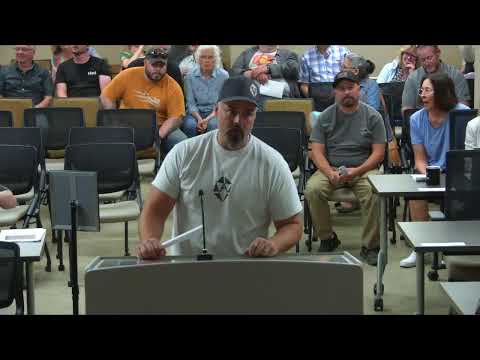
Public testimony and council concerns More than two dozen speakers addressed the council on the surface‑water items. Supporters of a funding source — including nonprofits and several residents in flood‑prone locations — said repeated cleanups and property damage create ongoing costs that need a stable funding mechanism. Sarah Warren, a resident, told the council, "there's a cost to not managing stormwater, and that cost is now being disproportionately paid by only 1 group of city residents."
Opponents and many business owners described "sticker shock" at the initial bills. Several told the council the impervious‑area mapping used to calculate charges appeared incorrect for some parcels and that the appeals process would be difficult for people who are not computer‑savvy. Small business owners warned the fees would be passed on to customers or would make some operations financially untenable; one business owner described a potential bill increase of several hundred dollars a month. Others criticized the timing and community outreach used before the code went into effect.
Council directions and staff limits Council approved an amended suspension resolution that: (1) halts fee collections and applies credits so customers are not back‑charged while council reviews alternatives; (2) directs staff to produce options for fee structures and to present data on properties charged the highest fees; and (3) continues certain time‑sensitive grant or construction activities identified by staff (staff asked for a limited set of work — such as a CIPP lining contract and a pending NRCS grant application — to continue because stopping them would risk losing grant funding or delay critical repairs).
The council also placed a number of previously authorized storm‑water contracts and bid preparations on stop‑work orders while the review proceeds; the city manager told council that pausing work this fall would likely push many construction projects into 2027–2031 if the pause continues.
What the council voted - Suspension resolution (amended): passed unanimously (8‑0, 1 absent). Council directed staff to return with options for fee adjustments and additional data during a 120‑day suspension. - Ordinance (first reading) repealing LMC chapter 13.80: passed on first reading 6‑2 (1 absent). The repeal will require additional readings; councilmembers said advancing first reading would preserve options while the body works through amendments and outreach.
Where it goes from here Councilors asked staff for clearer parcel‑level data, a simpler appeals process and alternative fee schedules (including tiered rates and exemptions or caps for small businesses and low‑income homeowners). Several councilors said they wanted more outreach into neighborhoods such as West Laramie and more explicit accounting of how previously committed local funds and potential grants would be used.
Councilors and staff set a 120‑day window for the review established by the suspension vote. If councilors cannot reach agreement on a revised fee structure, the council retains the option to advance repeal and consider alternative funding approaches, though several members said they preferred using the review period to craft a revised, more equitable fee instead of immediately scrapping the program.
Ending note The meeting extended into late evening as the council moved through other business. The surface‑water debate drew the largest turnout and most sustained public comment of the night, and councilors said they would continue work sessions and outreach as they try to reconcile technical needs with community affordability concerns.