Get Full Government Meeting Transcripts, Videos, & Alerts Forever!
Get email alerts on the Budget And Finance topic
No spam. Unsubscribe anytime.
Zionsville parks board adopts financial sustainability policy with equity section; board debates fee-recovery targets
Summary
The Zionsville Parks and Recreation Board approved Resolution 2025-03 establishing cost-recovery tiers and a goal to recover 50% of recreational program costs by 2030; board members pressed staff on timing, flexibility and the size of reserves.
The Zionsville Parks and Recreation Board on Oct. 8 adopted Resolution 2025-03, a financial sustainability policy that establishes cost-recovery tiers for parks and recreation services and adds an equity-and-access provision to ensure programs remain accessible to residents regardless of income or ability.
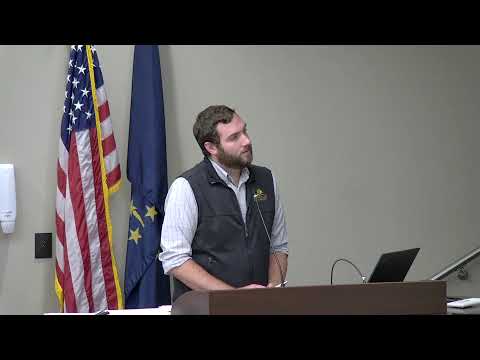
Jared (last name not specified), Parks Superintendent, said the policy was compiled from examples nationwide and National Recreation and Park Association (NRPA) data and was streamlined to reflect Zionsville’s lack of indoor and aquatic facilities. The policy sets recovery bands (for example, 0–20%, 50%, 150% and 200% cost-recovery targets for different service tiers) and an aspirational goal to recover 50% of recreational operational costs by 2030. Jared told the board the department currently recovers about 21% of recreation staff costs and that moving toward the stated targets would require incremental fee increases and five-year reviews.
Board members asked several detailed questions. Chad Dilley and other members pressed whether the policy should be a formal policy or an operational procedure, expressing concern that formalizing price-recovery targets could reduce future flexibility. Jared said the policy was intended as a “guiding compass” to ensure continuity if staff or board membership changes and that the policy would be revisited every five years. Questions also focused on how the policy’s percentages translate into actual reserve goals; Jared said the department’s tax-based general fund (Fund 02/02/2004) has cash reserves historically above the guideline and stated the policy seeks to maintain a minimum 40% operational reserve for unforeseen circumstances.
Board members discussed practical effects: some programs, such as summer camps, are already meeting higher recovery rates; others (community-benefit events) would remain low- or no-cost. Jared said the department would seek partnership funding, foundation support and scholarships to preserve access while increasing cost recovery. The board voted to adopt the resolution; a fee schedule reflecting the new targets is expected to be presented next month if the policy is approved.
Members said they intend to monitor market responses to incremental increases and to use outreach and partner subsidies to reduce “sticker shock.” The policy document includes language on fee assistance, tiered pricing and scholarships for qualified residents.