
Annapolis council approves rewritten Comprehensive Plan implementation after marathon debate over height, density and transit
Summary
After more than two hours of public testimony and extended debate, the Annapolis City Council approved amendments to implement elements of the Annapolis Ahead 2040 comprehensive plan that adjust density rules, add community benefits and place new transportation expectations on large planned developments. Council removed a proposed block of text on
The Annapolis City Council voted Tuesday to adopt an amended ordinance implementing parts of the Annapolis Ahead 2040 comprehensive plan, approving changes that allow higher densities in specified planned developments and add binding community-benefit and transportation expectations for larger projects.
Supporters said the package ties new housing to transit and on-site community benefits; opponents said the changes risk spot zoning at City Dock and could open the door to taller structures and private gain without sufficient review. After multiple amendments and an extended floor debate, the council approved the ordinance as amended.
The measure initially drew the meeting's largest public turnout and the longest debate. Dozens of residents, historic preservation advocates and neighborhood leaders told the council they feared spot zoning and increased height or bulk at City Dock would harm the city's historic character. Multiple speakers urged the council to send the draft back for further study and to involve the Historic Preservation Commission. Preservation groups and residents pointed to the proposed City Dock height/bulk adjustment as a narrow change that would benefit particular properties and expressed concern about legal vulnerability; one speaker argued the measure might violate Maryland's prohibition on special legislation for private benefit.
Council members and staff spent the bulk of the debate negotiating amendments intended to limit visual impacts, require setbacks and screening, clarify green-roof and accessory-structure rules, and add a community-benefit agreement requirement for projects that seek density bonuses. The approved language requires larger planned developments seeking increased density to negotiate binding agreements that may include affordable housing, local hiring, grocery or community space, transit pass subsidies or other contributions intended to reduce car dependency and support neighborhood services. The council also approved a provision to allow tax-increment financing districts to be created in the future to capture new tax revenues and help pay for infrastructure tied to denser developments.
Planning staff and multiple council members said the changes aim to implement the council-adopted comprehensive plan by creating a code mechanism to encourage mixed-use development tied to measurable community benefits. Staff told the council that projects would still need standard planning and Historic Preservation Commission review, and that the new mobility and monitoring requirements would be scaled to project size and be subject to implementation rules developed by staff.
Opponents, including residents from Ward 1 and the president of Historic Annapolis, said the dock-area height language should be removed and returned to the next administration for fuller community and Historic Preservation Commission review. They urged caution about allowing even modest rooftop or mechanical increases on parcels that face public water and view corridors.
Council members amended the ordinance repeatedly on the floor to narrow scope and add guardrails: they tightened setback requirements, clarified that enclosed rooftop structures may not include habitable dining/bar areas (stairwells and elevator lobbies excepted), expanded green-roof definitions, and required more detailed applicant demonstrations of minimized visual effects. One amendment limited monitoring and reporting requirements to larger projects and changed some annual reporting to biennial reporting to reduce administrative burden.
The council also debated and then adopted a transportation-oriented amendment that ties density bonuses to agreed mobility commitments. Several council members stressed that the language as adopted is an initial framework that will require further refinement and directed staff to return with implementation procedures that would include the procedural steps for developer/community benefit agreements. Staff warned those implementation details will require additional administrative work and clarified that some enforcement, monitoring and reporting functions could require staffing adjustments.
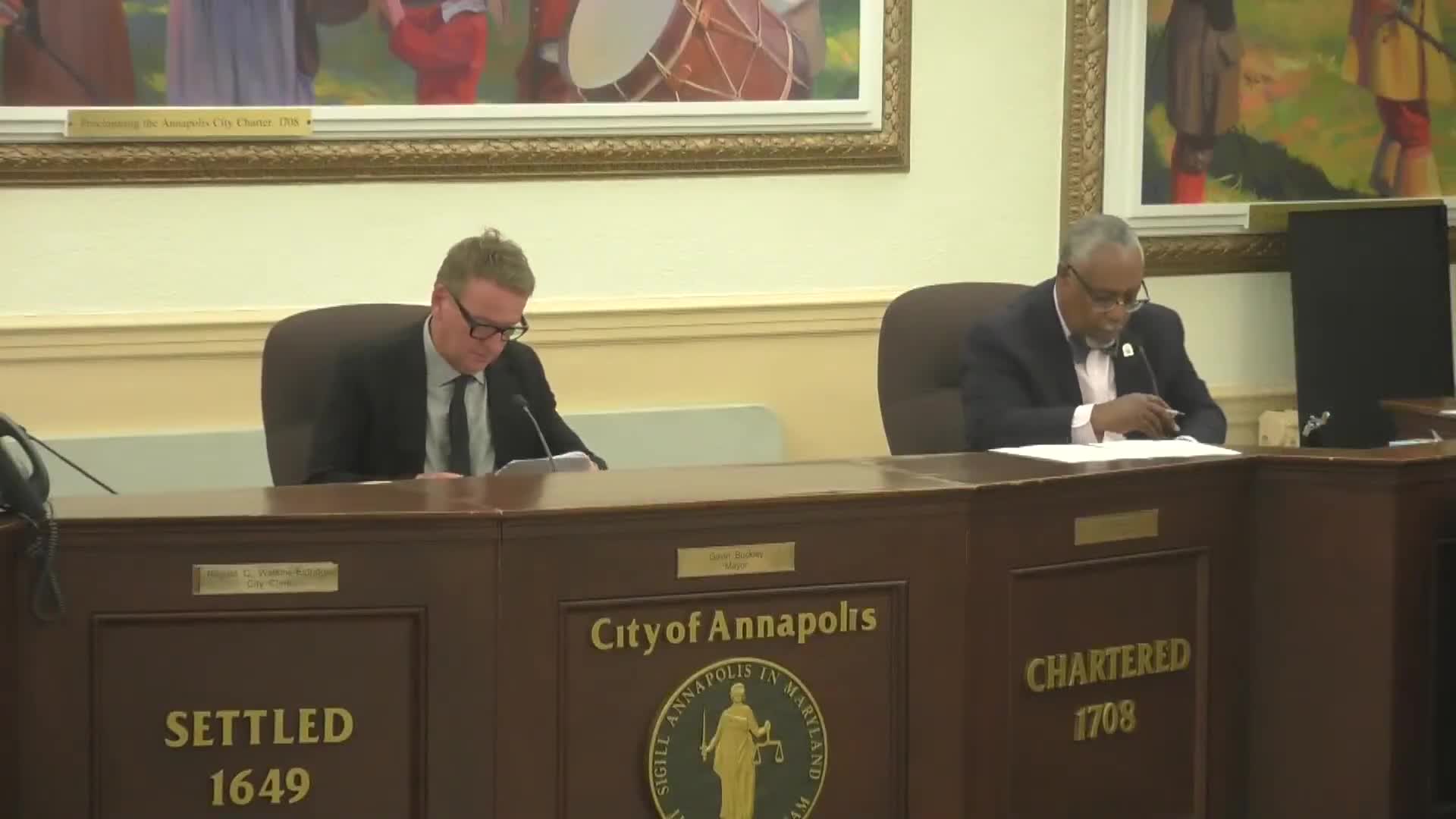
The vote came after an initial failed roll call and subsequent reconsideration; the ordinance passed as amended on final vote. Mayor Buckley and a majority of the aldermen voted to adopt the changes; a minority voted no, citing concerns about process, specificity and the potential for piecemeal rezoning in historic areas.
The ordinance's passage will allow some developers to seek higher residential densities in exchange for community benefits and transit-focused mitigation, but projects will still need planning commission and historic-preservation reviews. Council members and staff emphasized this is not an immediate green light for taller buildings without additional approvals.
Voices in public comment also raised separate but related concerns: downtown flooding and a multi-year pump failure at City Dock; repeated resident complaints over unpermitted structures and a lack of enforcement; and questions about whether future projects would actually fund the transportation improvements the amendments contemplate. Council members said they expect follow-up briefings from staff and explained implementation will include additional steps to define and administer mobility commitments and monitoring.
Votes at a glance
- O-14-25, Implementation of Annapolis Ahead Comprehensive Plan 2040 — Passed (as amended). Outcome: approved. Vote tally: roll call recorded; individual vote record available in city minutes. Notes: Council adopted multiple floor amendments clarifying limits on rooftop enclosures, setbacks, green-roof standards and community-benefit requirements; staff to draft implementing procedures.
- Related votes and outcomes recorded elsewhere on the agenda (see Votes at a glance article itemization): several charter amendments, ordinances and resolutions were acted on during the same meeting (details recorded separately).

Create a free account
Unlock AI insights & topic search