
Middletown High highlights career pathways in broadcast, robotics, aerospace, agriculture and the arts
Get AI-powered insights, summaries, and transcripts
Subscribe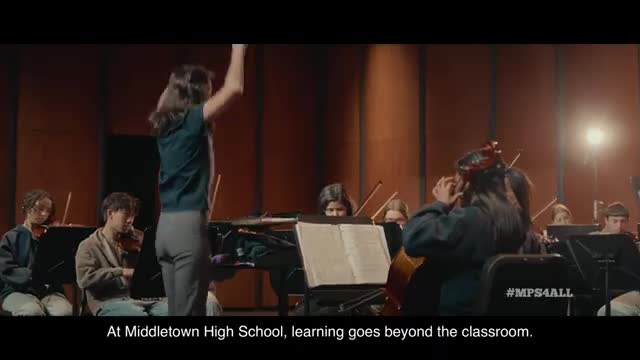
Summary
Middletown High School presented an overview of its career-pathways programs, describing hands-on classroom experiences in broadcast television, robotics, aerospace/drone safety, agriculture, music and visual arts and noting college credits and FAA Part 107 preparation available to students.
Middletown High School showcased its career-pathways programs in a recorded presentation that described hands-on learning opportunities in broadcast television, robotics, aerospace and drone safety, agriculture science and technology, music and visual arts.
School presenters said the broadcast television program runs a student-led newscast each morning that reaches every classroom, and that students handle production roles including cameras and the video switcher. A narrator in the recording said, "From anchoring the news to editing with professional software, they create daily broadcasts in a fully equipped modern TV studio." Student speakers described the class as highly enjoyable and creatively freeing: Student 3, a Middletown High School student, said, "It's the most fun I've ever had in a class ever in my entire school career. Through this program, students get so many opportunities like going on big trips, working with industry professionals, and starting their own podcast."
The robotics and engineering pathway was presented as competitive and travel-oriented. The recording describes the Blue Dragon robotics team and says students build and program robots "designed to compete on a real arena floor," and that members have taken part in regional and national tournaments. A student (Student 4) said the class teaches methods for breaking down complex problems: "They break them down, dig deep into, you know, the guts of it." Students also noted learning project-management skills.
The aerospace and drone safety course was described as including drone flight training, FAA Part 107 exam preparation and work with metalworking machines such as vertical mills and lathes. The narrator said the course "specifically prepares students for the FAA part 107 exam, giving them the opportunity to earn a commercial drone pilot license." One student credited the program with preparing them for an aviation career: Student 3 said the program "has been a really big stepping stone for me, career wise. I am now going into the Air Force to further my career in aviation." The recording also mentions the Redbird flight simulator as part of the hands-on equipment.
In agriculture science and technology, the recording describes on-campus animal care, college-level course opportunities and an experiential waterfowl habitat project in which students build duck nesting boxes and monitor them with embedded cameras. Students identified animals used in class—"guinea pigs, sugar gliders, we have mini horses, we have goats"—and one student noted the class had already provided about nine college credits.
Performing and visual arts pathways were presented as fostering collaboration and skill development across band, choir, orchestra, painting, sculpture and photography. Students said the programs give them opportunities to learn multiple instruments and prepare for postsecondary studies in fields such as graphic design.
The recording closed by framing these offerings as career and college preparation: "These pathways aren't just classes. They're experiences. They build confidence, spark curiosity, and show students what's possible," the narrator said.
The presentation is a program-level overview and did not include formal board actions, funding line items, or dates for new initiatives. It emphasized program features, student experiences and equipment used in coursework.