
Interim city attorney outlines land‑use process, 120‑day deadlines and new state housing laws
Get AI-powered insights, summaries, and transcripts
Subscribe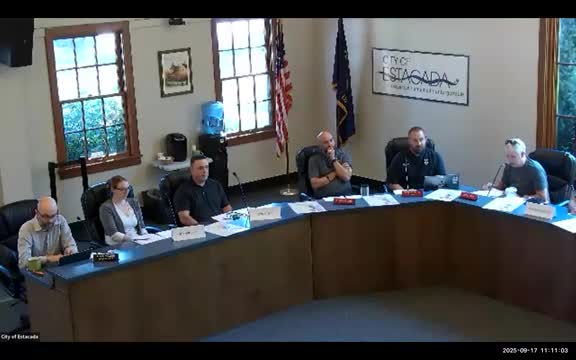
Summary
At a Planning Commission meeting, interim contract city attorney Carrie Richter gave a Land‑Use 101 presentation explaining legislative vs. quasi‑judicial reviews, ex parte rules, public‑records and meetings constraints, the 120‑day decision clock, and recent Oregon legislation affecting housing review.
Carrie Richter, the interim contract city attorney, gave a roughly hour‑long Land‑Use 101 presentation to the Estacada Planning Commission, reviewing the planning commission’s role, public‑meeting and public‑records obligations, ex parte contacts, and several recent state bills that change how cities must handle housing applications.
Richter said the city implements state land‑use law through its comprehensive plan and municipal code and that planning commissions most often handle two decision types: long‑range (legislative) matters and quasi‑judicial development reviews. She explained that quasi‑judicial reviews — such as conditional‑use permits, land divisions and some design reviews — require extra due process because they affect private property rights.
Richter reviewed key timelines: staff has 30 days to deem an application complete; once complete the city must make a local decision within 120 days, a deadline that can expose the city to court action and attorney‑fee liability if missed. She also said notice rules are set by state minimums (100 feet) though Estacada’s comprehensive plan calls for 300 feet on zone changes and the city is considering code updates.
On procedural fairness, Richter stressed the obligation to disclose and, when appropriate, recuse for ex parte contacts, bias or pecuniary conflicts. She warned commissioners that serial communications across members can inadvertently create a public‑meeting violation; the Oregon Government Ethics Commission has recently taken a stringent view. Richter also explained that public‑records duties extend to emails, texts and notes taken during meetings.
Richter summarized recent state legislation affecting local review of housing and development: Senate Bill 1537 (expanded mandatory adjustments for housing applications, including setback, landscaping and height adjustments), Senate Bill 974 (waivers of certain design standards for developments above defined thresholds and a new “shot clock” for engineering review), and House Bill 2138 (changes to middle‑housing approvals and related procedural timelines). She noted some adjustments are temporary (for example, waiver provisions that sunset) and that some state requirements cannot be overridden by local code.
Commissioners asked practical questions about notice radii, when to disclose employment ties (a commissioner employed by the district was advised to disclose employment and state their ability to decide based on the criteria), conflict of interest thresholds, and how to handle evidence during hearings. Richter advised that commissioners should surface personal expertise or factual knowledge while the record is open so parties may respond; personal, undisclosed evidence cannot be raised during deliberation.
Richter closed by offering follow‑up training (Land Use 102 etc.) and encouraging commissioners to contact staff with questions ahead of hearings to make meetings more effective.