Get Full Government Meeting Transcripts, Videos, & Alerts Forever!
Get email alerts on the Opioid Settlement topic
No spam. Unsubscribe anytime.
Commissioners weigh Narazene church renovation against recovery court funding from opioid settlement dollars
Summary
Officials debated whether restricted opioid settlement funds should pay to renovate a county-owned church for opioid-related services or be used to fund a newly proposed recovery court. Commissioners discussed receipts and estimates; staff said restricted receipts so far are limited and a resolution to allocate funds could be prepared.
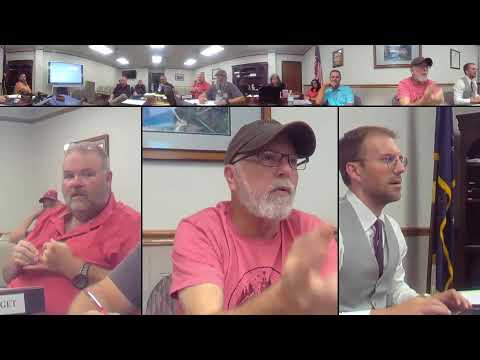
Scott County leaders debated using opioid settlement funds Oct. 7 to renovate a county building (the Nazarene church) or to fund a recovery court program created by the judiciary.
Jennifer (county staff) told the joint session that receipts so far this year are lower than in prior years and that the county had one restricted opioid receipt in August (about $9,232.09) and unrestricted opioid receipts showing roughly $35,612. She said overall receipts and timing were uncertain. "We've had 1 receipt in there ... $9,232.09 came in in August," she said, warning the boards that projected opioid money has been lower this year and that the timing of additional receipts is not guaranteed.
Judge Mount had requested roughly $30,000 to start a recovery court program that would serve opioid-related cases. Supporters said a recovery court does not necessarily require additional prosecutors, defenders or judges; it diverts eligible existing cases into a treatment-focused docket. One commissioner said the church renovation should come first, citing the building's need and its potential to serve youngsters and program participants.
County staff displayed an earlier estimate (from an August 2022 estimate circulated by the state) that Scott County's restricted abatement share could be about $98,863.02 and an unrestricted estimate of roughly $11,257.13 for 2025 under that earlier estimate; staff cautioned that actual receipts to date differ and that further settlement payments may change totals.
Why it matters: restricted opioid settlement funds are legally constrained to certain uses related to opioid abatement and treatment. Commissioners must choose which eligible projects to prioritize if receipts are inadequate to cover both the church renovation and a judge's recovery-court request.
What happens next: staff agreed to review ordinances and receipts and to confirm whether restricted and/or unrestricted opioid funds can pay both projects. One commissioner said he would prepare a resolution if staff confirmed funds were available. Staff said they would return with the exact account balances and a resolution for a future meeting if the funds exist.
Ending: Commissioners did not take a final vote Oct. 7. They signaled willingness to prepare a resolution and asked finance staff to verify restricted/unrestricted balances and any previously appropriated commitments before formal action.