Committee approves bipartisan Counter UAS Security, Safety and Reauthorization Act, 60–0
Summary
The committee favorably reported H.R. 5061 to reauthorize and expand counter-UAS authorities for DHS, DOJ and the FAA, including a pilot mitigation program and airport protections; final committee tally was 60–0.
The House Committee on Transportation and Infrastructure unanimously approved H.R. 5061, the Counter UAS Security, Safety, and Reauthorization Act, and ordered the bill favorably reported to the House by a recorded vote of 60–0.
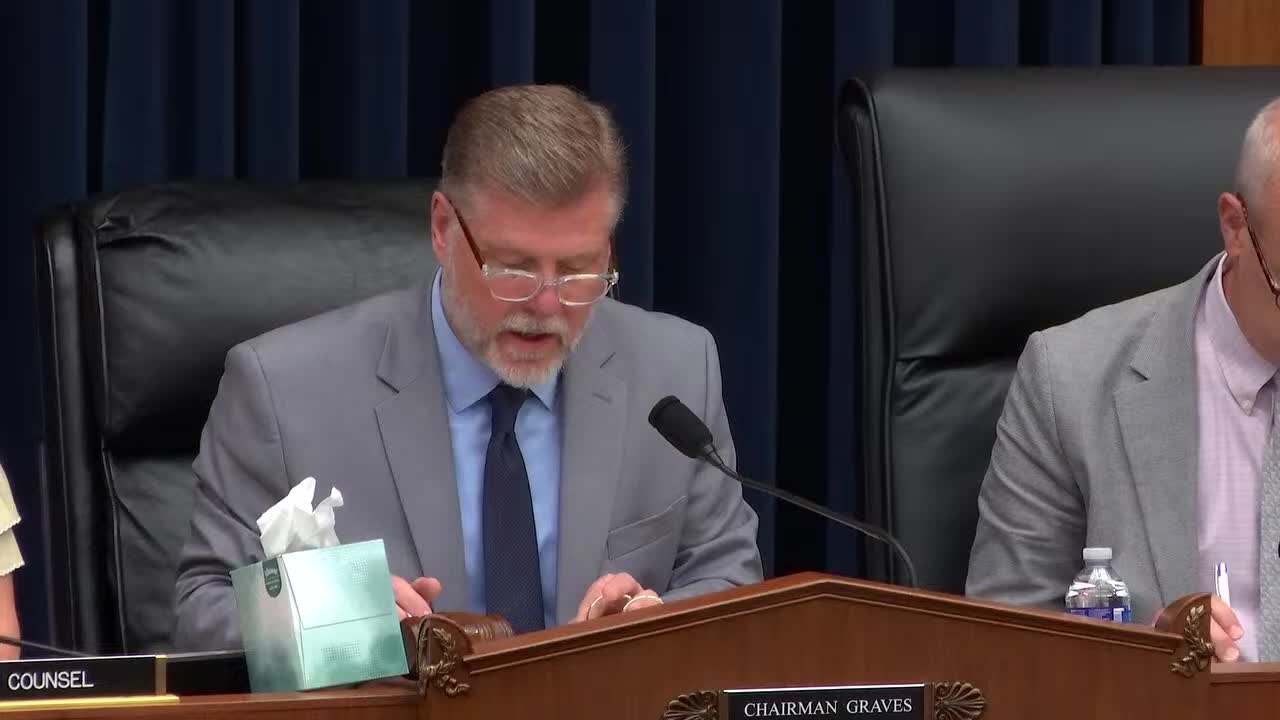
Chairman Graves and Ranking Member Larson framed the bill as the product of tri-committee bipartisan negotiations with Homeland Security and Judiciary. The legislation extends and expands current counter-unmanned aircraft system (UAS) authorities for the Department of Homeland Security and the Department of Justice, grants new authorities and structure to the Federal Aviation Administration, and establishes interagency standards for training and pre-deployment activities for counter-UAS systems.
Key policy elements adopted include authorization for DHS to approve acquisition and deployment of approved counter-UAS systems for law enforcement operating on behalf of covered sites, a counter-UAS mitigation pilot program allowing selected state law enforcement agencies to operate approved mitigation systems at up to four covered sites while providing coverage for an unlimited number of covered events, and protections and procedures tailored to airports including small-hub airports. The manager’s amendment clarified inclusion of small-hub airports, defined airport police roles, allowed public safety agencies to participate in an FAA voluntary verified drone operator program without additional requirements, and permitted training at interim events for World Cup and Olympics coverage.
A floor amendment offered by Representative Burchett that would have allowed private individuals to shoot down drones flying under 200 feet above private property was considered and later subjected to a recorded vote; the amendment failed 26–34. Committee supporters repeatedly stressed the need to balance aviation safety, civil liberties, and public safety. Representative Stauber and others urged expansion of the pilot program in future work, noting the current pilot limits (40 pilot participants referenced in discussion) could leave many local law enforcement agencies without access to mitigation tools.
On final disposition the committee recorded a 60–0 vote to report the bill favorably to the House and cleared staff to make technical and conforming edits before floor consideration.