
Clemmons council debates overhaul of animal and nuisance rules, directs staff to draft revisions
Get AI-powered insights, summaries, and transcripts
Subscribe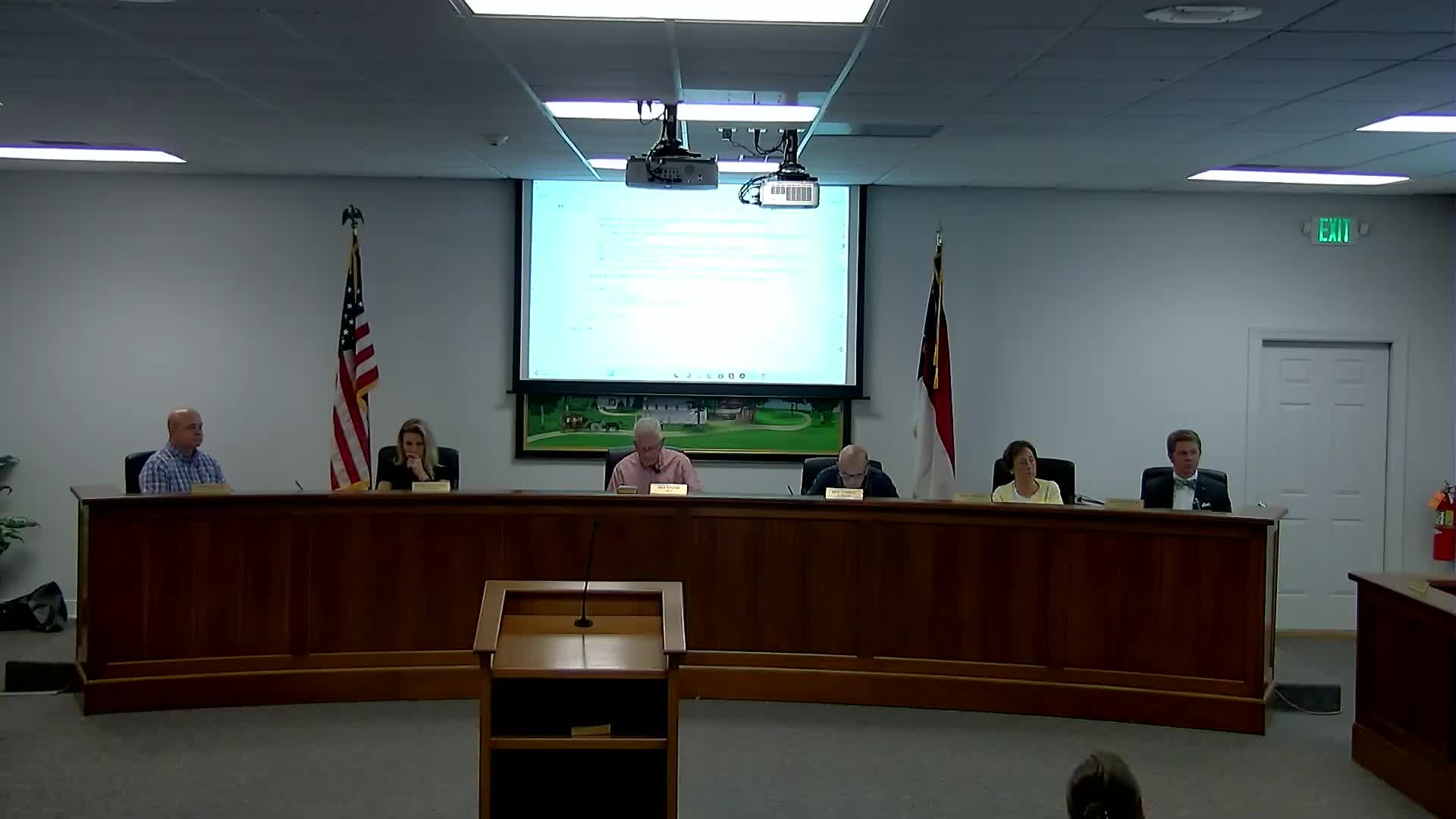
Summary
Council members, the village attorney and planning staff discussed an omnibus approach to animal- and noise-related complaints, directing staff to prepare UDO and nuisance-code revisions and to pursue short-term process changes to improve enforcement.
The Village of Clemmons council spent the bulk of its meeting debating a proposed rewrite of local animal rules and how the village enforces noise and nuisance complaints.
The draft ordinance before the council, labeled Ordinance 2025-O-5, would leave Forsyth County Chapter 6 (Animals) in place while adding village-specific provisions in Chapter 90 and placing setback and lot-size rules in the Unified Development Ordinance. "Regulating animals is an optional power," Village attorney Bernie Benshaw said, adding that the village originally adopted Forsyth County's ordinances when it incorporated in 1986 and has amended only a few sections since.
Council members expressed frustration that existing county ordinances and the county noise ordinance have not produced enforceable results for residents. One council member described two recent complaints — involving a dog and backyard fowl — that residents said went unresolved, and asked whether the village can take more immediate action.
Benshaw said the draft tries not to duplicate the county code and noted three separate documents council must consider: Forsyth County Chapter 6, the village's Chapter 90, and the UDO. "There will be three, count them, three ordinances to look at," he said. He recommended placing technical rules on setbacks and lot sizes in the UDO because that code already governs land-use standards.
On enforcement, Benshaw and councilmembers discussed civil versus criminal penalties. Benshaw said civil penalties are easier for the village to pursue without involving the district attorney and that criminal penalties require concurrence from the district attorney. He warned criminal enforcement is harder and that the county sheriff's office has urged against making penalties criminal because of limited DA resources.
Forsyth County law-enforcement representatives—identified in the meeting as a sergeant and a deputy—explained evidentiary limits for both civil and criminal cases. The sheriff's office can enforce misdemeanor noise violations only when deputies witness the conduct. Absent a deputy, a complainant must pursue magistrate or court action, the deputy said. "If the resident isn't willing to come out and testify, then...we're not changing anything," one councilmember summarized of current practice.
Council members and staff agreed on a two-track approach: (1) a near-term review and cleanup of the nuisance code and procedures to improve the village's immediate ability to respond to complaints, and (2) a longer-term update to the UDO to add setbacks, allowable numbers of certain animals, and other land-use controls. Planning staff and the attorney said the UDO approach takes longer because it is tied to zoning districts, while nuisance-code changes can be drafted more quickly.
Council directed the village attorney and planning staff to prepare revisions and present drafts at upcoming meetings. Council noted a tentative schedule: review of suggested UDO items to occur in upcoming meetings with a draft nuisance-code revision to be ready by the last meeting in November for council discussion. The council also directed the manager to coordinate with the sheriff's office to identify any procedural changes that could improve the likelihood of timely enforcement.
Council members cautioned staff to avoid drafting an overly broad or unworkable code. "We don't want to open a Pandora's box" by trying to regulate every possible noise source, one councilmember said. Staff responded that most municipal codes use a combination of quiet-hour rules, enumerated nuisance examples (barking dogs, persistent roosters, loud parties) and a residual standard for other loud noises.
The council did not adopt new ordinance language at the meeting; instead it asked staff for revised drafts and for presentational materials that align the county code, the village Chapter 90 draft, and the UDO changes.
Ending: Council members agreed to supply individual written comments on the draft to the attorney and to reconvene the matter at the agreed timeline. The manager said he would meet with law enforcement to seek process improvements and would return with findings by the assigned deadline.