
Forest Lake EDA weighs RFP for Headwaters 123, pauses major work‑plan changes until council strategic session
Get AI-powered insights, summaries, and transcripts
Subscribe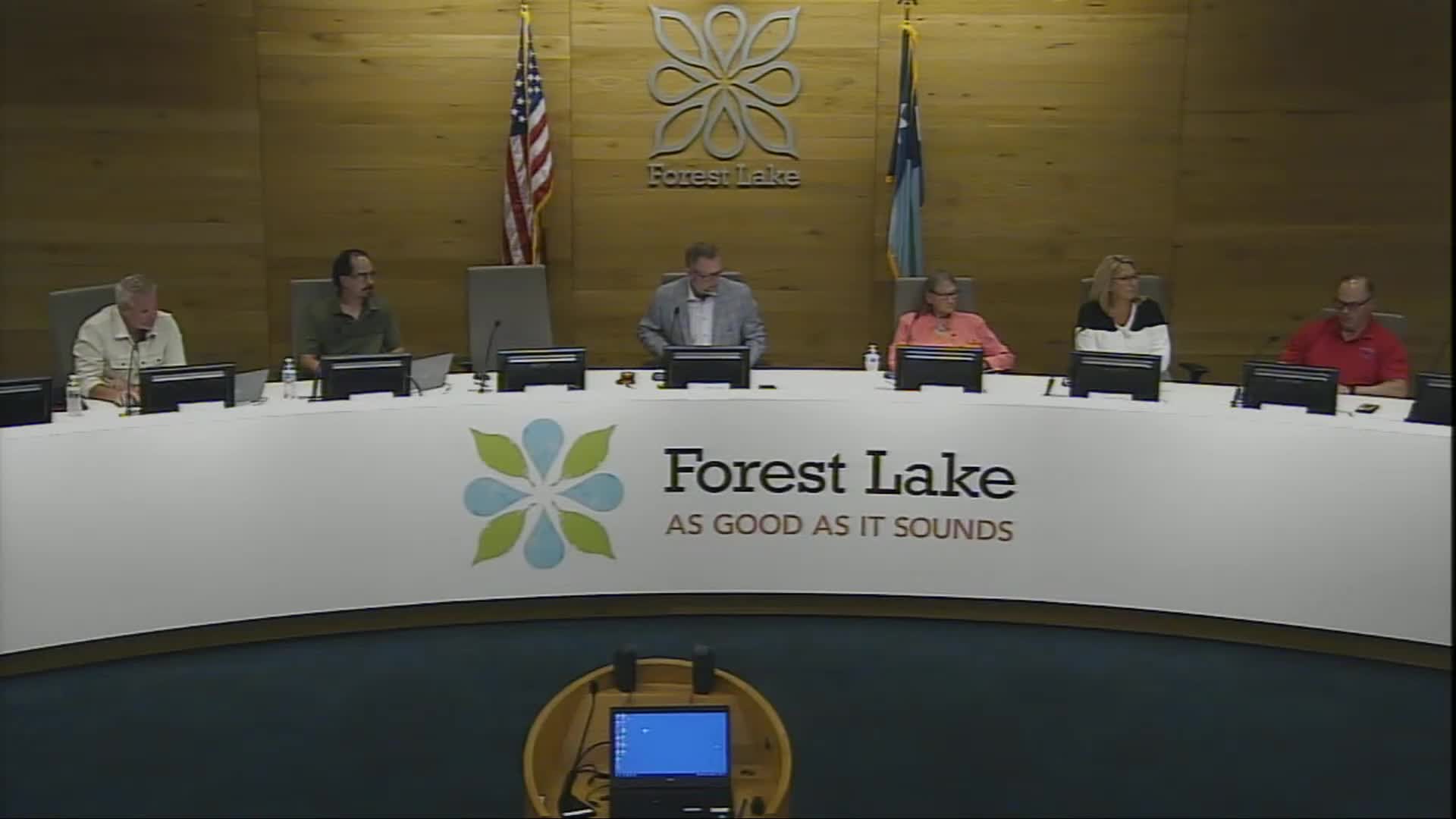
Summary
Members discussed issuing a request for proposals for the city‑owned Headwaters 123 property, staffing capacity to manage an RFP, and several work‑plan updates including broadband, affordable housing dollars and commission turnover. No formal EDA vote to issue an RFP was taken; staff will return with cost estimates and a proposed timeline.
The Forest Lake City Economic Development Authority discussed next steps for the city‑owned Headwaters 123 property and broader EDA work‑plan priorities at its regular meeting. Staff outlined an RFP-based approach to solicit development partners and asked for direction on whether to hire outside help to manage the process.
Abby, EDA staff, told the authority that “the potential purchaser has chosen not to move forward with entering into agreement with the city,” and recommended a request‑for‑proposals process so the city can proactively seek developers. Abby said the RFP process would include a public release, a submission period with Q&A and site visits, a proposal review and interviews, and then selection and negotiations. “That process is likely to take 6 months or more,” Abby said, depending on drafting and response time.
The nut of the discussion was timing and capacity. Several members emphasized waiting for direction from an upcoming City Council strategic planning session later this month so the council’s priorities can guide any EDA work‑plan changes. Abby said staff recommended holding the current work plan over into 2026 and making limited updates after the council’s retreat.
EDA members and staff discussed alternatives and details for an RFP. Abby described typical RFP elements, including sample purchase agreements and “clawback” provisions to require development milestones. She also said the city could hire a third party to draft and manage the RFP to free staff capacity; firms mentioned in the meeting included CBRE and Eller's and Associates as potential consultants. Washington County assistance was also offered: a county representative, Chris, said the county’s CDA could help put together the RFP and share recent examples used by other cities.
Participants discussed what the EDA wants from Headwaters 123. Staff reminded the board that previous concepts had proposed a multiuse approach — business park lots interior to the site, limited retail along the parkway, and potential residential along edges to buffer neighborhoods. Several EDA members said any RFP should give preference to proposals that produce business development and long‑term tax base, and that the city can refuse proposals that do not meet those priorities.
Members raised infrastructure and market considerations. Chris noted an electrical capacity constraint in the area, saying the city previously was told it could access “200 megawatts” but recently was learning available capacity had been revised down, noting figures that had changed “to 2.5 megawatts and then even more recently, 1.5 megawatts,” which he compared to the size of a Costco and a half. He said the constraint affects the feasibility and timing for potential large data‑center users but that utilities are studying upgrades and additional transmission could be possible over time. On realistic timing, Abby estimated that even in a best‑case RFP and agreement schedule, permitting, entitlements and subdivision could push ground‑breaking into 2027.
Staff reported other EDA items related to the work plan: a Southwest area study is under way (grant application submitted), the forgivable loan program has been approved and implemented, and the city is working with Washington County CDA to administer Local Affordable Housing Aid (LAHA) funds. On broadband, Abby said the city fulfilled a commitment to Midco’s border‑to‑border grant and that roughly 250 properties became newly eligible for Midco broadband service, including about 10–12 businesses. The LAHA program was described as having an initial reserve of about $200,000 and a primary focus on owner‑occupied home rehabilitation for households at roughly 80–100% AMI; staff said the CDA will administer the program and return implementation details.
The EDA did not take formal action to issue an RFP at the meeting. Instead staff will: (1) run initial legwork on a draft RFP and cost estimates for hiring a consultant, (2) brief the council at its strategic planning session and report back, and (3) return to the EDA in November with visuals and estimated consultant costs so the EDA can decide whether to proceed and whether to fund outside help. Abby said staff capacity is expected to improve within 60–90 days as recent hires are onboarded, which could affect whether the city handles the RFP internally.
Votes at a glance • Motion to approve the meeting agenda — moved and seconded; outcome: approved (yes:7, no:0, abstain:0). • Motion to approve consent agenda (meeting minutes) — moved and seconded; outcome: approved with one abstention (yes:6, no:0, abstain:1). • Motion to adjourn — moved and seconded; outcome: approved (yes:7, no:0, abstain:0).
The meeting closed with staff noting next steps: staff will compile RFP cost estimates and sample documents, consult with the county CDA and potential consultants, and bring a more detailed RFP proposal back to the EDA after the council’s strategic planning session.