
Miami Lakes task force moves ahead with Oct. 25 Halloween event, seeks sponsors and volunteers
Get AI-powered insights, summaries, and transcripts
Subscribe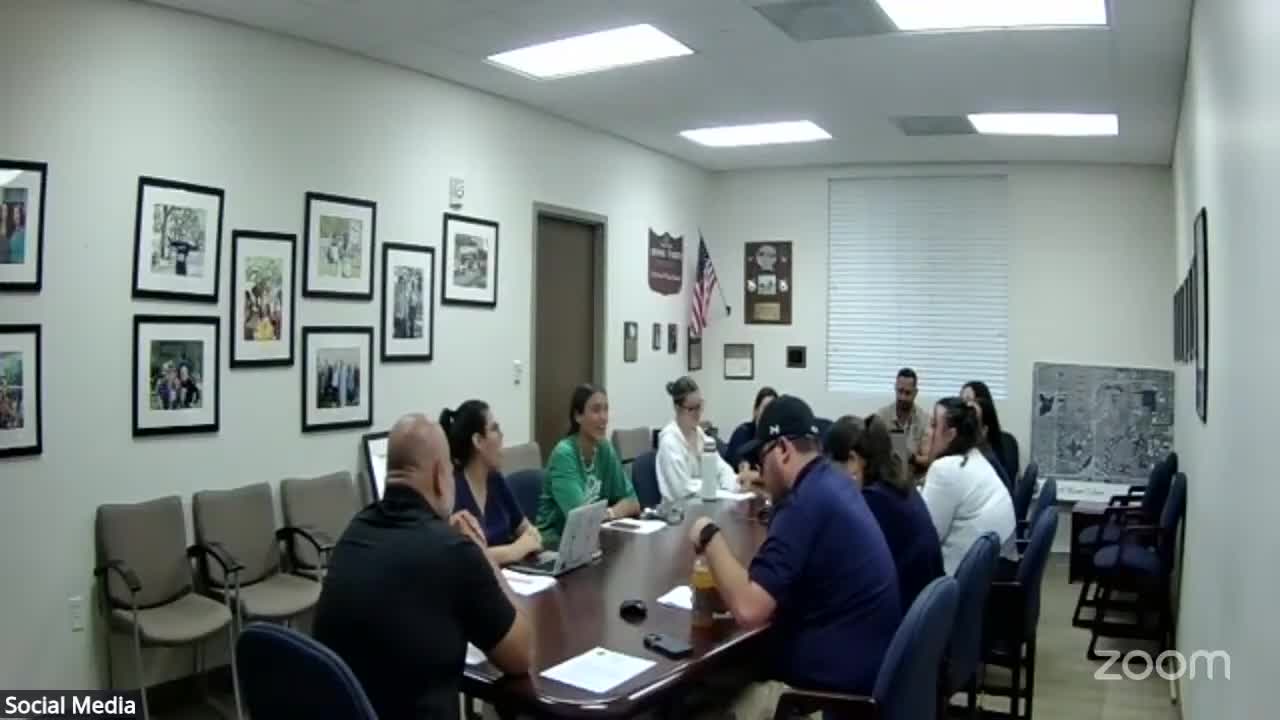
Summary
The Miami Lakes Youth Advisory Task Force voted to continue planning its Halloween event and discussed logistics including a haunted house, trick-or-treat stations, sponsors, volunteer rules and safety measures. The committee said the town council indicated it expects to keep last year’s budget, which takes effect Oct. 1.
The Miami Lakes Youth Advisory Task Force agreed on Monday to proceed with a community Halloween event planned for Oct. 25, with a rain date on Oct. 31, and began assigning logistics, sponsorship outreach and volunteer training.
The committee’s chair, Trevor Rodriguez, said the town council had told the committee “to keep moving forward like we had our original budget from last year,” and noted the council’s budget for the new fiscal year takes effect Oct. 1. Committee members described a program of attractions they want to run if funding holds: a haunted house, a trick-or-treat area, food trucks, a stage and projection screen, and light towers to brighten darker corners of the park.
Discussion focused on practical needs and cost. Members said LiveFX has already been booked for production support, and a committee member said some vendors had provided cost estimates for prebuilt haunted-house elements “in the $5,000–$6,000 range.” The committee talked about dividing the event into sponsored sections — haunted house, pumpkin area, treat stations — and placing sponsor banners around the park.
Volunteers and training were a major part of the discussion. The group reaffirmed a strict attendance and hour-tracking policy: students who sign up must attend the mandatory volunteer training, sign in and sign out at the event, and will not receive hours for partial attendance. The committee discussed issuing colored wristbands or other visible identifiers and providing vests for volunteers. Members proposed a mesh barricade or temporary fencing to create single controlled entrances and exits for the trick-or-treat area to improve crowd flow and safety.
Logistics discussed included power and lighting (committee members said Sunbelt and town resources had been used in the past), staging and projection for sponsor recognition, and whether the community center (Mary Collins Community Center) could be used for storage and setup the week before the event. The committee also discussed food-truck operations and acknowledged that vendors such as the food-truck owner Oscar should not use volunteers for money-handling; volunteers would assist with setup, breakdown and crowd direction only.
Committee members identified sponsorship tiers and outreach strategies (local business banners, school-based sponsor lists and a donation drive at principals’ meetings). Members suggested low-cost activity stations — ring toss, beanbag games, a small maze for young children — to provide a “fall festival” feel if full sponsorship for pumpkins or larger props is not secured.
The task force set planning and walkthrough dates to prepare the event and equipment layout, and asked members to pursue sponsors, box drives for decorations, and school-based candy drives. The chair said he would circulate a sponsorship packet to the committee.
Why it matters: the event has been one of the town’s largest annual community activities; committee members said it requires dozens of volunteers and a reliable sponsorship base to cover staffing, rented equipment and safety measures.