
Phoenix School reports gains in literacy and expands specialized programming
Get AI-powered insights, summaries, and transcripts
Subscribe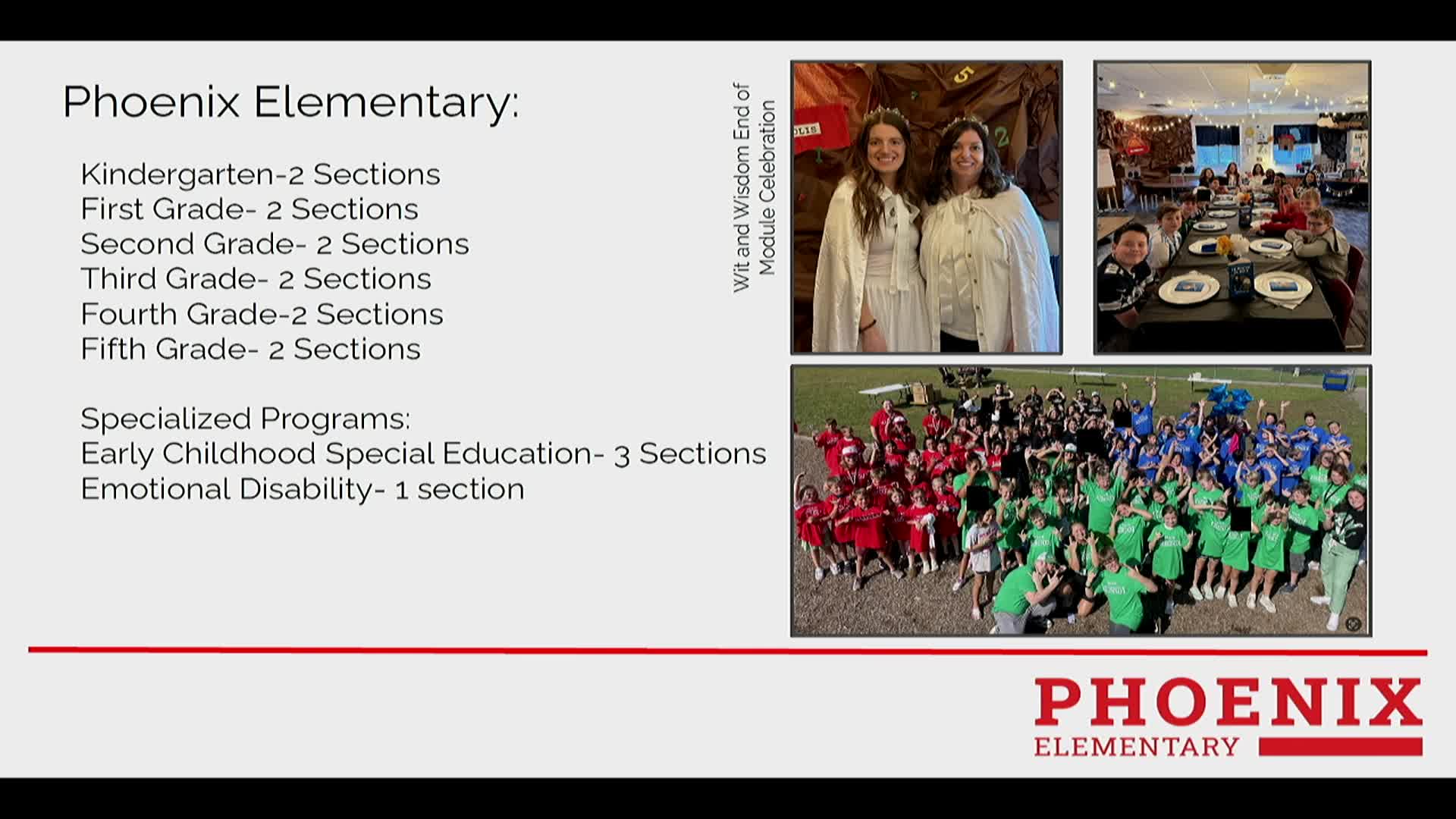
Summary
School leaders told the Grand Forks School Board that Phoenix School’s literacy scores increased, special education enrollment rose sharply and the school is piloting a house system and shared-specialist model to boost supports for students.
Phoenix School administrators reported to the Grand Forks Public Schools board that recent state test results and local assessments show growth in English language arts and several student-support initiatives are expanding.
School leaders presented results Monday during the fall reports portion of the board meeting and said the school aims to raise proficiency in English language arts from 38% to 50% and in math from 30% to 49% as part of ongoing improvement goals. The presentation noted Phoenix increased on the North Dakota state assessment while many other district schools declined.
Administrators highlighted a sharp rise in special education enrollment. The share of students with individualized education plans rose from about 18% in 2022–23 to about 28% in 2023–24, a roughly 10 percentage-point increase. The school said the growth reflects expanded specialized programming, including an emotional-disabilities classroom that will add a fifth student next week and three early childhood special education classrooms serving 3- and 4-year-olds.
To meet diverse needs, Phoenix described a new staffing model in which three generalists specialize and share students by area: literacy, math and emotional/behavioral supports. The presentation named Angie Mercile (literacy), Marissa Geiss (math) and Amber Rasmussen (emotional/behavioral) as those specialists. The school also uses a full-time literacy specialist and reported additional interventions such as targeted small-group instruction (TSI), interventions delivered during early-release PLC and data-driven student groupings.
Carla McDonald, Phoenix’s behavior interventionist, described how her role supports classroom behavior, documentation and targeted interventions. "If I can go in and sit with the student and keep them in the classroom, of course, that's best," McDonald said, explaining the team uses a "purple sheet" log to track incidents and guide supports. McDonald said log entries rose after staff were encouraged to document incidents more consistently; she reported third grade currently has the most entries and that 88% of students have two or fewer log entries for the year.
Tianna Edevold, Phoenix’s school social worker, reviewed attendance data and said Phoenix is slightly above the district in students attending at least 90% of the time (88% at Phoenix vs. 87% districtwide). Edevold described a tiered attendance intervention process aligned with district attendance policy and noted practical steps staff take to remove barriers to attendance.
The school also described a new house system adapted from the Ron Clark Academy to increase belonging across grade levels. Phoenix began house selection for grades 3–5 and planned phase 2 for kindergarten through second grade. The system includes house points, inter-grade activities and a house app funded initially with donations and Title I funds.
Presenters repeatedly credited Title I funding for paying for a full-time counselor, a full-time social worker and the behavior interventionist, and connected those positions to improved outcomes. The presentation included subgroup STAR early-literacy and math results, and leaders cautioned some swings in small subgroups (for example, Native American subgroup percentages) represent small student counts.
Board members asked questions about grade-level differences in behavior logs and about the house system's potential spread to other schools. The board heard that other elementary schools have adapted the house model and that Phoenix paid for training and app costs partly through Title I and donations.
Ending: Phoenix leaders said they will continue to monitor assessment and behavior data, refine interventions, and complete the second phase of house selection the following day. The district will receive additional updates as programs and data develop.