
El Segundo Unified details three‑year OKR strategic plan and expands safety procedures, including run‑hide‑fight drills
Get AI-powered insights, summaries, and transcripts
Subscribe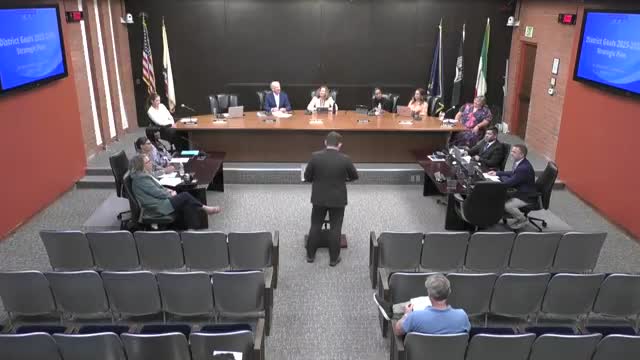
Summary
Superintendent Dr. Johnson and district staff presented a new OKR (Objectives and Key Results) implementation system for the district's three‑year strategic goals and an expanded safety update that includes new training, infrastructure recommendations and a shift to explicit “run, hide, fight” language for certain drills.
Superintendent Dr. Johnson and district staff presented the district’s strategic goals and the implementation system on Aug. 26, saying the board approved three‑year goals in July and the district has translated them into annual Objectives and Key Results (OKRs) that will be tracked quarterly.
The superintendent said the OKR framework turns broad goals into concrete, measurable actions and will be reviewed every quarter and reported publicly at a January midpoint. Examples presented included a safety goal to “provide routine and proactive security measures” with key results such as conducting two run‑hide‑fight drills per school year, completing vigilance and lifesaving training for all teachers, and finishing site safety action plans derived from ASTRA risk‑management evaluations.
Why it matters: District leaders said OKRs will make progress measurable and increase accountability across departments, with periodic color‑coded status reporting (green for on time, blue for ahead, red for behind). The safety update addresses both staff training and physical site recommendations from external evaluators; presenters said staff training is the highest‑impact intervention for school safety.
Safety priorities and changes presented: Dr. Johnson and other staff outlined three guiding principles — practice, pragmatic, proactive — and emphasized “messy drills” that include realistic scenarios. The district said it will update language and training to replace earlier “distract” terminology with “fight” in its run‑hide‑fight protocol (while noting age‑appropriate modifications for elementary students). ASTRA risk management’s findings were summarized as emphasizing staff training, procedure recommendations and campus adjustments (gates, doors, panic exits). The district also listed near‑term projects: replacing certain door latches with “1‑2‑3” latches, installing panic‑bar exits where needed, updating safety supplies, and standardizing “grab‑and‑go” guides in classrooms.
Digital and incident response: The district also highlighted digital safety work: ongoing 24/7 monitoring, ransomware detection and isolation tools, and privacy and risk assessments. An IT staff member said the district’s defensive posture includes active monitoring and ransomware containment tools and that surrounding districts consult El Segundo about its model.
Training, community messaging and timelines: The district said it would continue vigilance trainings this fall, conduct action‑plan work at sites, and provide a quarterly progress report in October and a public mid‑year update in January. Staff urged community members to report safety concerns to principals or the superintendent and encouraged volunteering with site councils, PTAs or the Ed Foundation to support programming and infrastructure needs.
Quotes from the meeting: “The most important thing you can do for safety is staff training and practice. 100%,” Dr. Johnson said, summarizing ASTRA’s key finding. On drills, a district presenter said they will “conduct two run, hide, fight drills per school year, which we currently don't do.”
What the record does not show: The board did not vote on new mandatory run‑hide‑fight adoption or specific capital expenditures in this meeting; staff said some infrastructure projects will come before the board for approval in future agenda items. Detailed budgets, timelines for each physical project and precise school‑by‑school drill schedules were not specified in the presentation.