Get Full Government Meeting Transcripts, Videos, & Alerts Forever!
Get email alerts on the School Improvement topic
No spam. Unsubscribe anytime.
UCPS curriculum committee reviews 2025–26 focused-school plan and forwards six-strategy approach to full board
Summary
Union County Public Schools staff presented the district's 2025–26 focused-school plan — six strategies including executive coaching, teacher supports, daily intensive tutoring, expanded wraparound services, more time in school, and culture-and-climate initiatives — and the committee voted 4-0 to send the plan to the full board.
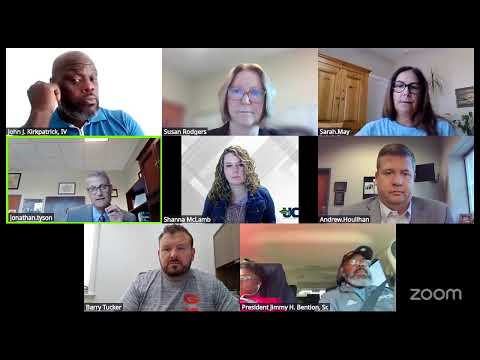
Union County Public Schools staff presented the district’s 2025–26 focused-school plan to the Curriculum Committee on Sept. 24 and the committee voted to forward the plan to the full board for consideration.
Dr. Houlihan, a UCPS presenter, opened the overview by saying the plan updates a strategy that began in February 2017 and that “when this plan is implemented with fidelity, we are we have schools that are are moving out of low performing.” The plan identifies six high-level strategies: effective leadership, teacher effectiveness, daily intensive tutoring, positive culture and climate, more time in school, and wraparound services.
Dr. Tyson summarized Strategy 1: “Strategy 1 is effective leadership. We believe, that these schools need effective leadership and that begins with the building level principal.” Staff said leadership supports include executive coaching, principal professional learning communities and pipelines for assistant principals.
For teacher effectiveness, staff described district-led professional learning series, PLCs, common formative assessments and multilingual-learner supports, including WIDA alignment. Strategy 3 — described by staff as the “cornerstone” of the plan — is daily intensive tutoring targeted to fourth grade, seventh grade and ninth-grade Math I students. Staff noted the district uses a whole-grade tutoring model based on research conducted with the University of North Carolina at Chapel Hill and provides full-day onboarding and monthly training for tutors.
The plan’s culture-and-climate work includes de-escalation and crucial-conversations professional development, greater use of key performance indicators that review teacher survey and discipline data, and college-and-career engagement partnerships (Atrium, North Carolina Cooperative Extension and others). More time in school could include before- and after-school tutoring and a summer “jump start,” though staff said summer programming depends on state funding. Wraparound services include district counselors, social workers, teletherapy through the N.C. Department of Health and Human Services collaborative, and the addition of an ESL counselor and expanded elementary play therapy.
During questions, Reverend Kirkpatrick asked whether after-school care is considered a wraparound service; staff answered it is not currently classified as such but said they would look into the gap in sites and staffing. Staff noted one District 1 elementary school currently offers after-school programming and that the district has asked the after-school director, Mr. Moore, to identify gaps and options for second semester or next school year. A district-level family engagement coordinator position was identified as a vacancy; staff said interviews are underway with the intention to present a candidate to the board in October.
The committee moved to send the focused-school plan to the full board and recorded a 4-0 voice vote. The committee packet contains the slide deck and memos referenced during the presentation.