Get Full Government Meeting Transcripts, Videos, & Alerts Forever!
Get email alerts on the Crypto Kiosks topic
No spam. Unsubscribe anytime.
Mass. lawmakers consider licensing, limits and a ‘pause’ on cryptocurrency kiosks amid surge in scams
Summary
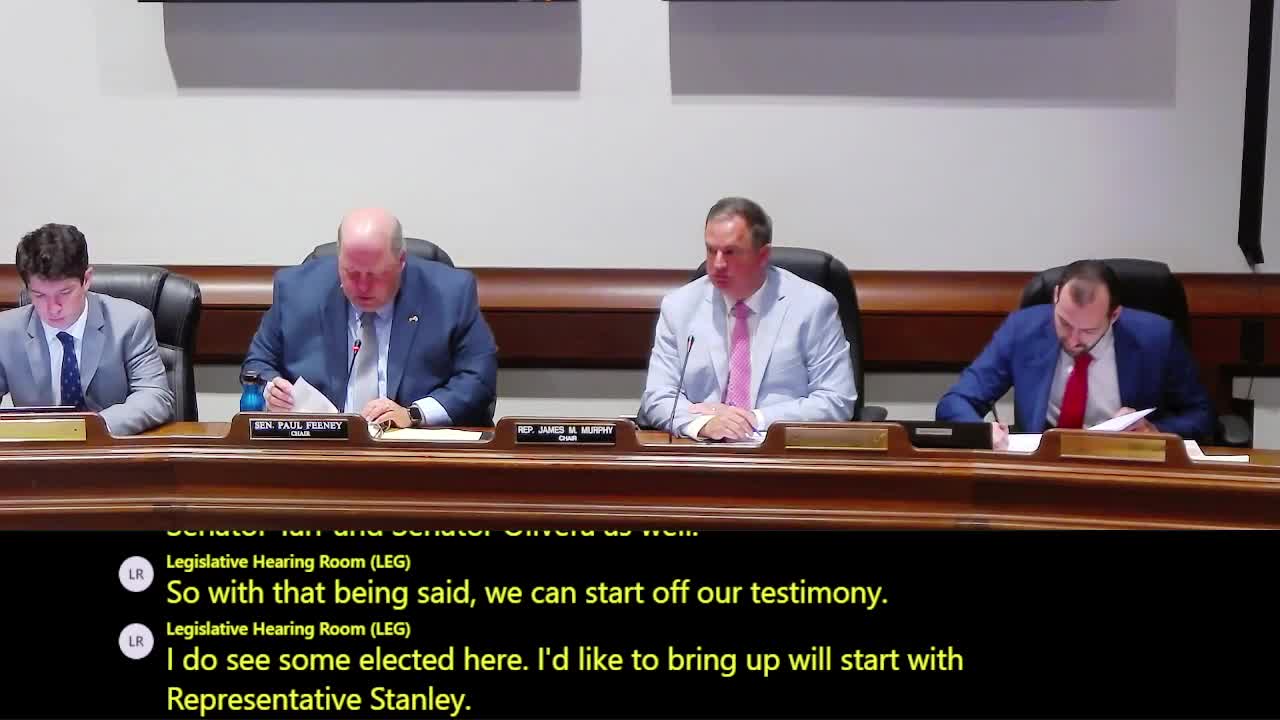
Members of the Massachusetts Legislature's Joint Committee on Financial Services heard hours of testimony on legislation to regulate cryptocurrency ATMs, often called crypto kiosks, during a public hearing that focused on scams targeting older residents and other vulnerable consumers.
Members of the Massachusetts Legislature's Joint Committee on Financial Services heard hours of testimony on legislation to regulate cryptocurrency ATMs, often called crypto kiosks, during a public hearing that focused on scams targeting older residents and other vulnerable consumers.
Supporters of the bills — including local detectives, district attorneys, the attorney general's office and AARP volunteers — said kiosks are a growing vector for fraud. They urged the committee to adopt provisions requiring kiosk operators to register or be licensed as money transmitters, post visible anti‑fraud warnings, print transaction receipts, set daily transaction limits, require live customer support and offer refunds for transactions linked to criminal fraud. “These kiosks are very easy to use,” said Detective Michael Maher of the Waltham Police Department. “The fraudsters often keep the victim on the phone throughout the process, guiding them... The transactions move quickly and can be difficult to trace.”
Why it matters: Testimony painted a pattern in which fraudsters impersonate authorities or trusted companies, direct victims to withdraw cash and deposit it into a kiosk, then guide the victim to send funds to a cryptocurrency address controlled by the scammer. Witnesses cited national complaint data and local casework showing rapid growth in reported losses and the disproportionate targeting of older residents.
Key provisions discussed and evidence presented
- Licensing and registration: AARP and law enforcement urged state licensing of kiosk operators and a public registry of kiosk locations. Representative Stanley said his bill (House 1247) would require kiosks to be registered with the Commonwealth and impose other consumer protections.
- Daily transaction limits and “speed bumps”: Multiple prosecutors and law enforcement witnesses recommended transaction limits and other friction to slow scams. Detective Anthony Lucey called for a short transactional “pause” or hold (he suggested 24–48 hours in testimony) that could allow law enforcement or the kiosk operator to intervene before funds are irrevocably moved. “The pause button is the only thing... that will curb this the most,” Lucey said, describing cases where operators froze transactions and returned funds after law enforcement contacted them.
- Warnings, receipts and refunds: Witnesses supported mandatory on‑screen warnings and printed receipts showing the destination wallet address so tracing software can help investigators. AARP representatives backed full refunds (fees and principal) for new customers in confirmed fraud cases when a police report is filed within a specified window.
- Law‑enforcement tracing and limits to recovery: Glenn Kaplan of the Attorney General’s office and county prosecutors described limits on recovery once funds move through wallets and offshore exchanges, and noted that timely reporting improves the chance of reclaiming funds. Kaplan recommended clear standards for the evidence a consumer must provide to obtain refunds and suggested 24/7 live customer support at kiosks.
Industry concerns and tradeoffs
Kiosk operators said they support many consumer protections — including licensing, analytics and warnings — but warned that some provisions in the AARP bill would effectively force them out of business. Ethan McClelland of Bitcoin Depot and Larry Lipka of CoinFlip disputed a proposed 3% fee cap as unrealistic, citing equipment, rent, cash handling and compliance costs. Bitcoin Depot asked the committee not to report House 1247 and Senate 707 favorably as written; CoinFlip said it voluntarily uses pause-and-refund processes at times and urged a balanced approach. McClelland also raised a law‑enforcement data point: FinCEN suspicious-activity reporting is prioritized at $2,000 and that too-low limits could reduce reports that help trace criminal networks.
Technical and legal hurdles
Detectives and prosecutors described tracing challenges because funds move quickly across wallets and exchanges; investigators said success depends on acting before funds are moved overseas. Detective Lucey said recent court guidance limited police ability to seize funds once they are routed outside Massachusetts, complicating investigations and underscoring his argument for a transaction pause.
What’s next
The committee did not take a vote at the hearing. Members heard multiple competing proposals and asked follow‑up questions about the size of daily caps, refund mechanics, the scope of training for host‑location staff, the operation of a pause or hold, and how licensing would interact with federal rules. Several witnesses offered to work with the committee on amendments.
Ending note: Sponsors and a broad range of witnesses urged prompt action. As Representative Kate Lippert Garabedian and AARP volunteers said, the risk of continued financial harm to older residents led several municipalities to ban kiosks locally; multiple witnesses argued that state rules can provide uniform protections while allowing legitimate businesses to operate.