
Edgar County reviews drafts of commercial wind and standalone battery storage ordinances; schedules hearings after further study
Get AI-powered insights, summaries, and transcripts
Subscribe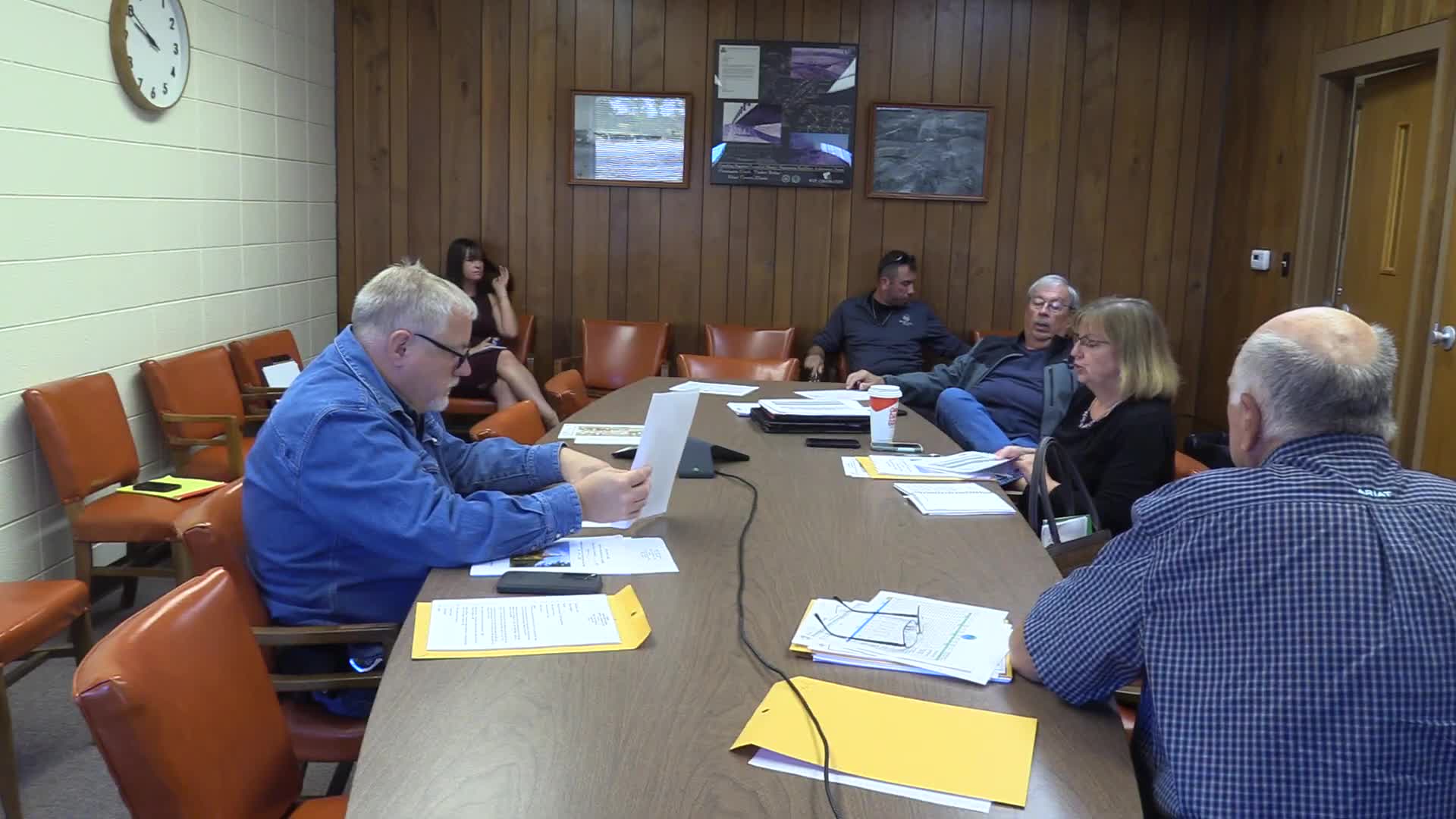
Summary
County officials reviewed draft ordinances for commercial wind energy and standalone battery energy storage, discussed limits set by 2023 state siting law, fee caps, setback proposals and whether to adopt formal zoning; no vote taken — board will study drafts and schedule public hearings.
Edgar County officials reviewed draft ordinances for commercial wind energy and for standalone battery energy storage and agreed to study the drafts further and schedule public hearings.
Attorney/consultant Andy (on the phone) told the board the drafts largely reflect state mandates from 2023 and that the county must adopt certain requirements the state spelled out — for example, setback and sound limits required by the state siting statute. Within those limits counties have limited room to impose additional restrictions. Andy also said the drafts incorporate battery storage language so that storage sited as part of a wind or solar project would be regulated under the wind or solar ordinance, while standalone battery energy storage systems (BESS) would be handled under a separate BESS ordinance.
Key provisions discussed: - Tiering for standalone battery systems: the draft defines tier 1 systems as less than 600 kilowatt‑hours and tier 2 systems as 600 kWh or greater. Tier 1 systems would be permitted without a special public hearing; tier 2 systems would require a special permit and a formal public hearing. Andy said many small residential or commercial energy‑storage systems ("about the size of a big file cabinet") would fall into tier 1. - Setbacks and safety: because the state has not established setback limits for standalone battery systems, the draft proposes county setbacks of 200 feet from parcel lines, 200 feet from rights of way and 1,000 feet from any nonparticipating residence or community building. The draft also requires compliance with the National Electrical Code and National Fire Protection Association standards and includes provisions for decommissioning and road‑use agreements. - Fees: the draft mirrors the solar ordinance’s building‑permit fee of $5,000 per megawatt capped at $100,000; a special‑use application fee of $40,000 with an associated bank up to a maximum of $250,000 was also discussed, with unused portions refundable.
Board members asked operational and jurisdictional questions. Phil Doblestein asked whether standalone battery projects exist that are not connected to wind or solar; Andy said they do — often sited near substations or converted from retired power‑plant sites — but most current projects are tied to solar or wind. The board discussed whether the county must become a zoned county to adopt more extensive siting controls; Andy said the county could pursue zoning but that an unzoned county has more limited authority and that doing nothing would leave the county with the least control.
No ordinance was adopted at the meeting. Lisa Ellis said the plan was to "go home and study and integrate what he told us" and then revisit the drafts at the next study session; the board asked Andy to be available for future hearings and a brief recap.
Votes at a glance: the only formal voice vote recorded during the meeting was to adjourn; the motion to adjourn was moved by Russ and seconded by Andy Kent and the chair called the voice vote in favor. The ordinances themselves received no vote and will return for further study and a public hearing schedule.