Get Full Government Meeting Transcripts, Videos, & Alerts Forever!
Get email alerts on the Waste Management topic
No spam. Unsubscribe anytime.
Greenbelt staff propose trash-fee increase; council hears pay-as-you-throw and composting pilot options
Summary
City staff told the Greenbelt City Council work session the proposed FY26 budget includes a two‑year, phased trash-rate increase to cover a structural deficit driven by a nine‑year rate freeze and rising county tipping fees; staff also outlined alternative models — a pay‑as‑you‑throw pilot and continuing the Compost Crew food‑scraps program if the
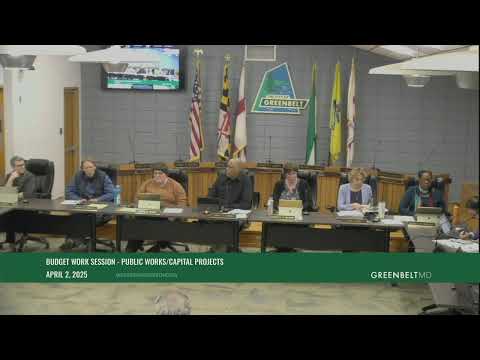
City Manager Josue Semoran told the Greenbelt City Council at its budget work session that the proposed fiscal‑year 2026 budget includes a rate increase for residential waste collection to address a “structural deficit” created after nine years without an adjustment and a recent 20% county increase in tipping fees.
Semoran said the budget as presented assumes a two‑year phase‑in of higher collection charges that staff modeled as a 20% increase over that period. “We included a 20% increase because from the conversation we had with council, council was leaning towards a 2 year phasing in period of the rate,” Public Works Director Brian Kim said; he added that any final rate change would need to be adopted by resolution and staff is targeting an effective date of July 1.
Why it matters: the change would increase household bills, reduce a projected operational deficit and affect low‑volume and high‑volume households differently. Semoran said the model in the printed budget reduces the structural deficit from about $199,700 to roughly $119,800 in the first year of the change.
Alternatives presented
Staff described two alternatives they will bring back for council consideration. The first is a pay‑as‑you‑throw model that ties a portion of customer charges to the amount of waste each household sets out. Resident Tom Taylor, who has worked with staff on the topic, said Waste 0 (the consultant team) has implemented successful pilots elsewhere and that the approach combines education with billing incentives to reduce landfill waste.
The second alternative is to fold the existing, grant‑funded Compost Crew food‑scraps pilot into regular city service when the grant ends this year. Luis Robles, a sustainability coordinator, and Tom Taylor reported high participation and low contamination rates in the Compost Crew pilot; Taylor said weekly participation has averaged “close to 90%.” Staff said preserving the composting option would likely require some level of city subsidy if rates are to remain stable for participants.
Timing and next steps
Council members asked staff to return with more detailed scenarios and subsidy options. Semoran said staff will follow up with specific rate‑change resolutions and with budget scenarios showing different subsidy levels for composting and pay‑as‑you‑throw pilots.
Statements in the meeting that appear in this report are drawn from council work‑session remarks and public comments; no final rate resolution was adopted during the session.