
Lawmakers and Advocates Debate Forest Reserves, Watershed Protection and a Natural-and-Working-Lands Package
Get AI-powered insights, summaries, and transcripts
Sign Up Free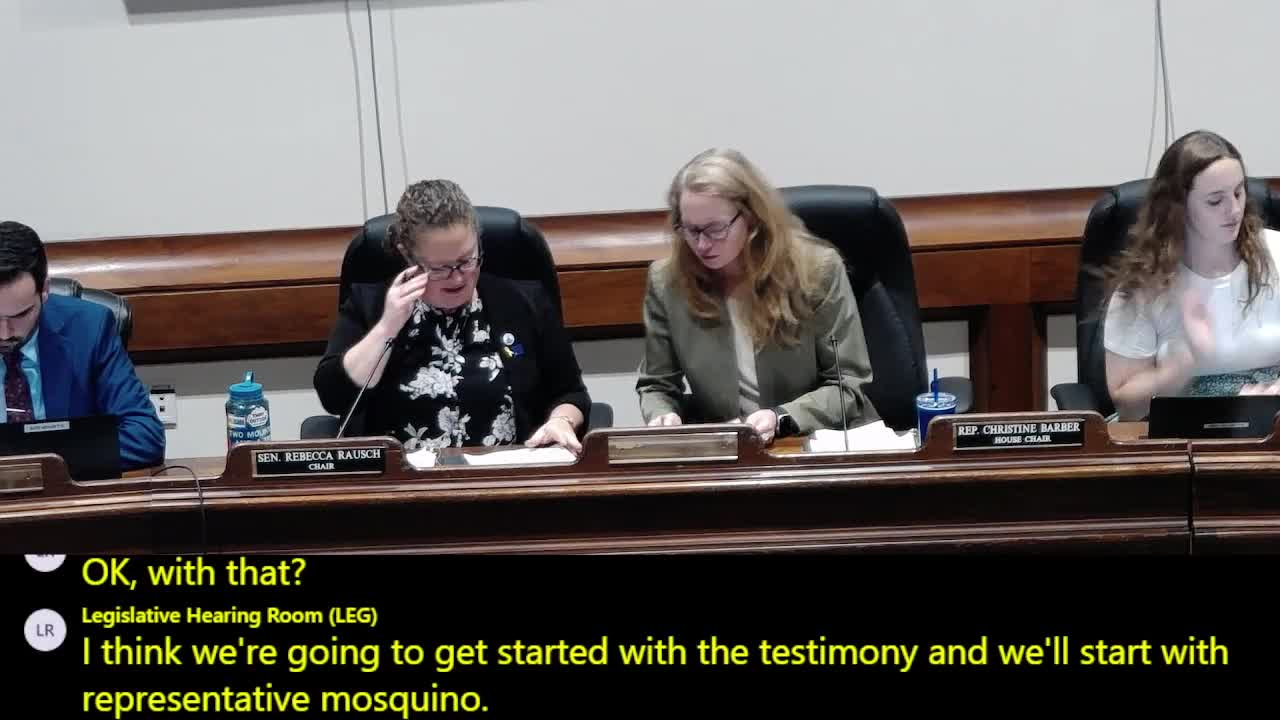
Summary
State legislators and dozens of witnesses spent more than two hours on competing proposals to expand permanent protections for Massachusetts’ public forests and to promote municipal tree planting.
State legislators and dozens of witnesses spent more than two hours on competing proposals to expand permanent protections for Massachusetts’ public forests and to promote municipal tree planting.
Representative Joan Moschino (testifying on H.1005, companion S.549) framed natural-and-working-lands legislation as part of the Commonwealth’s decarbonization roadmap and urged the committee to report the bill favorably. Supporters said a package of bills, including H.952 and H.953 (forest and watershed protection), would add large tracts of state land to permanent reserve status and that H.1013 / S.553 would establish a municipal reforestation trust to help towns expand canopy, particularly in environmental‑justice neighborhoods.
The bills would change how state-owned lands are managed and would create new state-level incentives and funds for tree planting and for keeping forested lands intact. Proponents—environmental groups, town climate committees, watershed and conservation organizations, and several scientists—argued that protecting and expanding forests is an essential and immediate option for carbon sequestration, water security and biodiversity. Zach Porter, executive director of Standing Trees, told the committee the bills would help Massachusetts meet a longstanding goal of protecting a meaningful share of public lands as reserves, citing examples from other states.
Opponents included the Massachusetts Forest Alliance and some landowner and hunting groups, who urged a mixed approach of reserves and active sustainable forest management. Chris Egan, executive director of the Massachusetts Forest Alliance, argued that active management is necessary in places such as watershed lands to reduce blowdowns and to address plantations that are succumbing to invasive pests. Egan referenced recent state studies and said in some scenarios a mix of reserves and managed forests yields similar carbon outcomes and provides economic activity for rural towns.
Scientists and conservation advocates countered that permanent legal protections are currently rare in the Commonwealth and that existing administrative reserves can be reversed by subsequent administrations. William Moomaw, a climate scientist, told the panel that only about 1% of Massachusetts land has permanent legal protection and that international science supports protecting much higher shares of land to safeguard biodiversity and ecosystem services.
Several witnesses quantified the scale and urgency. Testimony cited figures including roughly 311,000 acres of DCR-managed lands and about 100,000 acres of Division of Water Supply Protection (DWSP) lands as potential candidates for stronger protection; supporters said the three‑bill package could identify roughly 412,000 acres of state holdings for permanent reserve designation. Witnesses also referenced state targets and plans—e.g., the Commonwealth’s roadmap, the Clean Energy and Climate Plan (CECP), and the Global Warming Solutions Act—as context for why the bills are timely.
Committee members asked about tradeoffs between reserves and active management—especially for wildfire risk, insect damage and plantations—and whether the administration’s ongoing work on reserves should proceed without new legislation. Several witnesses and legislators said the bills are intended to cement long‑term protections that survive administrative changes; others urged patience for the administration’s efforts and recommended combining reserves with sustainable forest practices.
The hearing produced no formal votes. Legislators and committee staff invited written submissions and technical data; advocates on both sides signaled they would supply additional analyses and maps.
Why it matters: forests on state lands intersect climate, drinking-water protection for millions of residents (Quabbin/ware reservoir systems were repeatedly cited), biodiversity, recreation, and rural economies. The debate at the hearing turned on whether the Commonwealth should lock in permanent reserve status for large portions of publicly held forests now, or rely on a mixed‑use approach that includes active forest management and locally tailored practices.
Next steps: Committee chairs said they will accept written materials and continue to work with stakeholders and the administration. No committee action was recorded during the hearing.