Get Full Government Meeting Transcripts, Videos, & Alerts Forever!
Get email alerts on the Municipal Actions Votes topic
No spam. Unsubscribe anytime.
Council approves two annexations, $125,000 cyanotoxin study, traffic changes and youth representative
Summary
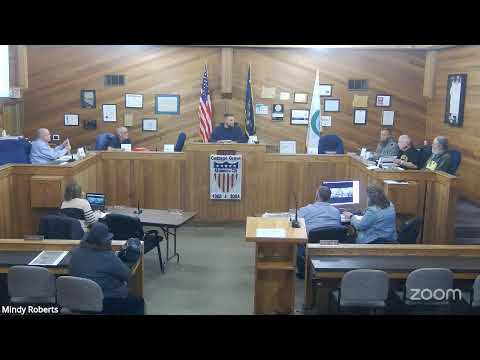
At its Oct. 13 meeting, the Cottage Grove City Council adopted ordinances annexing portions of McKinley Avenue and Highway 99, authorized a $125,000 cyanotoxin feasibility study for the Rau River water treatment plant, approved two traffic-control changes and created a youth representative position.
Cottage Grove City Council on Monday, Oct. 13, adopted two annexation ordinances, authorized an engineering task order for a cyanotoxin study at the Rau River Water Treatment Plant, approved traffic-control changes at two intersections and approved a resolution to add a youth representative to the council.
The council voted unanimously to adopt Ordinance No. 3198, annexing approximately 911 feet of McKinley Avenue into city limits, and Ordinance No. 3199, annexing roughly 5,050 feet of Highway 99 right-of-way into the city. Both ordinances were introduced by Senior Planner Lenny Crow and were available to council at least one week before the meeting, allowing the council to adopt them on first vote.
In a separate motion, the council approved Task Order No. 3 with engineering firm West Yost to perform a cyanotoxin treatment feasibility study for the Rau River Water Treatment Plant. Public Works Director Faye Stewart said the city received a $125,000 grant from the Oregon Health Authority to fund the study. "The city of Cottage Grove has received a $125,000 grant from the Oregon Health Authority to perform a cyanotoxin treatment feasibility study for the Rau River Water Treatment Plant," Stewart said during the presentation. The motion authorized the city manager to sign the task order; the measure passed unanimously.
Councilors split 3–2 on a traffic-control package for Cemetery Road and Ash Avenue. The approved motion, moved by Councilor Settlemeier and seconded by Councilor Meriday, directed staff to install stop signage on the eastbound and westbound legs of Cemetery Road (with language permitting a right turn without stopping on the westbound approach) while leaving cross traffic designated as "does not stop." The council noted the change can be revised if it does not reduce crash risk.
Separately, the council unanimously approved converting the intersection of South Sixth Street and Adams Avenue from a two-way to a four-way stop following an engineering review and crash-history check; staff cited vision-clearance issues and six recorded collisions at that location between 2009 and 2017.
On a procedural item moved off the consent agenda earlier in the meeting, the council adopted Resolution No. 2173, establishing a youth representative position on the city council and repealing Resolution No. 2002. The resolution passed on a recorded roll call vote with all members present voting aye.
Votes at a glance
- Ordinance 3198 (McKinley Avenue annexation): Moved by Councilor Wilson; seconded by Councilor Mary Day; outcome: adopted unanimously. Details in staff report and attached legal description (Exhibits A & B). - Ordinance 3199 (portion of Highway 99 annexation): Moved by Councilor Sotomayor; seconded (recorded); outcome: adopted unanimously. - West Yost Task Order No. 3 (cyanotoxin feasibility study, Rau River WTP): Moved by Councilor Wilson; seconded; outcome: approved unanimously. Funding: $125,000 Oregon Health Authority grant; city manager authorized to sign. - Cemetery Road & Ash Avenue traffic control improvements: Moved by Councilor Settlemeier; seconded by Councilor Meriday; outcome: approved, 3–2 (motion installs stop signage on Cemetery Road with right-turn permitted on the westbound approach; cross traffic does not stop). Vote names not specified in the roll call. - South Sixth Street & Adams Avenue (convert to four-way stop): Moved by Councilor Lammerman; seconded by Councilor Wilson; outcome: adopted unanimously. - Resolution 2173 (establish youth representative on city council; repeals Resolution 2002): Moved by Councilor Lammerman; seconded by Councilor Wilson; outcome: adopted unanimously.
What the votes mean
The two annexations make city limits contiguous with adjacent property owners and are intended to allow future annexations of private parcels. The cyanotoxin feasibility study will analyze treatment options and existing on-site groundwater well capacity as an alternative or supplement to river intake, and staff said the study was scoped and approved by the Oregon Health Authority. The traffic changes are intended as near-term safety measures; council members noted they can be revisited if the new controls do not produce the intended safety benefits.
Councilors and staff said the youth representative resolution aims to restore a council-level youth role and will begin with students from the local high school and the South Lane School District; staff indicated the program can be expanded later.
Ending
Staff will return with implementation details — ordinance finalization, task-order signatures and follow-up striping and sign installations — and the council asked that traffic outcomes be monitored and reported back if problems persist.