Get Full Government Meeting Transcripts, Videos, & Alerts Forever!
Get email alerts on the Social Services topic
No spam. Unsubscribe anytime.
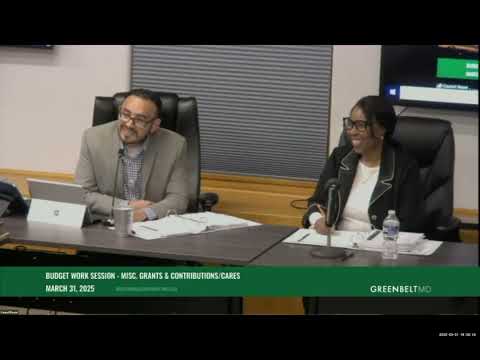
Greenbelt shifts CARES positions to ARPA funds; Meals on Wheels and food distribution cited as pressure points
Summary
City staff and nonprofit partners told the council that several CARES positions and program costs are being sustained with ARPA and grant dollars in FY2026, while Meals on Wheels and city food distributions face funding uncertainty and operational limits.
City staff and the nonprofit partners who serve Greenbelt residents told the council that social-service programs remain under pressure as some federal and county funding streams are uncertain and American Rescue Plan Act (ARPA) dollars are being used to sustain positions in FY2026.
Dr. Liz Park, director of CARES, and Crystal Beatty, associate/assistant director, outlined that the draft FY2026 presentation shifts several CARES staff positions and some program expenses from the general fund to ARPA and to grants (including HUD and state grants) so the city can continue services such as crisis intervention, counseling and the Greenridge House service coordination program. Staff cautioned that ARPA is time-limited and that those positions would need a general-fund home when ARPA yields end.
Meals on Wheels volunteer director Lisa Eady told the council that the program serves roughly 48 Greenbelt residents through CARES-funded vouchers and supplies meals at no cost for about 10 others; she said program income has been cut by about one third and that long-term funding is uncertain. City staff said $72,000 in ARPA funds has been allocated to meal services and that the city currently plans monthly distributions (staff described $3,000 per month through calendar 2026 in one presentation) but that council could consider different payout timing.
Council members and residents also discussed the city’s monthly produce and grocery distributions: staff said they track participants with a service card and that about 50 registered families use the drive-through distribution in Greenbelt West; staff also described homebound deliveries. Volunteers and council members raised operational questions including volunteer capacity, transport (one delivery truck run per month), the number and type of bags used for distributions and culturally appropriate items (mesa flour and other staples requested by some households). City staff said they will review distribution logistics and pricing for alternatives to single-use plastic bags.
Staff also told council that they are monitoring federal grant approvals: HUD funding for service coordination remains in a holding pattern because of the federal continuing resolution and the county and state grant programs have not yet finalized allocations; the city is tracking those timelines because some service positions are funded from those streams.
Dr. Park: "We are starting to see older adults helping their adult children financially; it affects ability to cover essentials and is driving demand for assistance," she told council. Council members asked staff to increase outreach to community groups and schools and to publicize food distributions and resources more widely.
No formal actions were taken during the work session; staff will follow up with county and congressional contacts to track federal grant approvals and will return to council with operational proposals for food distribution and any recommended changes to ARPA-funded payout schedules.