Get Full Government Meeting Transcripts, Videos, & Alerts Forever!
Wichita Falls ISD board adopts 2025–26 district improvement plan after wide-ranging discussion on early-literacy and achievement gaps
Summary
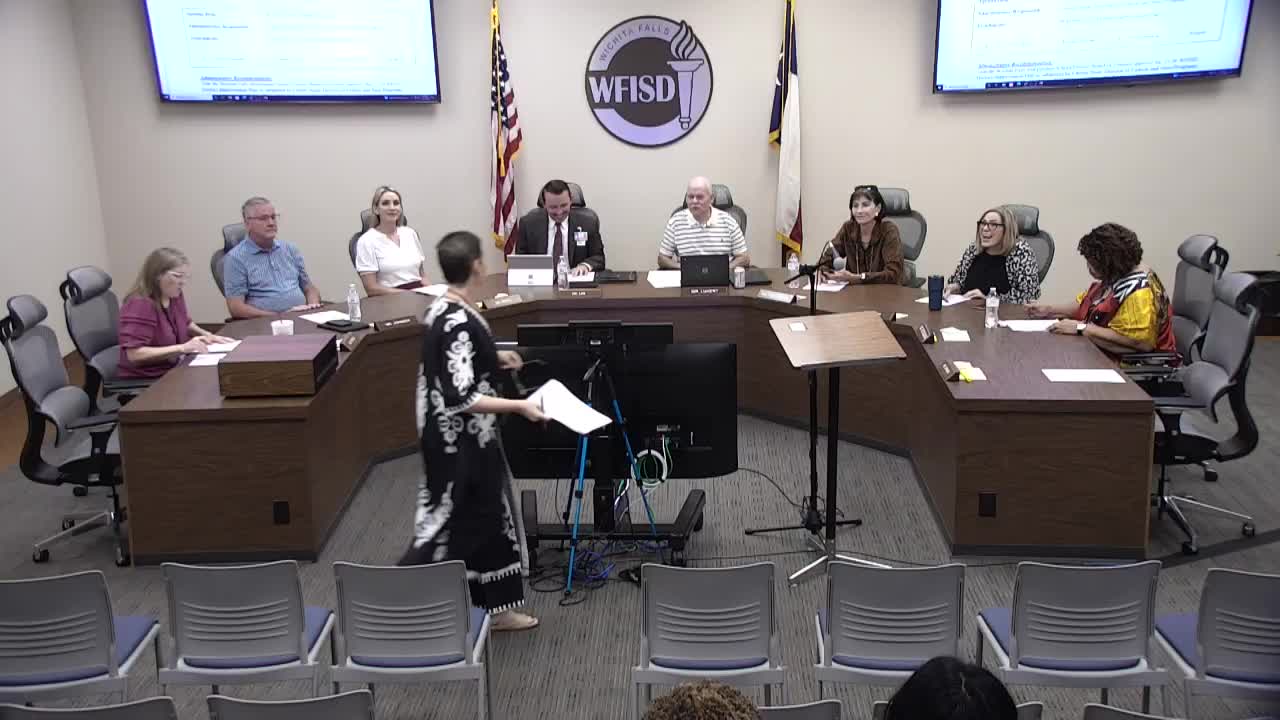
Wichita Falls Independent School District trustees voted unanimously to adopt the 2025–26 District Improvement Plan after a lengthy work‑session discussion focused on literacy and math performance in early grades and strategies to accelerate student learning.
Wichita Falls Independent School District trustees voted unanimously to adopt the 2025–26 District Improvement Plan after a lengthy work‑session discussion focused on literacy and math performance in early grades and strategies to accelerate student learning.
The board approved the plan as presented by Kristin Nash, director of federal and state programs, and recommended by Superintendent Donnie Lee. Trustees discussed targets carried forward from 2024–25 — including a district teacher retention target set at 85% and multiple grade‑level performance objectives (many set at an 80% end‑of‑year target) — and debated whether some targets should be raised for kindergarten and pre‑K reading and math.
Why it matters: The plan sets measurable annual targets that drive spending of state and local supplemental funds and guide curriculum and intervention priorities across the district. Board members said they wanted ambitious targets but also practical, monitorable strategies to help students who enter kindergarten and first grade below grade level.
Trustees and staff debated how assessment type and changing national norms affect the appearance of district results. Nash and district curriculum staff explained that K‑2 results use a norm‑referenced assessment that compares students to a national sample and that MAP norms were recently updated to account for pandemic effects — a change that lowered some reading norms and affected district percentages. Staff emphasized that different instruments are used at different grade bands (circle assessments in pre‑K, MAP in K‑2, then STAAR/STAR in…
Already have an account? Log in
Subscribe to keep reading
Unlock the rest of this article — and every article on Citizen Portal.
- Unlimited articles
- AI-powered breakdowns of topics, speakers, decisions, and budgets
- Instant alerts when your location has a new meeting
- Follow topics and more locations
- 1,000 AI Insights / month, plus AI Chat