
Residents raise environmental and transparency concerns as redevelopment staff explain LLCs and $450,000 payment tied to solar and data center projects
Get AI-powered insights, summaries, and transcripts
Subscribe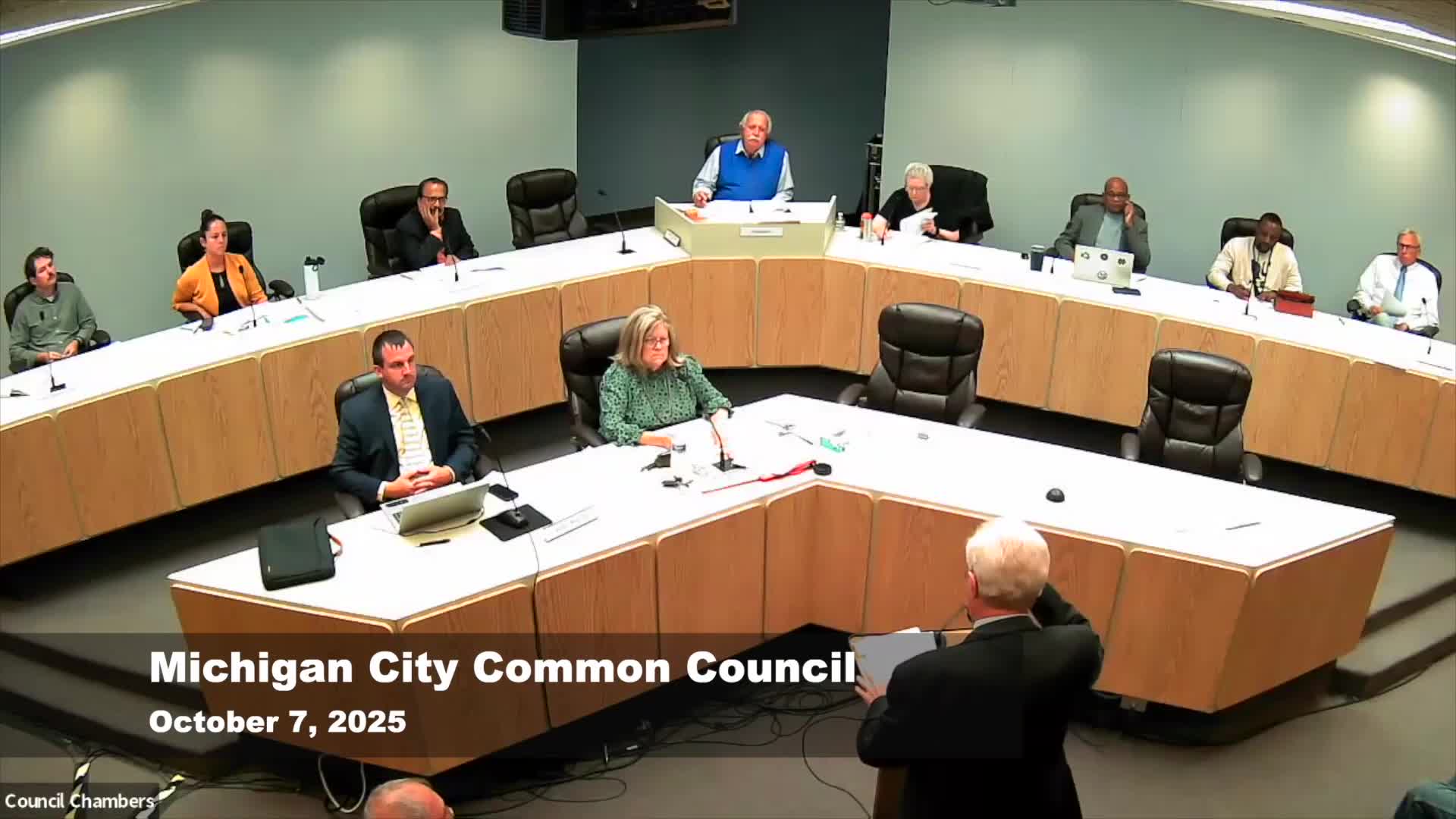
Summary
Public commentators pushed the Michigan City Common Council on Oct. 7 to halt or reopen approvals tied to a proposed data center and a nearby solar project, citing dust, potential contamination and opaque property transfers.
Public commentators at the Michigan City Common Council meeting on Oct. 7 urged the council to halt or reopen approvals tied to two separate but related redevelopment projects — a data center often referred to in public comments as “Project Maze” and a solar project adjacent to city hall — and pressed for more transparency about property transfers and environmental safeguards.
In public comment, Ashley Williams, a Michigan City resident, said developers for Project Maze had “moved polluted dirt past our schools and homes” and that no environmental studies or cleanup assurances had been provided. Dominic Yankee, another resident, asked the council to stop construction until air and soil testing show where excavated dirt has traveled; he cited possible asbestos and heavy metals. John Carrington and Paul Presbelinski also asked for clarification about who would own property conveyed for $10 and whether the city had adequate oversight.
The concerns prompted two officials with project knowledge to explain city procedures. Alan Sernick, attorney for the Michigan City Redevelopment Commission, said state law requires a petition to create an economic improvement district (EID) to be filed by private owners. To comply, he said the redevelopment entities created two short‑term private limited‑liability companies to enable use of the EID financing tool. Sernick told the council the $10 figure appearing on a recorded deed is a nominal consideration required by law and does not represent the real market value of the parcels. He said the developer has committed a $450,000 contribution to the city earmarked for housing purposes tied to the solar project.
Scott (director of redevelopment) added that the LLC structure was chosen to protect the city and taxpayers while the developer secures project financing. He said the LLCs would transfer the parcels to the solar developer if financing closes by an around‑December date; if not, the parcels would revert to the redevelopment commission.
No council vote to approve or rescind prior project actions occurred at the meeting. Several speakers urged halting construction at 402 Royal Road until the city produces environmental studies and monitoring plans; the council did not adopt a moratorium or direct staff to stop active work during the Oct. 7 meeting.
Why it matters: Residents say excavation and heavy equipment have dispersed dust near schools and homes. Council members and redevelopment lawyers say statutory and financing constraints limit steps the city can take short of altering agreements or forfeiting development tools.
What officials said: Mayor Angie Nelson told the council earlier in the meeting that the city had held negotiations with Phoenix and with unions about local hiring and that Phoenix had committed local contractors and training slots for Michigan City residents. That discussion addressed jobs and local procurement, but did not provide the environmental testing that residents requested.
What remains unresolved: public commenters seek testing for soil and air contamination, disclosure of all project principals, and more detail on the timing and conditions tied to the $450,000 commitment and the December closing date. Redevelopment counsel said recorded corrections had been filed to fix a scrivener’s error in corporate names used in prior documents and that prior council actions otherwise stand as approved.
The council did not vote on the requests from public commenters. Officials said they will continue to work with developers, and the council will revisit formal ordinances and readings at upcoming meetings.