
Edwardsburg schools present assessment data: literacy gains, rising SATs and expanded AP offerings
Get AI-powered insights, summaries, and transcripts
Subscribe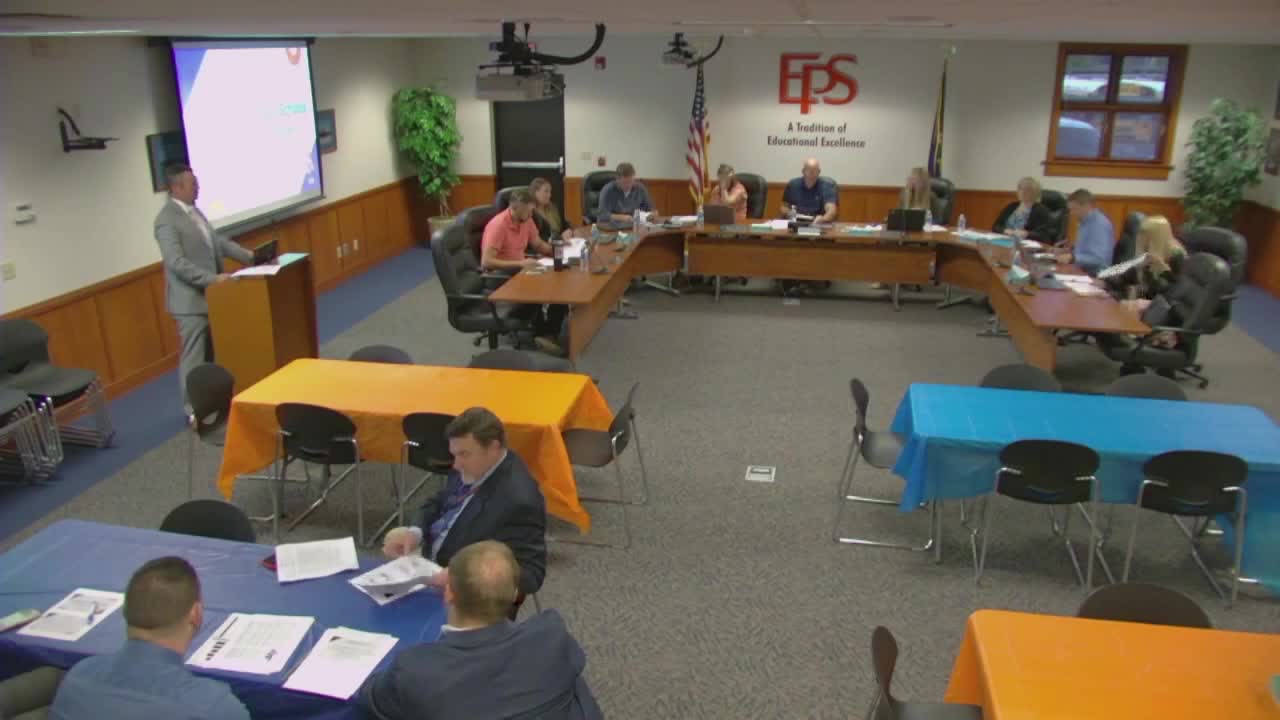
Summary
District administrators summarized M-STEP, DIBELS and SAT results and described targeted interventions (success time, focus math, Orton-Gillingham) and growing AP and dual-enrollment participation during a work session; presenters highlighted literacy gains at early grades and a 5-year rebound in SAT scores.
Edwardsburg Public Schools staff used a scheduled work session to review district assessment results and instructional initiatives, highlighting strong early-literacy gains in DIBELS assessments, rising SAT scores at the high school and expanding Advanced Placement participation.
"We have so much to highlight and celebrate about the great work being done by our teachers and students," Staff member Ryan Towner said as he opened the presentation and invited building principals to discuss school-level data. Towner framed the session as a focus on state summative assessments including M-STEP, PSAT, SAT and AP.
At the primary level, Staff member Tracy Spaulding described DIBELS results and the district's emphasis on the five pillars of literacy: phonemic awareness, phonics, fluency, vocabulary and comprehension. Spaulding said the district's kindergarten through first-grade DIBELS scores exceeded national norms and showed large year-over-year growth in measures such as nonsense-word fluency and oral reading fluency.
"Beginning of the year kindergarteners have no clue as to what we're asking them to do... but as the year goes along, we went from having 3 here at the beginning of the year up to 24, and then the year at 41," Spaulding said, describing growth on a benchmark measure.
Presenters linked the early-literacy work to later gains on M-STEP. At Eagle Lake (the district elementary), third-grade ELA proficiency on M-STEP was reported at 53.4 percent, the highest in the area for third grade, and the district reported math proficiency roughly 8 percentage points above state averages in some grades.
The district is expanding targeted supports. Initiatives described include "success time" (small-group, standards-based intervention time), a new focus-math intervention for number sense and computation, monthly standards-based mastery checks using i-Ready, and continued rollout of Orton-Gillingham approaches for decoding and writing support. Middle- and high-school staff also described "double-block" success classes that give identified students two periods of reading or math for extra instruction.
At the middle school, presenters highlighted unusually strong social-studies and science results and said the school is using paired courses and success classes as tier-2 supports. "One of the biggest indicators for student growth is the amount of time students spend in direct instruction," a middle-school presenter said.
High-school presenter Mike Dandren reported SAT and AP updates: Edwardsburg's reported SAT average rose to 1,063.2 this year (a rebound from 1,046 the prior year), and the district said 149 students were enrolled in AP courses this year. Dandren said 91 percent of students who took an AP course last year earned a 3 or better on at least one AP exam (120 of 132 students), though presenters clarified that students may take multiple AP exams and that the total number of exams differs from the number of students who took exams.
Dandren and other staff also described a significant dual-enrollment program: about two-thirds of juniors and seniors were reported enrolled in dual-enrollment courses, and the district said it intends to add AP microeconomics, macroeconomics and art in the coming year to increase AP access.
District leaders emphasized curriculum alignment and multi-year implementation of new materials, including a recent science-adoption pacing guide and professional development tied to late-start days. Administrators framed the work as a mix of bottom-up classroom practices and top-down curricular alignment: using frequent assessment checkpoints to identify gaps, then scheduling targeted interventions to close them.
Board members asked about comparables and proficiency definitions; presenters said proficiency percentages were based on state M-STEP cut scores and that comparable schools were selected by size and demographic criteria. The work session was discussion-only; the board did not take action on instructional items during the session.