
Wyoming municipal leaders warn 10‑day public‑records deadlines, fines would overwhelm small governments
Get AI-powered insights, summaries, and transcripts
Subscribe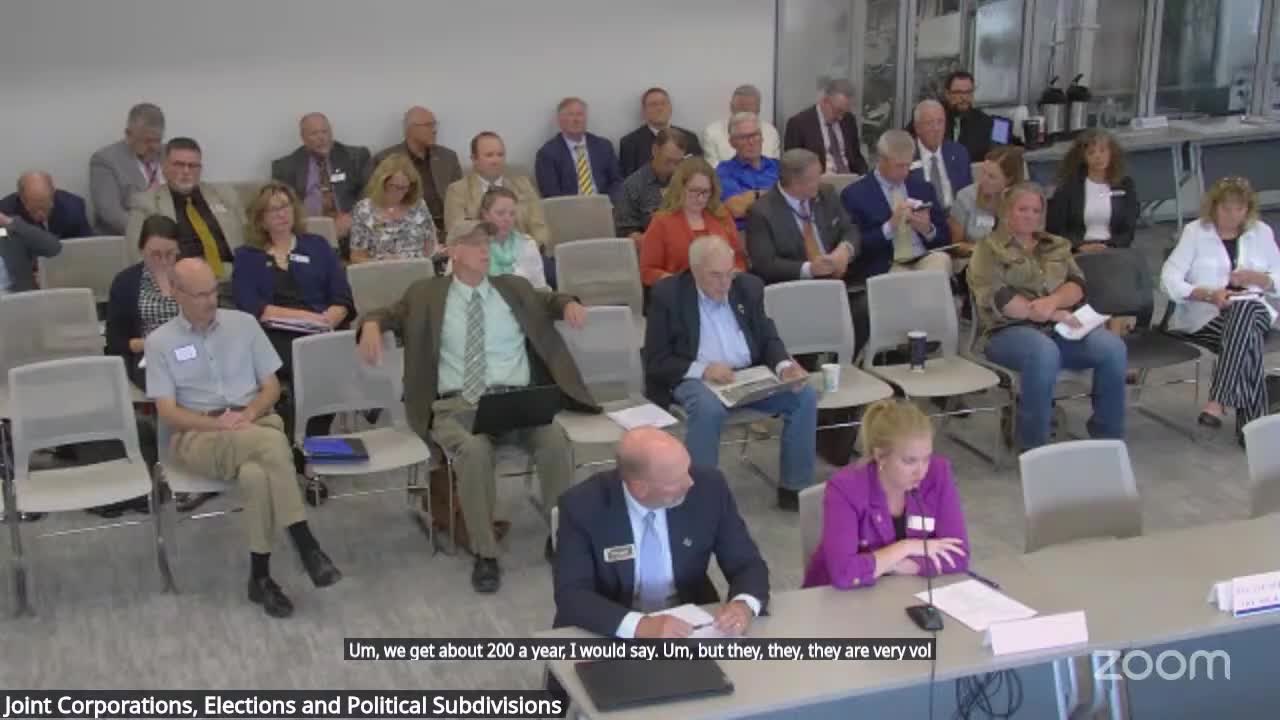
Summary
Mayor Leah Juarez, mayor of Mills, told the Corporations, Elections & Political Subdivisions Committee that accelerated FOIA timelines in the draft bill would be impractical for small local governments juggling daily operations and reduced staff.
Mayor Leah Juarez, mayor of Mills, told the Corporations, Elections & Political Subdivisions Committee that accelerated FOIA timelines in the draft bill would be impractical for small local governments juggling daily operations and reduced staff. “Compressing the statutory window to 10 days is quite simply impractical,” Mayor Juarez said, adding she had seen a single request estimated at $28,000 to fulfill.
The University of Wyoming urged caution. Tara Evans, vice president and general counsel at the University of Wyoming, said her office’s experience with high‑volume, privacy‑sensitive searches showed redaction work can be time‑intensive: “If we get a request for emails, it takes days and days to go through these emails.” She urged retaining a longer response window to avoid errors and added that the university’s average response time is about 31 days.
The Wyoming Association of Municipalities (WAM) and municipal officials described repeated examples of out‑of‑state or commercial “data‑mining” requests that were intended to overwhelm staff rather than obtain specific local information. Matt Murdoch, mayor of Pinedale and president of WAM, said towns sometimes receive bulk, burdensome requests that force small staffs to divert resources from essential services. “These requests often appear retaliatory in nature and divert valuable time and resources away from essential public services,” Murdoch said.
Other local officials described the operational reality: Kyle Butterfield, city administrator for Riverton, said his city handles roughly 1,100 requests annually and fulfills most without charging fees, but he warned that large, multi‑custodian email pulls require IT review and extensive redaction. Janine Jordan, Laramie city manager, said her city fills about 1,800 requests per year and that most are answered within a week, but that 18 especially large requests over 2½ years required “dozens, sometimes hundreds of hours of staff time.”
Smaller special‑district representatives urged targeted protections. Bill Wenning, speaking for smaller special districts in Sublette County, asked that inspections of public records be exempt from fees for special districts, saying fees can be “a weapon designed to prevent inspection of records.”
Multiple local governments and municipal groups recommended changes to the draft: allow an initial short acknowledgment window and preserve a longer production window (the longstanding 30 days was repeatedly defended), permit tolling for third‑party notice and privilege review, and include a good‑faith safe harbor and reasonable cost recovery for high‑volume, commercial requests. Several witnesses urged strengthening the ombudsman’s authority and staffing to mediate disputes rather than driving every disagreement into court.
Why it matters: Committee members heard consistent accounts that a 10‑day statutory production deadline and new civil fines could force rushed redactions, increase privacy risk, and exacerbate staffing problems in small towns. The committee heard repeated calls for a collaborative rewrite — clearer exemptions and processes, stronger ombudsman tools, and targeted funding or technical assistance for small jurisdictions — rather than an across‑the‑board tightening of deadlines.
Ending note: Several witnesses volunteered to participate in drafting sessions with the committee to develop language that balances public access with operational realities. The committee did not vote on changes to the draft public‑records bill during this hearing; members asked for stakeholder collaboration before any new legislation is advanced.