
Wyoming committee debates lump‑sum Hathaway scholarship plan, strips 20‑year eligibility and tables final bill
Get AI-powered insights, summaries, and transcripts
Subscribe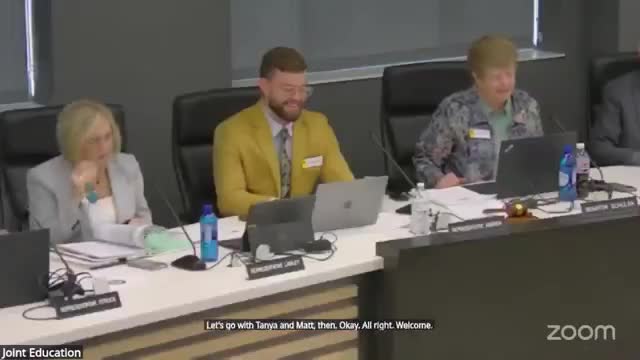
Summary
Legislative staff presented a draft to convert Hathaway into a lump‑sum, portable award and to extend eligibility from 4 to 20 years. Fiscal staff said the cost impact is indeterminable; the committee removed the 20‑year window, directed a working group and tabled the bill for more work.
A Legislative Service Office bill draft that would convert Wyoming’s Hathaway higher‑education scholarships into a lump‑sum award and extend eligibility from four years to 20 years prompted hours of technical explanation and policy debate before the Joint Education Committee on Aug. 21 in Casper.
LSO operations administrator Tanya Heitrich outlined the draft (26 LSO 94 working draft 0.6), describing broad statutory changes to operationalize a lump‑sum award, eliminate some semester‑based requirements and allow recipients to use awards for up to 20 years after initial eligibility. Matt Wilmarth, the LSO senior school finance analyst, told the committee the fiscal impacts are “indeterminable” because extending eligibility to 20 years and allowing lump‑sum use would change student behavior in ways the office cannot reliably predict.
The uncertainty was a central concern for several legislators. “How the heck are we ever going to manage the thing if we pass this?” Senator Scott asked, noting that moving from a 4‑year initiation window to 20 years creates unpredictable liability and administrative complexity. Wilmarth and Heitrich said the Department of Education would need new systems to track remaining award balances for each student and that, under current statute, awards can be paid on a first‑come, first‑served basis if available funds are insufficient.
The staff presented historical context and fiscal numbers. Wilmarth summarized original and current award amounts (honors: originally $3,200, currently $3,360 after a 2014 increase), historical expenditures (expenditures peaked in fiscal year 2020 at about $18.2 million and have declined since), and recent investment returns. He said the Hathaway expenditure account posted record investment earnings this year — roughly $54.7 million — with transfers to the corpus of about $24.6 million and a reserve balance approaching $55 million at the end of fiscal year 2025. He warned, however, that large recent earnings do not eliminate the unpredictability introduced by a 20‑year window or a lump‑sum option.
Supporters said lump‑sum portability would better serve non‑traditional students and those pursuing short technical and career programs. Senator Rothfuss and others argued the lump‑sum approach gives students flexibility — for example, to take two classes one semester and none the next without “burning” a semester of eligibility. Student and higher‑education witnesses offered mixed views: University of Wyoming student Paula Medina said the current semester‑based structure already provided her needed flexibility and warned that lump sums could create financial‑management complications for some students, while University of Wyoming official Mike Smith noted program strengths and reported that 86% of resident first‑time full‑time students receive Hathaway awards and that 67% of students receiving Hathaway at UW graduate or leave with no debt.
Committee actions: members voted first to remove the proposed 20‑year eligibility extension and revert that portion to current statute. They then approved multiple procedural steps before pausing substantive action: the committee voted to table the bill and form a voluntary working group to refine the draft and return in November. The committee also instructed LSO to prepare two additional bill drafts — one to review and propose new award amounts and another to examine alternatives to making the ACT an absolute eligibility gating metric.
Why it matters: Hathaway is the state’s flagship higher‑education endowment program and has shaped Wyoming college enrollment policy and budgets for two decades. Changes that expand eligibility windows or alter payment timing could shift future demand, affect institutional revenues and complicate administration. Committee members from both sides emphasized the desire to maintain the scholarship’s original intent while balancing predictability for state budgets.
Next steps: the committee created a voluntary working group to draft options and directed LSO to return with bill drafts on award amounts and ACT alternatives at the November meeting. Lawmakers said they want more technical analysis from the Department of Education, the community college commission and the university before moving forward.