
Residents urge Sparks council to reconsider closing Fire Station 5, cite longer response times and sprinkler code impacts
Get AI-powered insights, summaries, and transcripts
Subscribe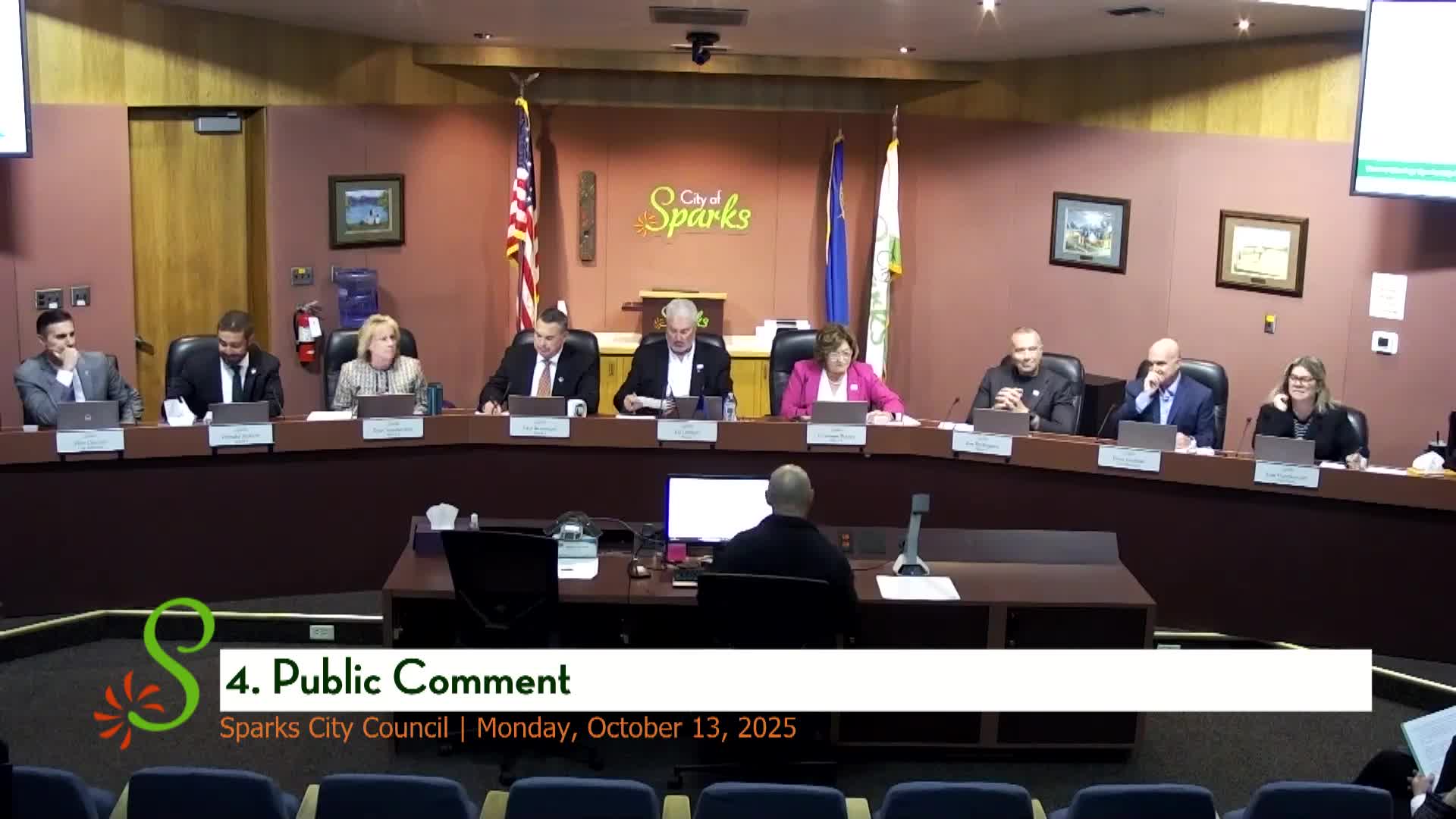
Summary
Two residents told the Sparks City Council Oct. 13 that closing Fire Station 5 and relying on newly opened Station 6 would increase emergency response times to Wingfield Springs and Golden Eagle Regional Park and could affect sprinkler requirements under local code.
Two residents told the Sparks City Council on Oct. 13 that closing Fire Station 5 and shifting resources to the newly opened Station 6 would add minutes and miles to emergency response times for homes and events near Golden Eagle Regional Park.
The comments, made during the council’s public-comment period, focused on public-safety risks and local code consequences if travel times grow. “Closing Station 5 is going to put thousands of people that visit Golden Eagle Park each year ... and our homes in jeopardy,” said Jim Kindness, a resident of Bloomfield Springs and Sparks. He said response from Station 6 to Golden Eagle would add “an extra 4 minutes and over 2 miles” and that his own home would see “an extra 3 minutes of travel time along with an additional mile.”
Kindness also told the council that “Northern Nevada fire code amendments along with Title 14 of the Sparks Municipal Code state that homes will be sprinklered if the fire department's travel time is greater than 4 minutes,” and argued that shifting apparatus to Station 6 would remove the time buffer that allowed some new homes to be built without sprinklers.
Martin Sudzinski, a Wingfield Springs resident, told the council he and his neighborhood pay association fees and provide private services such as landscaping and security. He questioned why the city would close Station 5 after approving development that, he said, assumed existing infrastructure and response levels.
Both speakers framed their remarks as requests for the council to reconsider or explain the decision. Kindness urged the council to produce an earlier outside study he said recommended keeping both stations and asked staff to provide that report; he said the city paid “over $20,000” for the study while Chief White was in office. Kindness also challenged the council’s public announcement that the department would use “dynamic staffing” between stations during peak hours and large events, saying he did not expect personnel to be routinely moved back and forth for weekend and event coverage.
The council did not take action on the comments during the meeting; the public-comment period concluded before the council proceeded to agenda votes.