
Supporters urge mandatory annual workplace harassment training and clearer employer policies
Get AI-powered insights, summaries, and transcripts
Subscribe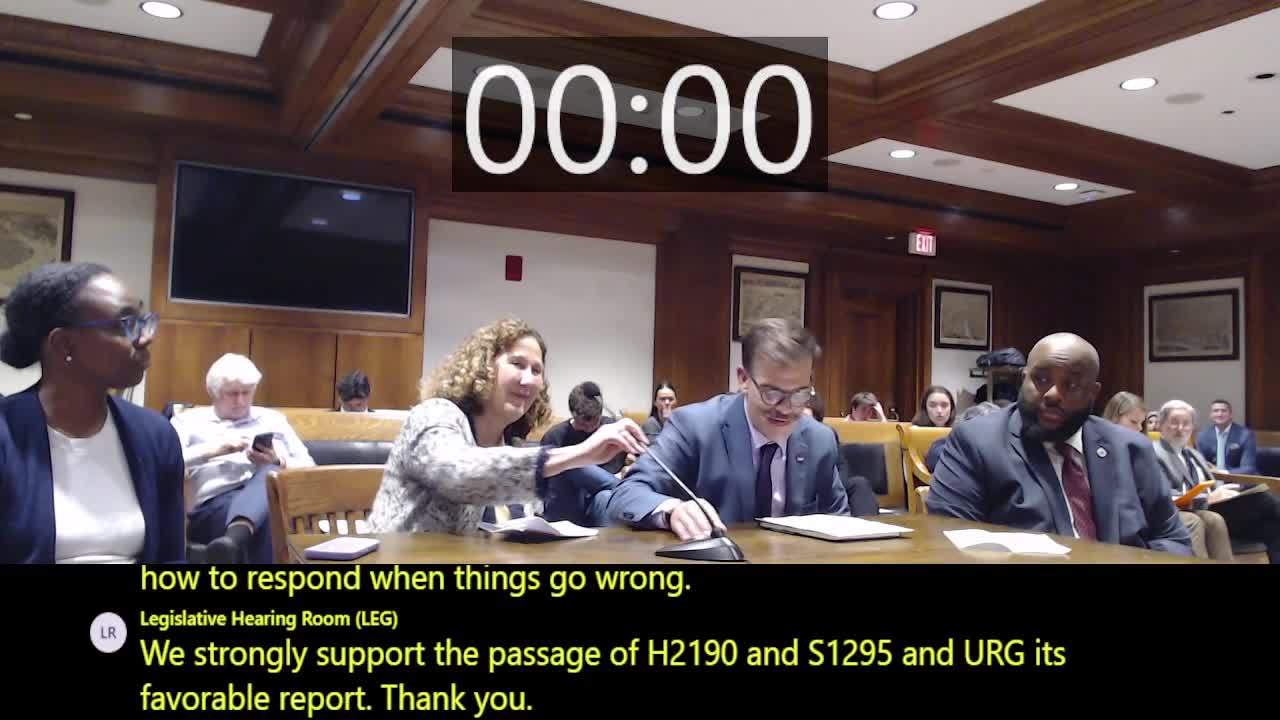
Summary
Unions, training providers and education groups told the committee that H2190/S1295 would create consistent annual harassment prevention training standards and require employers to post anti‑harassment policies aligned with MCAD guidance.
BOSTON — Labor unions, educator groups and training providers urged the Joint Committee on Labor and Workforce Development on Oct. 14 to report favorably on House Bill 2190 and Senate Bill 1295, a proposal to require employers to provide annual training and clear anti‑harassment workplace policies.
Supporters said mandatory, standardized training would reduce incidents, clarify complaint pathways and strengthen workplace culture.
Janine Yancey, CEO of M‑Train, a compliance training company, described multi‑state differences and urged a “single standard” to help multistate employers comply. “This bill, as proposed, would connect all these bills so that there's one standard for all of your multi state employers to adhere to,” she said.
Sarah Wilfred, director of education policy at AFT Massachusetts, cited a National Education Association finding that “1 in 4 female educators are harassed or assaulted on the job” and said the bill would require employers to establish and post clear anti‑harassment policies and provide trainings that meet the Massachusetts Commission Against Discrimination (MCAD) standard.
Alex Papali of the Center for Economic Democracy and other witnesses supported interactive training elements, including anonymous interaction with a qualified instructor, as a practice that promotes psychological safety and honest participation.
Lawmakers noted social‑media influences and asked whether small employers could be phased in; witnesses said some states have staged requirements beginning with larger employers and that low‑ or no‑cost training options exist for smaller businesses.
The committee took testimony from business, labor and nonprofit representatives and did not vote on the bill at the hearing.