Get Full Government Meeting Transcripts, Videos, & Alerts Forever!
Get email alerts on the Disaster Resiliency Trust Fund topic
No spam. Unsubscribe anytime.
Doctors and lawmakers urge long‑term revenue for Disaster Relief and Resiliency Trust Fund
Summary
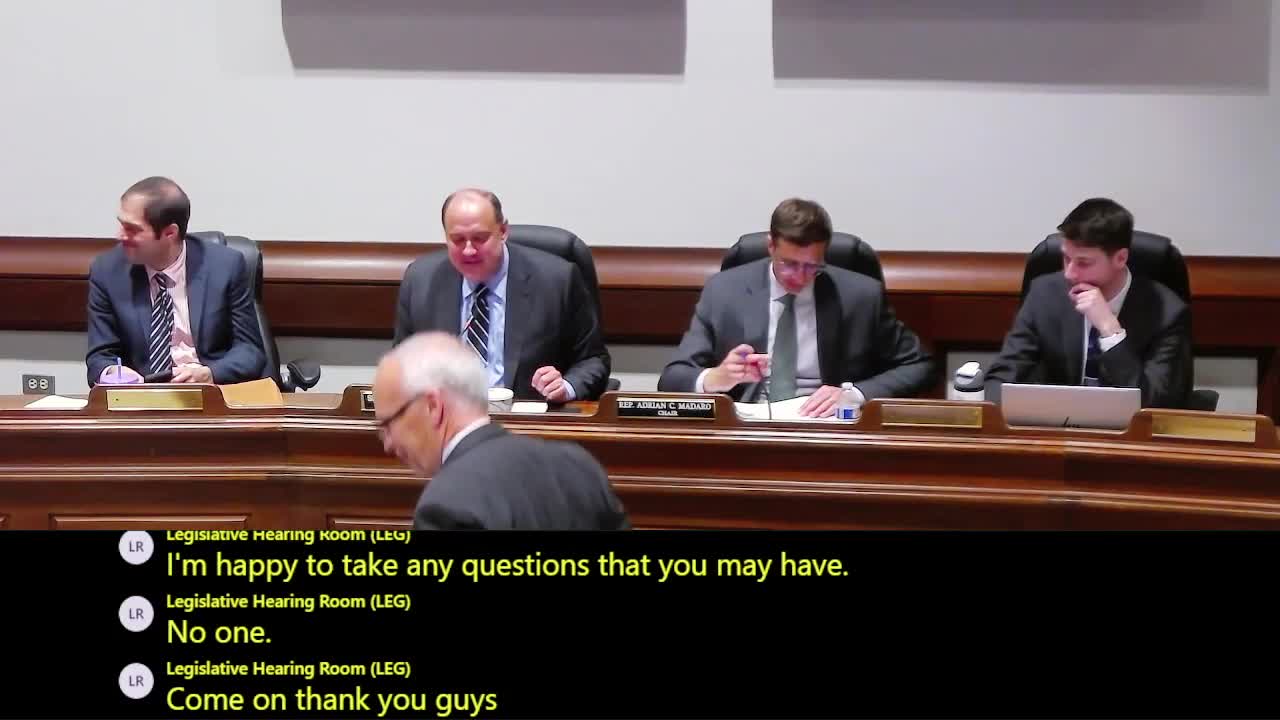
Public health and municipal witnesses told the Joint Committee on Revenue that the State Disaster Relief and Resiliency Trust Fund needs a recurring revenue source so the Commonwealth can respond quickly to increasing disaster risks.
Public health and municipal witnesses asked the Joint Committee on Revenue to support legislation that would provide a stable revenue source for the State Disaster Relief and Resiliency Trust Fund (S.1936, H.3030).
Dr. Paul Bittinger, chief preparedness and continuity officer for Mass General Brigham and an emergency physician, told the committee that changing climate patterns are increasing both heavy precipitation events and drought risk in Massachusetts. He said communities suffer long‑lasting damage after disasters when recovery funds are not readily available, and he urged lawmakers to ensure the recently created trust fund has dedicated revenue so “the state's support will always be available to help our communities in disasters.”
Senator Jo Comerford, who helped lead the earlier creation of the fund in the FY2025 budget, told the committee the Legislature and administration worked to place $14 million into the fund and that the bills being considered would provide recurring revenue. Comerford said the proposal in committee would dedicate a percentage of capital gains revenue before it becomes part of the rainy day fund—she described the approach as a way to ensure money is available “when” disasters occur, not “if.”
Comerford recounted the 2023 support the Legislature provided after floods and freezes—$20 million to farmers and $15 million for municipalities—and said those actions demonstrated the importance of being able to respond quickly to disasters. She and Dr. Bittinger both warned that federal disaster assistance from FEMA may be less certain going forward and that states need reliable, recurring mechanisms to respond.
Committee members asked clarifying questions about how the fund accrues in non‑disaster years and how funds roll into the account; Comerford and witnesses said the money would accrue and be available for response when needed. The testimony included references to MEMA and MDAR as implementation partners and to ongoing administrative work to build appropriation processes for quick deployment.
No formal committee action was recorded on S.1936 or H.3030 during the hearing.
Supporters framed the bill as an investment in resilience to reduce long‑term economic and social harms caused by disasters; they emphasized the value of immediate, accessible funding to stabilize local economies and public health after extreme weather events.