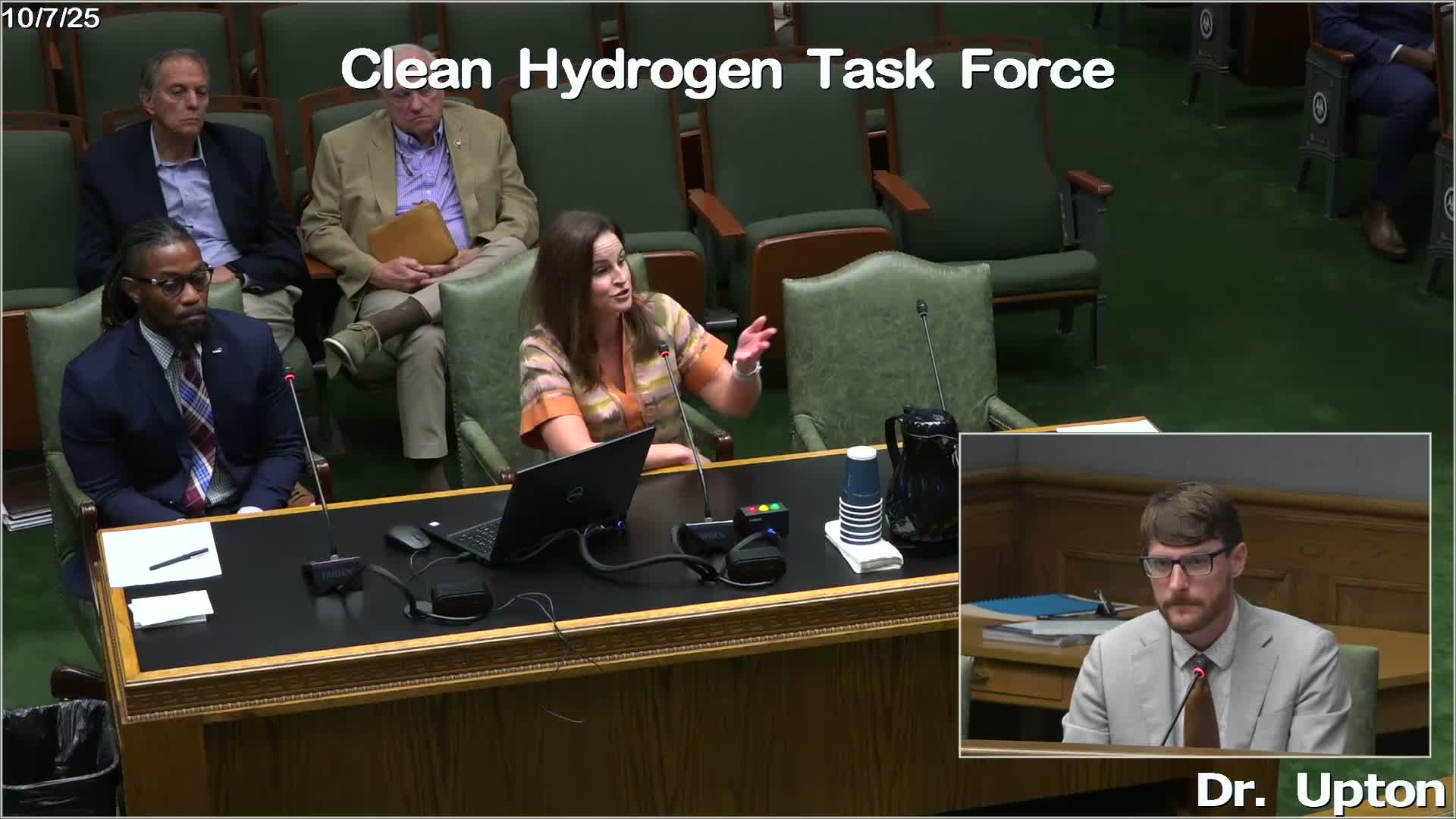
Clean Hydrogen Task Force reviews draft report; members ask for technical findings, regional coordination and appendices
Loading...
Summary
Task force staff presented a condensed executive summary and draft recommendations. Members asked for additional technical findings, inclusion of defense-related opportunities, and that the body of the report include appendices with meeting materials and public comments. The task force tentatively set a final meeting for Nov. 20.
Staff for the Clean Hydrogen Task Force presented a draft executive summary and a set of findings and recommendations on Oct. 7 and sought member feedback ahead of a planned final meeting and vote.
Matt Riones, staff lead, said the draft organizes findings under leadership, economic development and regulatory alignment and presented 10 findings and accompanying recommendations. He said the executive summary was intentionally condensed and that fuller explanatory paragraphs and the supporting materials would appear in the report body and appendices. He noted a suggested new recommendation promoting regional coordination with Gulf South states.
Members urged several additions and clarifications. Doctor Zappy and others asked that the report explicitly summarize technical shortcomings and technology gaps to stimulate R&D. Member Neil McMillan recommended including defense-sector hydrogen use cases and ERDC (Army Corps research labs) engagement; staff said a discussion of defense opportunities would be included in the report body. Task force members also flagged the need for clear, externally consistent definitions for “clean hydrogen” and transparency about differing public comments on decarbonization standards.
The group discussed report format: whether to include longer explanatory paragraphs in the executive summary or keep the front-end concise and include full detail in the report body and appendices. Several members (including Chair Orgeron and Miss Phillips) favored the shorter executive summary with detailed findings and public comments later in the report. Staff said the full draft would be circulated and members would have about 2–2.5 weeks to submit edits, with the committee expected to meet on Nov. 20 to consider the final report and vote.
Ending: Staff committed to circulating the draft report within about two weeks, appending meeting transcripts and public comments, and incorporating technical findings, basin-specific modeling recommendations and defense-related material in the full report.