Get Full Government Meeting Transcripts, Videos, & Alerts Forever!
Get email alerts on the Public Records topic
No spam. Unsubscribe anytime.
LSO briefs committee on public records and meetings: ombudsman and analysts propose tighter timelines and penalties
Summary
Legislative Service Office staff presented research on Wyoming’s Public Records and Public Meetings acts and a working draft to update the Public Records Act. LSO and the ombudsman recommended clearer timelines, acknowledgement rules and stronger enforcement; public commenters urged higher civil penalties to change institutional behavior.
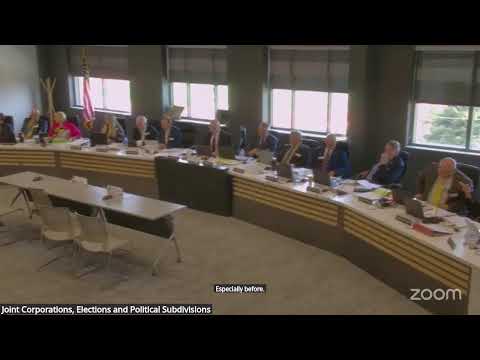
Legislative Service Office staff briefed the joint interim corporations committee on Aug. 14 on two companion research products: (1) a comparative memo on public meetings laws in neighboring states and (2) a fact sheet summarizing known civil‑penalty cases under Wyoming’s Public Records and Public Meetings acts. Staff also presented a working draft of changes to the Wyoming Public Records Act developed in response to committee requests.
LSO research analyst Jesse Schafer summarized the Public Meetings Act and differences across states. Schafer said notice and minute rules vary: Colorado, South Dakota and Utah require at least 24 hours’ notice for regular meetings; Idaho requires five days; Nebraska requires “reasonable notice.” Schafer reported that Montana’s law sets only a few narrow executive‑session reasons while Utah enumerates many more, and that some states permit criminal penalties for violations while others allow civil penalties or court remedies. She told the committee that Wyoming’s statutes permit an aggrieved party to sue and that a knowing, intentional violation of the Public Meetings Act is civilly actionable under Wyoming law.
Jesse Schafer and Josh Anderson (LSO) also reviewed a short inventory of court cases LSO identified since 2008. LSO reported several pre‑2012 criminal cases, and fewer civil cases after 2012 because the statutes were changed that year from criminal penalties to civil penalties; that shift makes tracking outcomes in judicial databases more difficult. LSO identified at least one 2017 civil enforcement case in which the district court found a state agency had conducted overly narrow searches of records and imposed modest civil penalties and nominal damages. Several other cases resulted in ordered release (sometimes redacted) but no penalties where courts found ambiguity or where failures were later “cured” by public release.
LSO staff presented a working draft (26LSO‑51 WD0.4) that would do several things: require governmental entities to acknowledge receipt of a records request within three business days; require release of readily available records once acknowledged; shorten the statutory timeline for fulfilling a records request to 10 calendar days (with an ombudsman‑reviewable extension up to 30 additional days for good cause); permit the ombudsman to refer enforcement matters to the attorney general or a district attorney for civil enforcement; and expand fee‑rule applicability while retaining exceptions for entities that charge lower fees. The draft would raise the civil penalty ceiling that a court may impose (LSO’s draft proposed raising an available penalty from $750 to as much as $2,000) and allow courts to award reasonable attorney fees to a prevailing requester.
The public records ombudsman (identified in testimony as the ombudsman but not named on the record) described real‑world frictions: smaller local governments often lack staff dedicated to records, citizens and staff sometimes disagree about precisely what documents are requested, and cyclical workload spikes (elections, budget seasons) make meeting rigid statutory timelines difficult in some jurisdictions. The ombudsman told the committee she has an ongoing intake log and tracks requests and referrals; she said she has advised citizens and directed several matters toward district court when compliance could not be resolved administratively, but that she had not yet referred enforcement matters to the attorney general’s office.
Public commenters urged stronger enforcement. Two Cheyenne residents urged higher civil penalties and argued that bigger institutional fines would change organizational behavior and produce faster release of records; one urged a penalty ceiling of $50,000 for institutional failures. LSO and the ombudsman responded that enforcement can take multiple forms (ombudsman referral, district court suit, attorney general action) and warned that shifting from modest to very large statutory penalties carries trade‑offs and may require additional implementation resources or changes to agency practice to avoid unintended consequences.
Committee members asked LSO and the ombudsman about: the most frequent record types at issue (sensitive criminal records and records in smaller local jurisdictions); whether courts still impose penalties after the 2012 statutory change from criminal to civil enforcement (LSO identified at least one civil penalty after 2012); and whether the AG’s office could handle more enforcement referrals (ombudsman said AG resource constraints and staff turnover complicate rapid AG engagement). LSO said it would provide the committee the ombudsman’s intake log in redacted form upon request.
Committee members discussed possible next steps: refining timelines, clarifying what “readily available” means, standardizing fee rules and publishing clear guidance for smaller jurisdictions. The committee did not adopt statutory language at the meeting but asked staff to continue drafting a balanced approach. Public commenters and at least one committee member urged stricter penalties to force institutional compliance; staff recommended additional coordination and training for small jurisdictions before adopting large penalty increases.
No formal committee action was taken on the LSO draft at the Aug. 14 meeting; staff will return with updated language and supporting materials for further committee consideration.