Get Full Government Meeting Transcripts, Videos, & Alerts Forever!
Get email alerts on the Career Technical Education topic
No spam. Unsubscribe anytime.
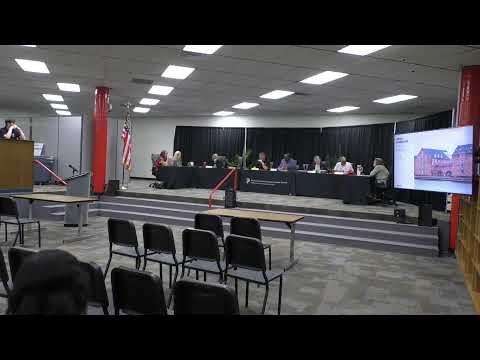
Board approves moving forward on Merle Taylor CTE conversion, discusses Pre-K relocation
Summary
The Jacksonville North Pulaski School District board voted unanimously to advance plans to convert the Merle Taylor multipurpose building into a career technical education center and to relocate Pre-K classes from Homer Atkins, while staff outlined costs, phases and funding paths.
The Jacksonville North Pulaski School District Board of Directors voted unanimously Oct. 13 to move forward with a plan to convert the Merle Taylor multipurpose building into a career technical education (CTE) center and to begin planning the relocation of Pre-K classes currently housed at Homer Atkins.
The CTE conversion would be phased: an initial welding program buildout on one side of the multipurpose building, followed by additional trades pathways (mechanical/electrical/plumbing and HVAC) and an eventual application to become a state-recognized career center that can offer concurrent college credit. Board members approved staff’s recommendation to begin Phase 1 immediately so welding students could return to the district next school year.
School staff said the district currently has about 13 Pre-K classrooms across sites and approximately 275 Pre-K students districtwide, with Homer Atkins alone housing 10 Pre-K classrooms. Staff described available slots for four-year-olds and said moving the Homer Atkins Pre-K classes to Merle Taylor would free space at Homer Atkins and place Pre-K students in a more modern facility.
Presenters estimated a ballpark renovation cost of about $300,000 to outfit 15 welding stations, including electrical, ventilation, demolition of the existing gym floor and installation of roll-up access and welding screens. Staff said equipment costs and additional startup funding would be sought through grants and state programs; the district expects to use the district building fund for renovation seed money while applying for grants and Office of Skills Development funding to support later phases.
Staff briefed the board on other logistical issues: some CTE pathways the district now uses are provided off-site (staff cited sending students to ASU-related satellite sites, a daily round trip of roughly 38 miles and schedules that create missed class periods), transportation burdens that the district wants to reduce by hosting programs locally, and start-up grant windows that open in October. A timeline presented by staff estimated both sides of the building open as a career center by fall 2027 if funding and approvals align.
Board members asked technical and safety questions — including whether the building requires sprinklers and whether each welding station must include fire suppression and dedicated power — and staff said those systems, ventilation and station-level suppression are part of the renovation cost estimate and that detailed code and fire-safety requirements would be confirmed during design.
The board also discussed keeping some Pre-K classes at other sites (staff said only Homer Atkins’ Pre-K classes would move to Merle Taylor under the current plan) and the possibility of paid Pre-K seats at some locations if state vouchers remain unavailable. Staff reported recent cuts to Arkansas Child Care Development Fund vouchers and said the district has begun considering paid slots to fill remaining capacity.
Votes and next steps: Board members moved and seconded the recommendation to advance the CTE scope and the motion passed unanimously. Staff was directed to return with more detailed renovation estimates, grant applications and program-approval steps at the next regular meeting.
A member of the public who spoke during the public-comment period raised academic-performance and ethics concerns unrelated to the building item; those remarks were recorded separately.