Get Full Government Meeting Transcripts, Videos, & Alerts Forever!
Get email alerts on the Economic Development topic
No spam. Unsubscribe anytime.
Fort Scott commissioners debate scope, amounts and safeguards for proposed small‑business grants
Summary
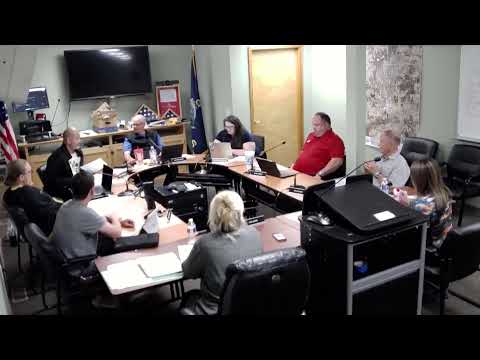
Fort Scott City commissioners and city staff reviewed a draft small‑business incentive program at a June 3 work session, discussing how large the annual fund should be, whether grants should go only to new storefront businesses or also to existing and home‑based firms, how to score applications, and how to ensure recipients create or retain payroll jobs.
Fort Scott City commissioners and city staff reviewed a draft small‑business incentive program at a June 3 work session, discussing how large the annual fund should be, whether grants should go only to new storefront businesses or also to existing and home‑based firms, how to score applications, and how to ensure recipients create or retain payroll jobs.
Mary (staff member) presented the draft plan and supplementary documents from past Fort Scott programs, and asked commissioners for guidance on eligibility, award size and the application cadence. Commissioners and staff talked through several design choices that would affect both participation and oversight.
The discussion focused first on scope. Staff described two related downtown programs used about 10 years ago (a downtown building improvement grant and a downtown new‑business leasing grant) and asked whether the new program should be limited to new businesses or also include existing businesses that demonstrate growth. Commissioners said they wanted to avoid a program that any existing business could tap without demonstrating expansion or local job impact; several suggested eligibility or scoring criteria that require documented job creation or retention to qualify for the larger awards. Commissioners also recommended creating a separate, lower‑dollar program for very small or home‑based startups so the main fund can prioritize projects that add employees or convert home businesses into customer‑facing storefronts.
Money and timing were discussed at length. Staff said an $80,000 annual bucket had been suggested previously; commissioners proposed starting smaller to test the program. The group coalesced around awarding grants once per quarter, with $15,000 available per quarter and awards capped at $10,000 per recipient (applications may request any amount from $0 to $10,000). Unspent quarterly funds would carry forward to later quarters. Commissioners also discussed an alternative split (for an $80,000 year: set aside a portion for existing businesses and a portion for new businesses), but did not adopt final allocations at the work session.
Program design details under consideration included: making awards reimbursement‑based (applicants do work, submit receipts, and are reimbursed) while permitting limited exceptions for applicants that cannot carry upfront costs; requiring proof of business registration or licensing for eligibility (for example, state registration or an EIN for businesses that sell goods, and licensing for child‑care providers); using a rubric to evaluate applications and a separate rubric to evaluate program outcomes; requiring a memorandum of understanding for award recipients that sets reporting expectations; and a 12‑month follow‑up period for staff to report project results back to the commission.
Matching and accountability were debated. Commissioners proposed different match levels (suggestions ranged from a 25% applicant match up to 50% match), and discussed whether match could be satisfied with recent documented expenditures (receipts) incurred within a short timeframe (suggested: three to six months). Several commissioners expressed a preference for reimbursement with receipts as the primary method to ensure accountability. Commissioners also discussed whether, and under what conditions, the city might seek recoupment if recipients failed to deliver promised outcomes; staff noted the legal complexity of recouping grant funds and said repayment provisions would be handled through the memorandum of understanding and legal review.
Eligibility exclusions mentioned in the draft (and discussed) included home‑based businesses by default, liquor stores and businesses whose primary activity is alcohol sales, and seed capital uses. Commissioners questioned blanket exclusions for home‑based businesses and suggested allowing exceptions where the applicant can document local job creation or other community benefit (for example, a home‑based cleaning or contracting business that hires local employees). The commissioners generally favored keeping liquor‑centric businesses as a potential exclusion consistent with many public grant programs.
Finally, commissioners asked staff to return a cleaned‑up program document and proposed rubrics for application scoring and outcome evaluation that reflect the group’s direction (quarterly award cycle, $15,000 per quarter, up to $10,000 per award, reimbursement preference, job‑creation as a key evaluation factor, and a 12‑month follow‑up). No formal vote was taken at the June 3 work session; staff said they would prepare the ordinance/administrative document and bring it back for a future commission meeting for formal action.
For reference: the work session packet included older Fort Scott downtown grant programs and a note from Lindsay Madison (staff) with sample language; staff said the Kansas Department of Commerce has terminated an emergency HEAL grant program recently, which may increase local demand for city grants once other state emergency funds wind down.