
Boston councilors, BPS debate proposed changes to exam-school admissions policy
Get AI-powered insights, summaries, and transcripts
Subscribe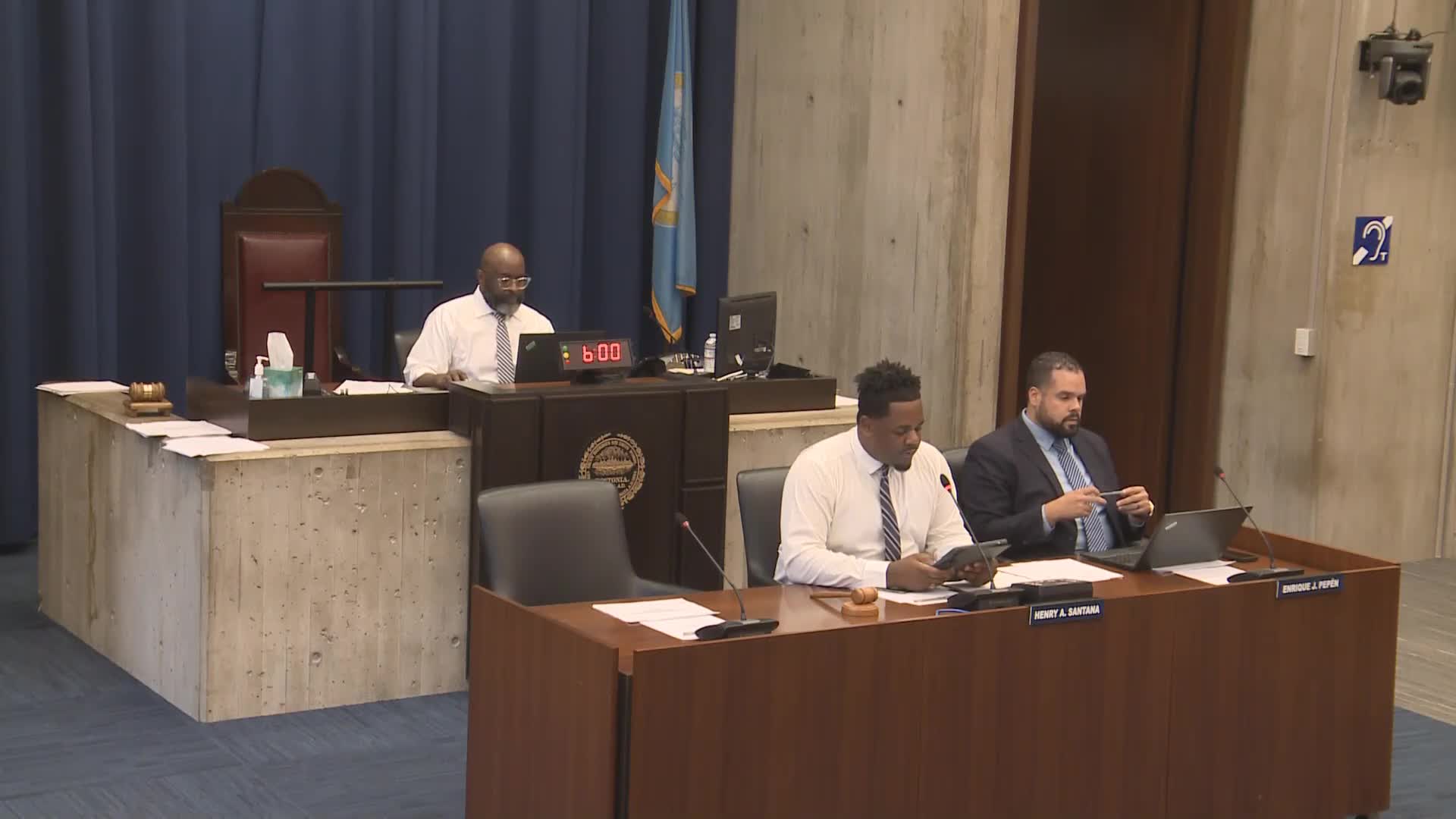
Summary
Boston City Councilors and Boston Public Schools officials sparred Sept. 29 over proposed revisions to the city’s exam‑school admissions policy, with the superintendent presenting a package of changes she said would make the system clearer while preserving socioeconomic tiers and a range of councilors, parents and advocates warning the proposal risks reducing invitations for Black, Latinx, multilingual learners and students with disabilities.
Boston City Councilors and Boston Public Schools officials sparred Sept. 29 over proposed revisions to the city’s exam‑school admissions policy, with the superintendent presenting a package of changes she said would make the system clearer while preserving socioeconomic tiers and a range of councilors, parents and advocates warning the proposal risks reducing invitations for Black, Latinx, multilingual learners and students with disabilities.
"Our recommendation is meant to keep what's working about the current policy and fix what's not working well," Superintendent Mary Skipper told the City Council Committee on Education during the hearing. She asked the School Committee to vote on the recommendations in November and proposed that, if approved, the policy remain in effect for three admission cycles to provide stability.
The change package brought forward by Skipper and BPS staff includes four principal recommendations: remove school‑based bonus points, reduce housing‑based bonus points from 15 to 10, add a citywide round that would allocate the first 20% of seats at each of the three exam schools to the highest scoring applicants who ranked that school first, and keep the existing socioeconomic tiers sized by number of school‑age children in each tier. The district also proposed keeping the composite score calculation at 70% grades and 30% MAP Growth test scores and asked that the revised policy apply to the 2026–27 admission cycle if approved.
Why it matters
The exam‑school policy governs admission to Boston Latin School, Boston Latin Academy and O’Bryant School of Mathematics and Science — three schools that draw public attention because of their academic reputation and historical underrepresentation of many city neighborhoods. Supporters of the 2021 reforms said those changes increased geographic and racial representation at the exam schools; critics argue the system still leaves many high‑performing students unable to receive invitations and that further adjustments could reverse recent gains for historically underrepresented groups.
What BPS told councilors
Skipper and BPS data chief Monica Hogan said the district reviewed five years of outcomes, ran simulations on several variables and conducted community engagement this summer (two webinars and a feedback form). The district reported 326 responses to the feedback form and said 81% of respondents were current BPS students or families.
Skipper recommended eliminating school‑based points because they are ‘‘hard to explain,’’ raise competition between elementary schools and in some cases raised composite scores above 100, making it mathematically difficult for high‑scoring applicants to receive an invitation. She recommended trimming housing points from 15 to 10 because the district’s analysis showed a typical composite difference closer to 10 points in recent admissions cycles. On the citywide round, Skipper proposed that the first 20% of seats at each school go to the highest composite scorers who ranked that school first, then distribute the remaining 80% of seats equally across the four socioeconomic tiers.
Councilors’ concerns and questions
Councilors across the political spectrum pressed BPS on several points: whether the proposals would reverse gains in diversity achieved after the 2021 changes; how the district will measure and protect access for English learners and students with disabilities; whether the citywide round would favor non‑BPS applicants who sit for the MAP test on weekends; and how the district will address early‑grade opportunity gaps that affect later competitiveness.
"I would like to put that at the forefront of this conversation," said City Councilor Enrique Pepin, who described his personal experience with the exam school process and said he wants a predictable policy that does not change annually. City Councilor Ben Weber pointed to federal legal constraints after the Supreme Court’s admissions rulings and said the district must design a race‑neutral policy that can withstand legal scrutiny.
Several councilors urged BPS to expand preparatory and enrichment programming in grades 4–6 and to strengthen all high‑school options so families do not feel the choice is ‘‘exam school or bust.’' "We have to make sure that we are bringing up the quality of education at all of our high schools," said Council President (as recorded) during opening remarks.
Public testimony and community panels
More than a dozen parents, community organizers and educators testified during the committee’s public comment period. Several speakers urged the council and BPS to pause or revise the proposal and flagged the district’s outreach as inadequate: organizers said two late‑summer webinars and an on‑line feedback form that produced 326 responses were insufficient engagement for a district of roughly 45,000 students.
"To state it plainly, the engagement numbers are embarrassing," said organized speaker Christa Magnuson of the Massachusetts Education Justice Alliance, who said the webinars did not allow meaningful discussion and that BPS did not show how feedback from underrepresented communities was captured. Parent and education researcher Roseanne Tung, a member of the 2021 exam‑school task force, also urged more transparent simulations and for the district to run scenarios changing one variable at a time so the effect of each change can be measured.
Many speakers expressed support for keeping or restoring features that expand access — including proposals ranging from a lotteried allocation among eligible applicants to formulas that guarantee slots for top students from each sending school — and recommended that any changes include clearly funded plans to expand K–8 and high‑school academic supports and outreach to historically excluded families.
What the district’s simulations show
BPS staff presented simulations of possible configurations. Using recent applicant pools, district staff said their simulation of the recommended package would have different effects year‑to‑year — in the 2024–25 applicant pool the simulation produced small shifts in the racial and socioeconomic shares of invitations (for example, a cited simulation showed a drop in invitations to economically disadvantaged students from 39.2% to 35.5% in one pool). BPS staff repeatedly cautioned that applicant pools change and that year‑to‑year differences in who applies make precise prediction difficult.
Next steps
Superintendent Skipper told the committee that the School Committee would continue to hear public testimony and was scheduled to vote on the proposed policy in early November (the district indicated a likely vote on Nov. 5 at its next meeting). Skipper asked that, if approved, the policy remain in effect for three admission cycles to allow reliable evaluation of its outcomes.
"We want an exam‑school policy that can stand the test of time and give families the stability and predictability to plan," Skipper said.
Ending
Committee members said they would follow up with BPS for additional analyses requested during the hearing, including neighborhood‑level simulations, crosswalks with transformation lists, and further breakdowns of applicant and invitational outcomes by race, special‑education and multilingual status. The School Committee had already received the recommendations Sept. 25 and will consider them in public meetings in the coming weeks, including further testimony and technical simulations requested by council members and community advocates.