Get Full Government Meeting Transcripts, Videos, & Alerts Forever!
Get email alerts on the School Bond topic
No spam. Unsubscribe anytime.
Rockford board approves ballot language for $230 million bond to fund buildings, buses and technology
Summary
The Rockford Public Schools board voted to place ballot language before voters for up to $230 million in general obligation bonds to fund air conditioning, gyms, building repairs, buses, and technology; the board approved the language after extended discussion and public comment, and will submit it to the Kent County Elections Office.
The Rockford Public Schools Board of Education voted to approve ballot language asking voters to authorize up to $230,000,000 in general obligation unlimited-tax bonds to fund school buildings, buses and technology, the board announced after a lengthy presentation, discussion and public comment.
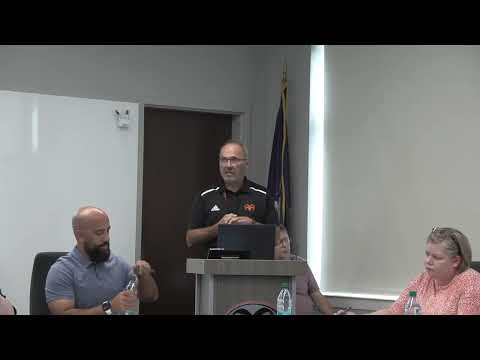
Superintendent Dr. Matthews told the board the proposal stems from a district strategic-planning process and a facilities review, saying the package focuses on two main buckets: "building for the future," including air conditioning and separate gym and cafeteria spaces for elementary schools, and "advancing excellence," including performing-arts renovations, a proposed indoor turf fieldhouse (the Grama Center) and expanded career-technical classrooms. "We have 16 buildings covering 1,500,000 square feet and almost 500 acres of land that we're responsible for," Dr. Matthews said while outlining priorities and cost estimates.
The presentation described specific priorities the district expects to pursue first if voters approve the bond: installing air conditioning in remaining schools, adding separate gym and cafeteria spaces at four elementary schools that currently lack them, upgrading aging mechanical, electrical and plumbing systems, improving entry circulation and security at several secondary campuses, continuing a planned replacement schedule for buses, and updating instructional technology.
Board members spent more than an hour asking clarifying questions about prioritization, outreach and finance. Board member Kelly emphasized staff recruitment and retention when discussing air conditioning, saying air-conditioned classrooms are an "attraction and retention strategy for staff." Several board members pressed on how the district would prioritize projects within the two buckets, and whether the district had community support; Dr. Matthews said a 22-person community committee, building administrators and other stakeholder groups participated in the planning.
Public comment included critical and supportive views. One resident told the board the timing and scale risk voter trust and called the proposal "a 30-year debt commitment," arguing the district should prioritize reading and math. A second public commenter said previous bonds sent large sums to financing and contractors rather than directly to students and urged consideration of an operating millage instead.
Board members described the proposal as a continuation of the district's long-standing approach to facility finance. Dr. Matthews and others noted the local tax rate (millage) would remain the same as current debt millage levels, which they described as a "0 net increase" in rate, while acknowledging homeowners may see higher dollar amounts because of rising property values. The presentation reiterated that state school-aid dollars do not typically fund large-scale facilities, buses or technology, which districts commonly address through bonds.
After discussion, Board member Kelly moved to approve the ballot language and Board member Christie seconded. The board approved the motion on a roll-call vote with six members supporting and one opposing. The board recorded the requirement that final ballot language be delivered to the Kent County Elections Office by the stated administrative deadline (noted in the presentation as August 12).
The board did not adopt final project lists or architectural plans at the meeting; Dr. Matthews said architectural design work would proceed only if the community approves the bond. Board members outlined plans for community outreach if the ballot language is placed on the November ballot, including school- and community-based meetings, PTO presentations and informational materials to explain what the bond would and would not fund.
Votes at a glance: motion to approve ballot language to place general-obligation unlimited-tax bonds (not to exceed $230,000,000) on the ballot — mover: Kelly; second: Christie; roll-call outcome: approved 6–1. The board instructed staff to submit the language to the Kent County Elections Office by the stated deadline.
The board moved on to remaining agenda items after voting; district leaders said they will post a calendar of community informational events and continue stakeholder outreach in the weeks before absentee ballots are distributed.