Get Full Government Meeting Transcripts, Videos, & Alerts Forever!
Get email alerts on the Education Instructional Practice topic
No spam. Unsubscribe anytime.
Lapeer Community Schools outlines formative‑assessment push, grading changes and AI guidance
Summary
District leaders described expansion of a statewide formative‑assessment program (FAME), instructional rounds, draft AI guidance, changes to grading practice and a citizenship rubric during a presentation to the board.
Dr. Jeff Standen, principal at the Zemmler campus, told the Lapeer Community Schools board that the district is intensifying work on formative assessment and related professional development across multiple buildings. “We're gonna talk about formative assessment,” Standen said, introducing the presentation on benchmark 3.1a.
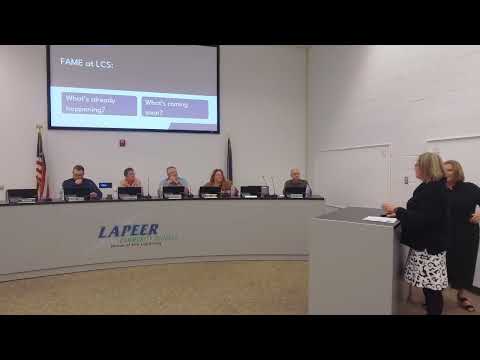
The presentation, led by district learning coaches and building administrators, framed formative assessment as a daily, teacher‑driven process that helps teachers track and respond to what students learn before summative tests. Learning coach (first name not specified) Allman described the process in concrete terms: “What I just described is a formative assessment process, and it's what teachers go through with all their students every day.” Allman said the district is using the FAME (Formative Assessment for Michigan Educators) model to structure the work.
Why it matters: District leaders said the work is intended to improve teacher practice and student achievement by ensuring teachers routinely set learning targets, check student understanding and adjust instruction. The board heard that the approach will guide professional development, classroom observations and revisions to grading practices.
District officials gave specifics about the FAME program and local rollout. Allman said FAME began in February 2008 as a collaboration between the Michigan Department of Education and the Michigan Assessment Consortium, and that it has been implemented statewide: “There are 260 teams across the state right now, and there's 1,500 different team coaches that have worked with this initiative.” Lapeer staff said local learning coaches who participated in FAME cohorts are now coaching in district buildings.
Instructional rounds and professional development: Presenters described instructional rounds for teachers already underway and planned administrative rounds that will run through December and January to inform building PD. One speaker said administrators will participate in instructional rounds next week, with the observations feeding goals for professional development and coaching.
Grading, retake policies and evaluation changes: District staff described multiple grading reforms in progress. Presenters said the district is revising how summative assessments factor into grading and teacher evaluation. “We have the elimination of, student or teachers being evaluated based on their summative assessments. That's no longer part of our teacher evaluation,” a district presenter said. The presenters said the change will allow teachers to break summative assessments into smaller units and implement power standards and common formative assessments. The board was told the district will involve department chairs in November PD to develop consistent retake and grading practices.
AI guidance and privacy: The presentation also addressed district planning for artificial intelligence. A district speaker said the district is moving beyond an “initiate” phase and consulting with Michigan Virtual on four stages of AI implementation, stressing academic integrity and student privacy. Presenters noted district policy work has been shaped by federal privacy rules, saying the work considered FERPA implications and led to guideline revisions.
Other classroom supports: Presenters said the district continues work on dyslexia initiatives, expanded STEM offerings and a new K–12 citizenship rubric to separate behavior and compliance from standards‑based achievement. One presenter cited a survey showing a reported 10% increase in students, parents and staff who believe schools are teaching appropriate behavior; staff said the district will expand Student Assistance (SAC) procedures and department collaboration time.
What’s next: District staff said administrators and learning coaches will use instructional‑round feedback to set PD goals, roll out the citizenship rubric, and finalize grading and retake procedures with department chairs in coming weeks.