
Lavaca County officials say federal grant rules and rising costs force cutbacks to road project
Get AI-powered insights, summaries, and transcripts
Subscribe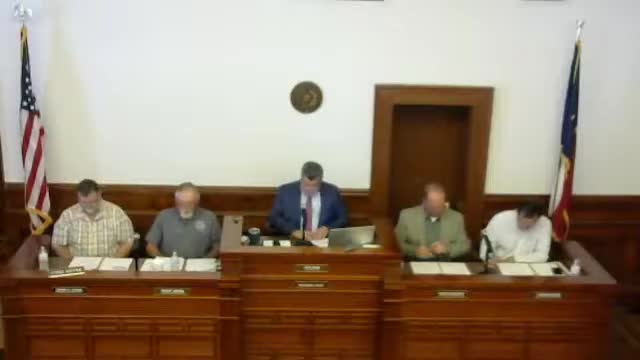
Summary
Officials told the commissioners that a road resurfacing project funded by leftover Hurricane Harvey funds approved in 2022 must be reduced because higher construction costs and federal program requirements have consumed grant funds; commissioners scheduled a special call meeting with the GLO to discuss options.
Commissioners and county staff on Oct. 14 described how a road resurfacing project approved in 2022 with leftover Hurricane Harvey funds must be reduced because costs have risen and federal program requirements have consumed a larger share of the award.
The project initially was approved at $2.9 million in 2022, county officials said, but environmental reviews, engineering, floodplain studies and administrative requirements have increased costs and reduced the money available for paving. The court scheduled a special call meeting with the Texas General Land Office (GLO) for Oct. 15 to discuss alternatives.
Why it matters: County leaders said the combination of procedural requirements and rising construction prices means the county will have to use local funds to cover part of a project they expected to be fully funded by the GLO, shortening the segment the grant can pay for.
A commissioner described the process as bureaucratic and said delays have doubled costs for the same scope of work. "The delays have penalized us, and so we're not going to be able to do what we wanted to do," the commissioner said. "It's sad because it's our money, but we have to jump through hoops to get it." The court did not identify that speaker by name in the public record.
Officials said the grant is leftover money linked to Hurricane Harvey (2017), and that engineering, environmental clearances and federal compliance alone can consume a significant portion of grant funds. The judge and commissioners said they had written to HUD and sought help from U.S. senators during the multi-year process.
As a result, commissioners said the county will complete only one mile of the originally planned two-mile resurfacing with the GLO funds; the remaining mile will be paid from county coffers. The court confirmed a special call meeting with the grant administrator for Oct. 15 to discuss options.
Ending: Commissioners framed the issue as part of a broader effort to press Austin and Washington for more efficient distribution of infrastructure funds and fewer administrative barriers for local projects.