
Plan Commission discusses motorized devices on town trail; staff to pursue education and monitor other communities
Get AI-powered insights, summaries, and transcripts
Subscribe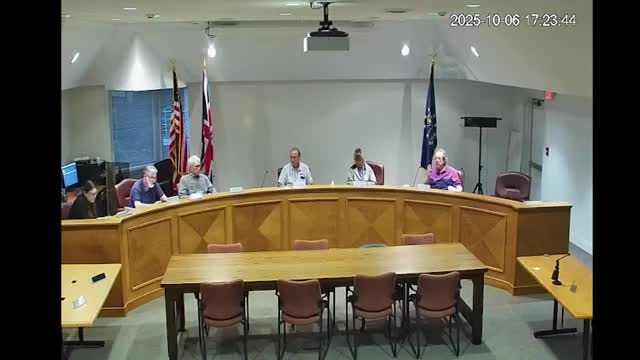
Summary
Commissioners reviewed Indiana and federal guidance on e-bikes and motorized devices and directed staff to emphasize public education. Staff referenced a legal memo and said class 1 and 2 e-bikes are generally permitted where bicycles are allowed unless locally prohibited; enforcement remains challenging.
Plan Commission members discussed motorized devices and e-bikes on the town’s non‑paved trail at their Oct. 6 meeting and directed staff to begin public education while monitoring other communities and legislative developments.
Staff summarized state and federal distinctions among e-bike classes: class 1 (pedal-assist up to 20 mph), class 2 (motorized without pedaling up to 20 mph) and class 3 (pedal-assist up to 28 mph). Staff said, under Indiana law as described to the commission, class 1 and class 2 e-bikes are allowed where bicycles are permitted unless a local government has expressly prohibited them. Staff cautioned that devices without pedals and other single-wheel devices are treated similarly under the existing interpretation unless specifically prohibited.
Staff told the commission that enforcement is difficult because visual identification of class type is often unreliable and some devices are not labeled. Commissioners discussed options including targeted education, signage, and observing policies adopted by nearby communities such as Carmel, which allows classes 1 and 2 with a 15-mph limit and provides for enforcement by designated officers.
Staff said it has a memo on the topic prepared last summer and offered to circulate it to commissioners; the memo’s author was identified in discussion but not quoted at length. Staff proposed posting clear guidance, issuing pictures and explanatory materials, and possibly convening a town hall to collect public input before any change to local rules. The commission did not vote on a regulatory change at the meeting; the direction was to pursue education and continue to evaluate other municipal approaches and potential legislative action.