
Board hears fall curriculum data: M-STEP, PSAT and SAT trends show recovery and math areas for focus
Get AI-powered insights, summaries, and transcripts
Subscribe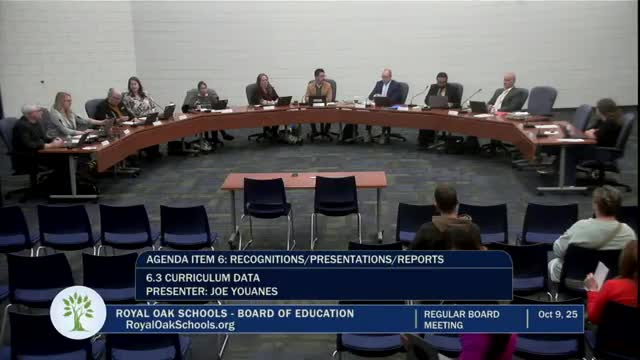
Summary
District leaders presented fall assessment results showing recovering proficiency after post‑COVID declines, increases in reading scores, and lower-than-desired math proficiency on nationally normed PSAT/SAT benchmarks; administrators proposed instructional steps to increase algebra access and embed test‑type problems in classroom practice.
Royal Oak Schools administrators shared fall assessment results at the Oct. 9 board meeting, reporting overall recovery toward pre‑COVID proficiency levels while identifying math—particularly algebra foundations—as an area of focus.
Dr. Ioannis (curriculum presenter) and Superintendent Dr. Topelski framed the presentation around the district strategic plan and described multiple data sources: M‑STEP (Michigan Student Test of Educational Progress) for grades 3–7 (reading and math), PSAT achievement data for grades 8–10, and SAT scores for grade 11. The presenters stressed the value of multiple data points and noted plans for deeper, school‑level reporting during the winter update.
The district showed year‑to‑year percent‑proficient comparisons for math and ELA. Administrators reported increases in M‑STEP percent‑proficient for many elementary grades (for example, third through fifth grade math), while acknowledging dips in some grades (the transcript cites a fourth‑grade ELA dip from 65% to 57% between 2024 and 2025). Dr. Ioannis emphasized cohort monitoring (tracking the same students across years) as a tool for evaluating growth.
On PSAT results (a nationally normed exam administered in grades 8–10), the presenters said overall percent proficient for meeting college‑readiness benchmarks showed small declines in places (an example cited: 39% to 38% overall percent proficient on one PSAT summary) and that reading scores tended to improve more than math as students progressed through high school. Dr. Topelski and Dr. Dafelski discussed possible causes and instructional responses. They noted that PSAT/SAT formats can emphasize multi‑step problem solving and data analysis and that some students may be strong in data analysis and problem solving but lack earlier access to foundational algebra content on which higher‑level questions depend.
Administrators described building-level instructional responses: increasing exposure to PSAT‑type problems in math PLCs (professional learning communities), embedding “I do / we do / you do” release of responsibility structures so students see complex items more often, and examining whether more students can access algebra earlier to avoid an artificial ceiling caused by missing foundational skills. Dr. Dafelski said the SAT is “a nationally normed assessment” used as a college‑readiness gatekeeper, and the presenters described progress since the post‑COVID decline with an overall upward trend into 2025.
Board members asked whether PSAT forms are normed by grade and how algebra and course sequencing might affect eighth‑grade results. Administrators acknowledged differences in course exposure across grades (for example, algebra/geometry timing) and said they are analyzing whether adjustments—such as earlier algebra access—would raise PSAT and SAT performance.
The presentation concluded with administrators affirming a commitment to align instruction with assessment expectations, provide teachers with tools and professional learning, and report school‑level data in the district's winter update.
Quotes from the meeting - "We look at student achievement data and student growth data as a way to measure ourselves against those strategies within that learning goal," said Dr. Ioannis. - "The SAT is the gatekeeper to colleges for our students," said Dr. Dafelski. "We need to remove as many barriers as we can."
Next steps The administration plans school‑level data reporting in winter, continued PLC work to embed PSAT/SAT‑style problems and problem solving across grades, and exploration of course sequencing and algebra access to increase students' opportunity to demonstrate higher‑level math skills.