
Lafayette panel approves private wine‑tasting room inside hobby‑train tunnel despite neighbor objections
Get AI-powered insights, summaries, and transcripts
Subscribe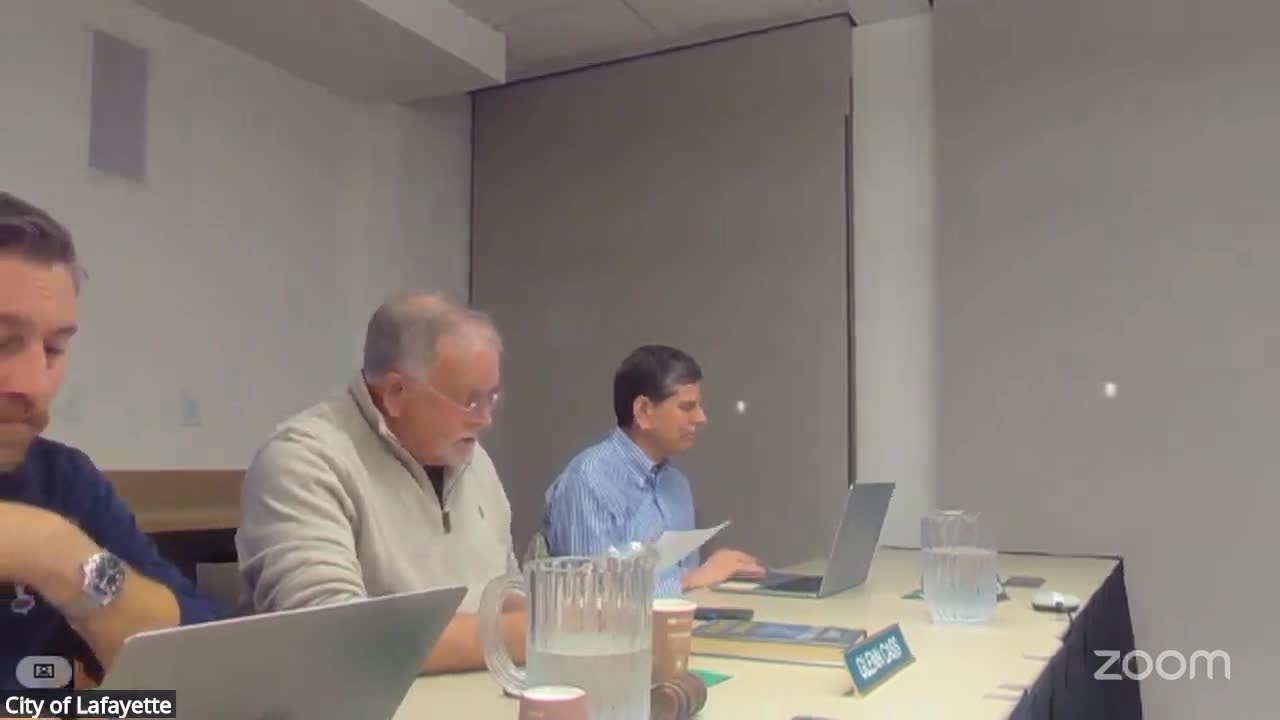
Summary
The Design Review Commission approved converting interior space of a private hobby‑train tunnel at 20 Spring Hill Lane into a private residential wine‑tasting room, finding the project exempt from CEQA and adopting Resolution 2025‑11. Neighbors urged further review of safety, permitting and environmental impacts.
The Lafayette Design Review Commission voted Oct. 14, 2025, to approve a permit to convert interior space within a private hobby‑train tunnel at 20 Spring Hill Lane into a private residential wine‑tasting room, finding the project exempt from the California Environmental Quality Act and adopting Design Review Resolution 2025‑11.
Staff planner Nicole told the commission the conversion is entirely inside an existing tunnel on the southern parcel of a two‑parcel property under common ownership, and that the applicant initially reported the converted area as 680 square feet before clarifying to staff that the actual interior area to be converted is 501 square feet. The proposed work includes a small bar, a powder room and a utility closet. Staff recommended approval subject to standard conditions and reiterated that the space is private and “cannot be open to the public nor operated for a non‑private enterprise.”
Why it matters: Neighbors said the broader project as built differs from prior approvals and raised safety, stability, environmental and noise concerns. Approving the tasting room, they said, risks establishing a precedent that could let large private entertainments be constructed in residential hillsides without adequate public review.
Neighbor Debbie Lindas, who lives adjacent to the property at 19 Spring Hill Lane, urged the commission to reject the resolution and to inspect the site and permits, saying the build‑out has exceeded what she understood was approved. “A private amusement park within a quiet hillside residential neighborhood,” Lindas said, summarizing her concern about the scale of onsite features and their effects on neighbors.
Project designer Mark Becker and the applicant disputed the complaints during a short rebuttal. Becker said the tunnel had been permitted and signed off, with soils engineers on site, and described the conversion as internal to an already constructed tunnel: “The tunnel's been permitted, signed off, soils engineers on‑site. Everything is up board on that,” he said.
Commission deliberations focused narrowly on the interior tasting room that staff asked the commission to review. Commissioners repeatedly limited the decision to the specific interior use and its design, saying broader disputes about prior approvals or other site features would be handled through building permits, other agencies or the courts. Commissioner Richard Stanton moved to find the project exempt from CEQA and to adopt Design Review Resolution 2025‑11 approving the tasting room subject to standard conditions; Chair Glenn Cass seconded. The motion carried on an affirmative voice vote (ayes recorded). The resolution and the staff report remain the formal record of conditions and findings.
Clarifying details recorded at the hearing: staff reported the applicant revised the converted area downward from 680 square feet (reported in the staff report) to 501 square feet when asked; the interior program is described as a private tasting room, cellar or bar accessory to the residence, with no public access allowed; proposed interior elements are a small bar, powder room, and utility closet. The project review was limited to the interior use; the commission repeatedly stated it was not ruling on other constructed features on the property.
What opponents asked for: Lindas and other speakers urged a site inspection, an independent review of permitting and engineering, and agency sign‑offs on fire protection, stormwater/drainage and geotechnical safety before approving further changes. Those requests were recorded in public comment but were not converted into conditions in the resolution approved for the interior tasting room.
Next steps: The commission's approval applies only to the interior tasting room described in Resolution 2025‑11 and to the standard conditions enumerated in the staff report. Neighbors indicated they may pursue additional administrative complaints or legal review to address broader concerns about the overall property improvements.