
State textbook committee outlines new rubric for instructional materials; CTE review submitted to board
Get AI-powered insights, summaries, and transcripts
Sign Up Free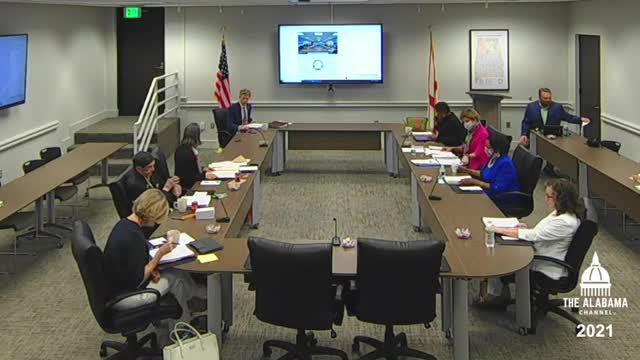
Summary
Presenters from the Alabama State Department of Education and the Career and Technical Education (CTE) textbook committee described a revised review rubric, committee composition and the adoption timeline, and reported limited public comment on the materials under review.
The Alabama State Department of Education presented proposed changes to the state textbook review process and a set of Career and Technical Education (CTE) textbook recommendations during the Alabama State Board of Education work session on April 8.
The session featured a state-department presentation by Dr. Boyd, an Alabama State Department of Education staff member, and by Mr. Stevens, who described a new, expanded rubric intended to guide textbook reviews. Jennifer Crutchfield, an agriculture teacher at Brookwood High School in Tuscaloosa County and secretary of the CTE state textbook committee, described the CTE committee’s work and asked the board to consider the committee’s recommendations.
Why it matters: The state textbook review determines which instructional materials the board will put on the state-adopted list from which local systems may select. Board members pressed staff for clarity about scoring, public notice and vendor responsibilities; staff described technical changes intended to give reviewers more time and to include more criteria than alignment to standards alone.
Dr. Boyd told the board the revised instrument aims to “define what products are good and have a tool that is uniform,” so review committees can spend less time proving publisher claims and more time judging classroom application, accessibility and other quality indicators. Staff described a rubric with four quality-point levels (1–4) plus an “insufficient evidence” option intended to flag missing or unverifiable material in vendor submissions.
Committee composition and process: Presenters said state law requires a 23-member state textbook committee and that the CTE review used that required core plus additional subject-matter reviewers (the presenters reported 16 additional appointees for this cycle). The CTE review used 45 rubric indicators; each title was reviewed by at least two reviewers and the reviewers’ scores were averaged and color-coded for board consideration.
Nonnegotiables and evidence: Staff said the review will require publishers to submit explicit alignment documents (alignment to the Alabama course of study and to the NAEP framework where applicable) and, for digital products, working usernames and passwords so reviewers and the public can inspect materials. Dr. Boyd and other staff said those nonnegotiables will stop reviews that fail to supply required evidence: “The nonnegotiables means that the review will not move forward if they do not meet our nonnegotiables,” a department presenter said.
Public notice and comment: The department published a public notice and a March 26 press release and made materials available online; presenters said the public comment period extended through May 13 (the day the board may vote). Jennifer Crutchfield said the committee received no public comments on the CTE materials during the posted notice window. Crutchfield summarized the committee’s recommendation: “The committee hopes that the board will review the committee’s work and vote to adopt the textbook recommendations and rejections as presented.”
Open resources, pricing and reviewer guidance: Staff said open educational resources (OER) may be submitted and will be held to the same evidence requirements as publisher products. Presenters also said publishers are required to submit pricing and licensing detail in vendor packets for committee review, but price is not part of the rubric score; reviewers may raise pricing in their qualitative comments and local districts will see the pricing information when selecting resources.
Board members’ concerns and next steps: Board members pressed for additional detail on several points: how “insufficient evidence” affects averages and whether titles narrowly above a pass threshold should receive a second review; how accessibility, special education needs and the “science of reading” will be verified in submissions; and why public response to notice was low. Members asked the department to improve distribution of notices to districts and to provide the full reviewer reports and score sheets to local systems before publishers begin presentations. Staff said those materials are provided to local districts and to the board in packet form and will continue to be shared; staff also said they will consider additional outreach methods to increase public review.
No formal board vote on the CTE recommendations was recorded during the work session. Presenters and the committee asked the board to review the committee report and take action at a future meeting.
What to watch for: the board’s formal vote on adoption and any changes the board requests to the rubric or adoption list; whether the department changes public-notice procedures; and follow-up guidance on how “insufficient evidence” is scored or remediated.