Get Full Government Meeting Transcripts, Videos, & Alerts Forever!
Get email alerts on the School Bond topic
No spam. Unsubscribe anytime.
Florence Unified officials outline $98 million bond, land sale on November ballot and warn of cuts if measures fail
Summary
District staff presented details of Proposition 401 (bond) and Proposition 402 (site sale), saying a projected 753 ADM shortfall reduced FY26 funding by about $3.85 million; officials urged voters to return mail ballots before Oct. 28 or use drop boxes through Nov. 4.
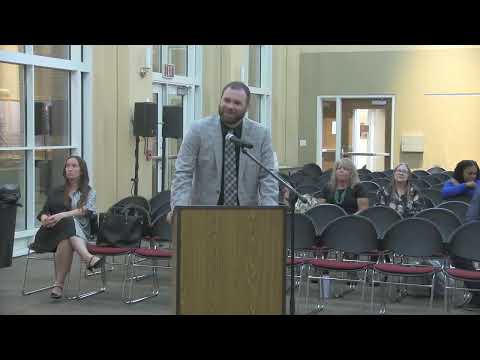
Mr. Cruz, a district staff member, told the Florence Unified School District governing board that two measures on the November ballot — Proposition 401 (a special bond election) and Proposition 402 (authority to sell or lease two parcels of district land) — are intended to preserve staffing and fund needed capital work across district buildings.
"Our ADM is our average daily membership. It is the equation that the Department of Education uses for funding on a per student basis," Mr. Cruz said, explaining how Average Daily Membership (ADM) affects state funding. He told the board the district's early FY26 ADM is down 753 from FY25 and that the district estimates that shortfall will reduce annual budget revenue by about $3,850,000.
The district presented Proposition 401 as a $98,000,000 capital bond to pay for building repairs and upgrades, and Proposition 402 as authorization to sell or lease two parcels in the San Tan Valley area to generate additional revenue. Mr. Cruz said proceeds from the site sale would go to the school plant fund and could be applied to staffing and programs as well as capital needs.
Nut graf: District staff framed the two ballot measures as complementary: the land-sale revenue would provide liquidity and Proposition 401 would fund long-deferred capital work — safety upgrades, HVAC, roofing, technology and bus replacements — while keeping programs and staff funded amid a temporary enrollment dip. Officials warned that if one or both measures fail, the district will need to evaluate cuts to administration, programs and possibly school sites.
Mr. Cruz described specific capital priorities the bond would fund: securing entry points at aging campuses, replacing fire-alarm and public-address systems that are decades old, upgrading camera and live-monitoring systems, replacing HVAC units that are often 20–30 years old, roof replacements (he cited one elementary roof estimated at about $3,000,000), technology and wireless network upgrades, and replacement of aging buses. He said many district buildings are 20 years old or older and the current administration is pushing to extend building life and improve safety.
On taxes, the district presented an illustrative tax model showing an average annual tax rate of roughly 45¢ to 45.49¢ per $100 of assessed value (rounded in presentation to 46¢), and said the average assessed value the district used in examples was $16,882, which produced an estimated average monthly cost of about $6.40 on the average home over the life of the bond. Mr. Cruz emphasized the district's projection that the estimated payment burden would decline over the 20-year repayment cycle under the structure presented.
District speakers also explained timing and voting logistics. Mr. Cruz said voter information pamphlets were mailed around Sept. 30, the last day to mail a ballot so it is postmarked and counted is Oct. 28, and voters may use drop boxes through Election Day on Tuesday, Nov. 4. He said the district and its advisors have begun preparatory work so, if voters approve the measures, projects and any land sale proceeds can be positioned for early 2025 implementation.
Board members and the superintendent urged turnout but did not direct how people should vote. Superintendent Knudson said, "I can't tell you how to vote. But, this is really important for our kids and the future in FUSD. So be checking your mailboxes and, it is a mail in only ballot. So let's win." Board member Carr said he detests property taxes but urged community support, calling the monthly impact modest and urging residents to consider the district's needs.
District staff warned of specific cuts should one or both measures fail: administrative reductions, changes in administrative structure (principals/assistant principals/deans), potential increases in class size via teacher reductions, transportation adjustments (including walk-boundary reviews), reduced extracurricular and elective offerings, and in more severe scenarios consolidation or closure of under-enrolled school sites. Mr. Cruz stressed the district would attempt to minimize student impacts but said difficult tradeoffs would be required if revenue shortfalls remain.
Ending: Mr. Cruz and board members encouraged residents to direct questions to district contacts posted on the FUSD website; Mr. Cruz specifically listed himself and district administrators Denise Erickson and Brad Gates as starting points for factual questions about the measures and site-sale parcels. The board's public remarks closed with a reminder about the upcoming election calendar and voting options.