Get Full Government Meeting Transcripts, Videos, & Alerts Forever!
Get email alerts on the Downtown Housing Redevelopment topic
No spam. Unsubscribe anytime.
Developers seek $950,000 in city support to convert 11 Scott Street to 52 downtown apartments
Summary
Developers presented a plan to convert upper floors of 11 Scott Street (Riverside Place) into 52 “missing middle” apartments and asked the City of Wausau for $950,000 in assistance. Public commenters and the Greater Wausau Chamber of Commerce voiced support. The council agreed to move into closed session to negotiate a term sheet on the project.
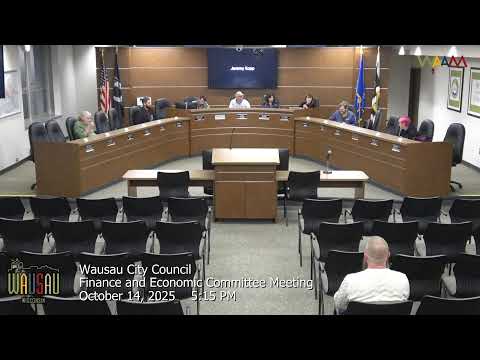
Developers representing 11 Scott Street LLC told the City of Wausau Finance and Economic Development committees on Oct. 14 that converting the largely vacant office building known as Riverside Place at 11 Scott Street into housing would fill a “missing middle” rental market and requested $950,000 in city assistance to make the project feasible.
Mark Craig, a developer with Lachry Development, and Raleigh Lachry, representing Lachry Development, said the four‑story building is difficult to lease as office space and that the proposal would convert the top two floors to residential use while keeping some office and ground‑floor uses. “We’re looking to redevelop and convert office use to residential use on the top two floors,” Craig said.
The developers said the full package, including office components and other work, would total about $10.6 million, with roughly $7.8 million attributable to the residential conversion; the immediate city request was $950,000. They said the residential portion would create 52 units: 41 one‑bedroom units, 10 two‑bedroom units and 2 three‑bedroom units. The project team estimated construction would take about 12–18 months if financing and approvals proceed this winter and spring.
Why it matters: Committee members and several public speakers framed the proposal as part of a broader downtown housing push. Tim White, a downtown resident, said adding housing “will bring people that will be interested and potentially, in working and investing as well.” Liz Wendt, a downtown resident, described the conversion as “a very good investment for the city” because it addresses a gap between subsidized and high‑end market units. Dave Ekman, president and CEO of the Greater Wausau Chamber of Commerce, urged the committee to move the project forward, saying the city needs more mid‑market units.
Developers and committee members discussed parking and potential office leases. The building currently carries an obligation for about 450 parking stalls; the developers said they had discussed reducing that obligation by roughly 150 stalls with city staff. They also said they were negotiating with prospective office tenants for portions of the second floor but acknowledged that filling the nonresidential space is uncertain. Raleigh Lachry said if office leasing cannot be achieved, the team may seek to convert additional floors to residential later.
Committee members asked about unit mix and amenities. Alder Watson asked about unit sizes; Craig said the project will emphasize one‑bedroom units to match current market demand. Alderman Neil raised the possibility of balconies; developers said structural and cost constraints make balconies unlikely for this conversion.
Formal next steps: After the public presentation and questions, the committees moved to closed session to negotiate a term sheet with the developer under Wisconsin Statute chapter 19.85(1)(e) (see actions). The committees did not approve any funding in open session and did not vote on a specific incentive package at the meeting.
Provenance: The redevelopment presentation began on the record when the agenda item was called for 11 Scott Street and ended when the committees voted to move into closed session to negotiate a term sheet. Two public commenters — Tim White and Liz Wendt — and Dave Ekman offered on‑record remarks in support of the project during the public comment period preceding the presentation.